
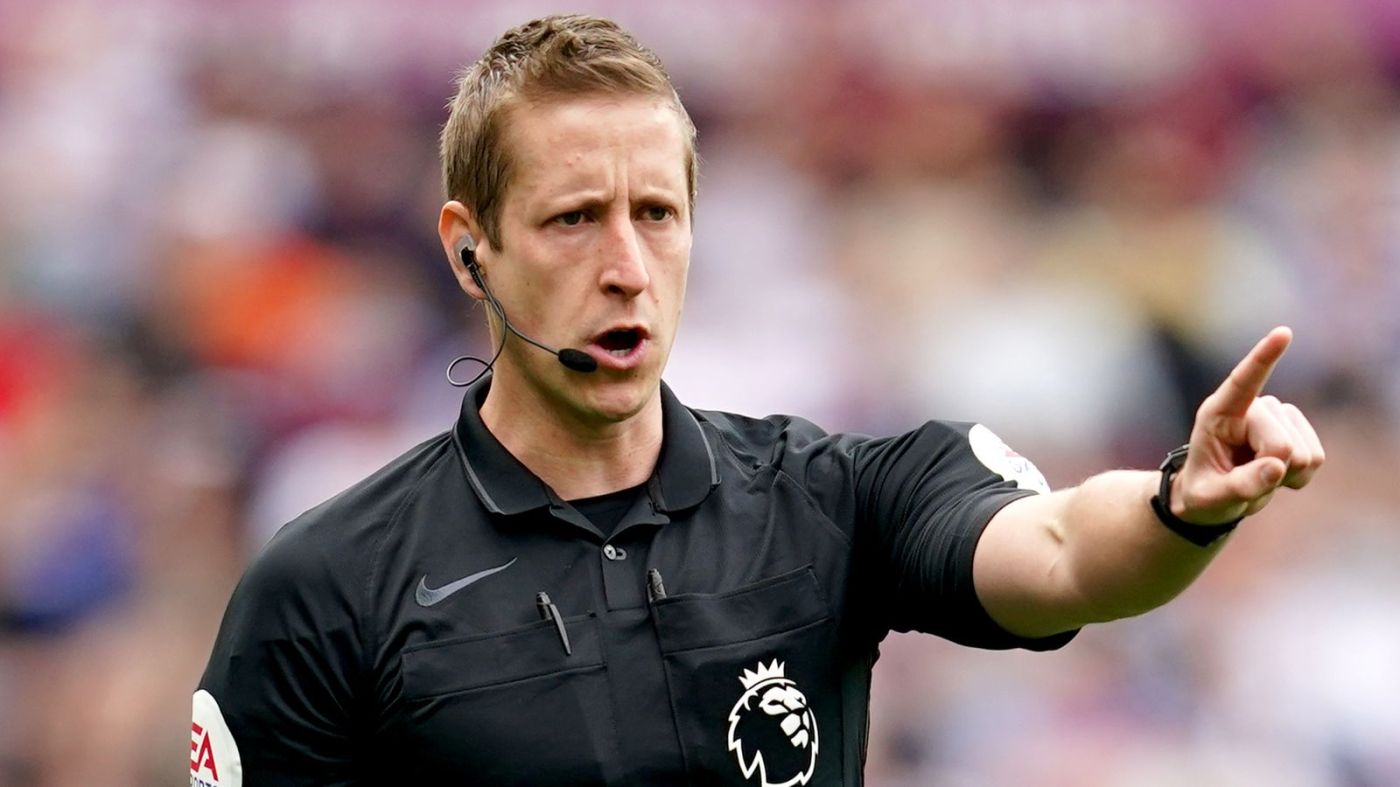
Officials in the Premier League and English Football League (EFL) will introduce longer injury-time periods in matches, similar to the World Cup format. Additionally, stricter rules will be enforced regarding player contact, with a higher threshold applied. Players will now be cautioned for crowding a referee, and managers will be required to remain within their designated technical area. These directives aim to enhance fairness and discipline in the game.
Refereeing guidelines for the upcoming football season include measures to combat time-wasting and dissent, as well as stricter monitoring of the bench and technical areas.
The added minutes at the end of EFL and Premier League matches are anticipated to frequently exceed ten minutes, just like in the previous World Cup in Qatar.
Last season, officials in England grew concerned about the low amount of time the ball was in play during professional matches. Statistics showed that the averages ranged from just 48 minutes in League Two to under 55 minutes in the Premier League.
Officials are adding more time for goal celebrations as they have become longer and more extravagant.
Referees will now measure the duration of game interruptions, such as goals, substitutions, injuries, or free-kick preparations.
The EFL will implement the multi-ball system in all matches, following the example set by the Premier League, in an effort to increase the pace of play.
Referees will be instructed to penalize actions that waste time, beyond simply kicking the ball away.
The EFL and Premier League football matches will now be more similar to the Qatar World Cup. The England vs Iran game lasted for 117 minutes with 24 minutes of added time due to injuries. There were two concussion-related injuries, eight goals, and 10 substitutions in the regular 90 minutes of play.
Leniency on “physical” challenges
Players can expect a higher threshold for contact on the pitch, resulting in fewer free-kicks being awarded for incidents that were previously deemed overly physical.
Referees must enforce guidelines regarding challenges on the field. Careless challenges result in fouls, reckless challenges lead to yellow cards, and any actions endangering opponents can result in a player being sent off.
Dissent
The threshold for a player to be shown a yellow card for dissent will be reduced this season.
Approaching the referee with multiple players may result in one or more players being shown a yellow card. This can happen when players run from a distance to approach the match officials.
Policing the technical area
Managers and backroom staff will face increased scrutiny, with penalties for having multiple coaches in the technical area and stricter consequences for managers who leave their designated zone.
Coaches or club officials who display aggression towards match officials or opponents will receive a red card. If a club official is sent off, they will not be allowed to watch the game from the stands and must be out-of-sight of the pitch.
 World of sports
Leave a comment