
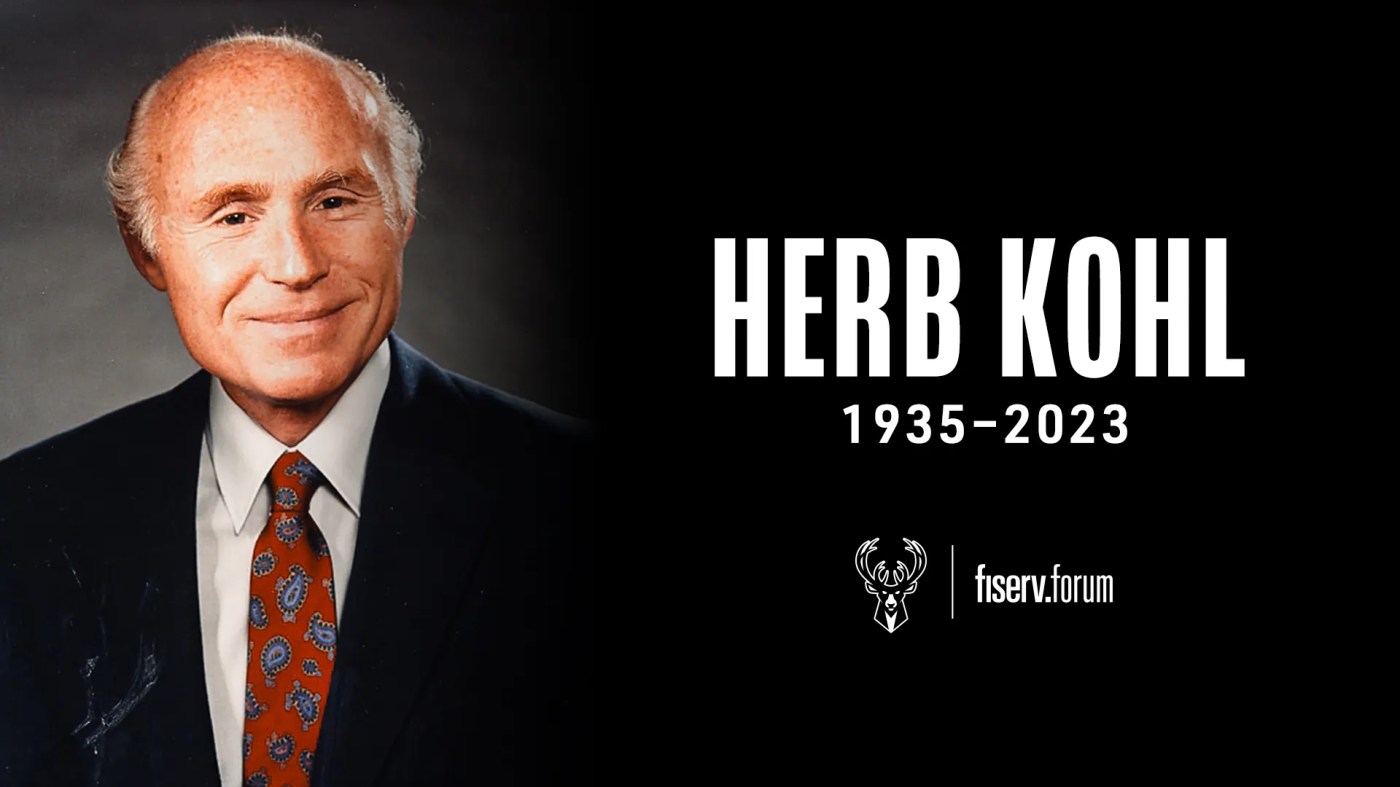
Herb Kohl, a former Democratic U.S. senator from Wisconsin and the previous owner of the Milwaukee Bucks, has passed away at the age of 88. His death was confirmed by Herb Kohl Philanthropies, which did not disclose the cause but mentioned that he had succumbed to a brief illness.
According to a statement from Kohl’s foundation, Herb had a deep love for Milwaukee and Wisconsin, choosing to spend his days in the place he cherished. Described as one of the most honorable individuals to have graced the earth, he had a profound impact on countless lives.
Kohl was a beloved and influential figure in Wisconsin, notably purchasing the Bucks in order to prevent the team from relocating, and generously supporting civic and educational initiatives throughout the state. His financial contributions extended to funding his own Senate campaigns, allowing him to present himself as a representative truly dedicated to the people.
NBA Commissioner Adam Silver also expressed his condolences, emphasizing Kohl’s exceptional commitment to the Milwaukee Bucks and the city itself. Senator Kohl’s dedication to keeping the team in Milwaukee and his instrumental financial support for a new arena have left an indelible mark on the franchise and the community.
In the Senate, a place often known for its egos, Kohl stood out as a modest and effective figure, particularly on issues vital to Wisconsin, such as dairy policy. Notably, he was the Senate’s sole professional sports team owner, and one of its wealthiest members.
“Sen. Kohl was deeply committed to community, kindness, and service to others,” Wisconsin Gov. Tony Evers said in a statement. “Wisconsin’s seniors, students, teachers, and schools, and farmers and rural areas, among so many others, are better off because of his life and legacy, the impacts of which will last for generations.”
Kohl was born in Milwaukee. He was childhood friends with Bud Selig, who later became the MLB commissioner. They were roommates at the University of Wisconsin and stayed friends as adults.
After getting his bachelor’s degree from the University of Wisconsin in 1956, Kohl got a master’s degree in business administration from Harvard University in 1958, and he was in the Army Reserve from 1958-64. He helped expand the family business, Kohl’s grocery and department stores, and was the company president in the 1970s. The company was sold in 1979.
Kohl became involved in Wisconsin politics in the 1970s, leading the state Democratic Party from 1975 to 1977.
In 1985, Kohl purchased the Bucks for $18 million.
“I am pleased, happy and delighted,” he said at a news conference. “The Milwaukee Bucks are in Milwaukee and they are going to stay in Milwaukee.”
The Bucks were doing well when Kohl became the owner. They had a few rough years in the 1990s, but then got better in the late ’90s and early 2000s. Kohl asked the NBA to share revenue in 2006. In 2014, he sold the team to Wes Edens and Marc Lasry. Kohl gave $100 million for the new Fiserv Forum. In 2021, the Bucks, led by Giannis Antetokounmpo, won the NBA championship. Kohl also donated $25 million to the University of Wisconsin for the Kohl Center.
“I was very happy to be in a position to help build a first-rate, state-of-the-art sports arena,” Kohl once said. “I think it cements the university’s reputation as one of the premier athletic programs in the Big Ten and the country.”
He used his own money to fund the Herb Kohl Educational Foundation, which donates money for scholarships and fellowships to students, teachers and schools in Wisconsin. In 1988, he ran for the Senate and won. He never accepted a pay raise in the Senate; he drew a salary of $89,500 every year, the same pay he got when he entered the Senate in 1989, returning the rest to the Treasury Department. He tended to home state interests and was instrumental in coming up with a replacement program for the Northeast Dairy Compact. He also had a strong say on farm policy and served as chair of several Senate panels. Kohl didn’t mind doing things in the Senate without much credit and almost seemed to be a throwback to another era as Congress became more partisan.
“I am a person who does not believe in invective,” he once said. “I never go out and look to grab the mike or go in front of the TV camera. When I go to work everyday, I check my ego at the door.”
He was followed by Democrat Tammy Baldwin, who was Wisconsin’s first female senator and the Senate’s first openly gay member.
Kohl, who never married, said that being single gave him time to balance the demands of life as a senator and owner. A sign on his Senate office desk said: “The Bucks Stop Here.”
The legacy of Herb Kohl extends far beyond his political and business endeavors, leaving an enduring impact on the community and state that he held dear. His memory will continue to inspire and his absence will be deeply felt by those whose lives he touched.
 World of sports
Leave a comment