
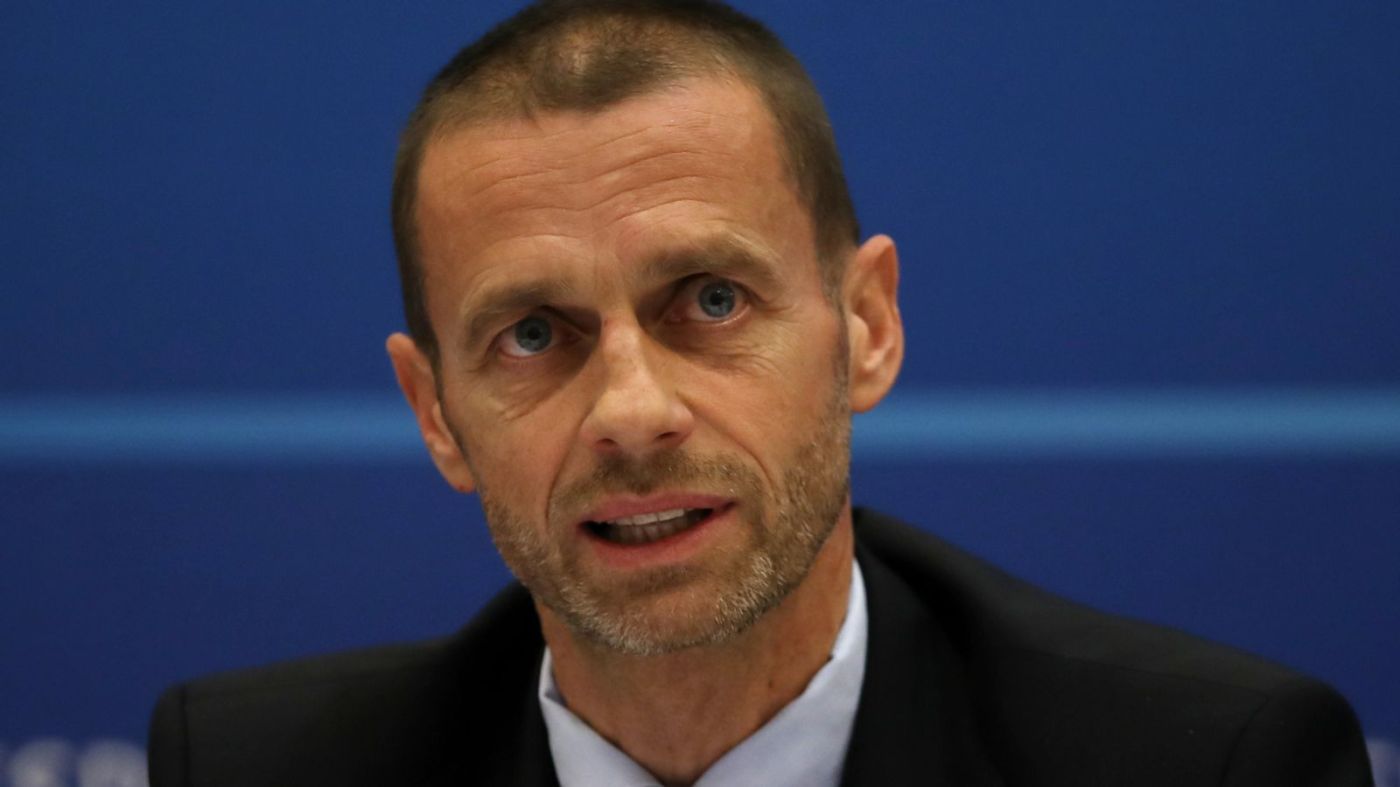
UEFA president Aleksander Ceferin’s decision to step down at the end of his current presidency following a UEFA Congress vote permitting him to stand for a fourth term in 2027 has sparked significant attention and discussion within the world of football governance. Ceferin, who initially came to power eight years ago on a platform of reform, has been vocal in his criticism of what he referred to as “nonsense projects of so-called super leagues,” alluding to the ongoing controversies within the global football community.
The announcement of Ceferin’s decision to not seek another term in 2027 came shortly after the UEFA Congress voted to allow him to do so, adding an unexpected twist to the proceedings. His decision resonated with the principle of limited terms, which he himself introduced during his tenure, aiming to restrict senior executives to serving a maximum of three terms in their roles. This move, designed to encourage fresh perspectives and leadership within UEFA, has been met with both support and criticism.
One notable critic of the potential for Ceferin to serve a fourth term was former UEFA chief of football Zvonimir Boban, who resigned from his position in protest and openly expressed his concerns about the plans for a fourth term. Ceferin’s comments following the vote shed light on his personal motivations, citing the significant time spent away from his family as a determining factor in his decision. Furthermore, he acknowledged that the decision to step down had been made last summer, emphasizing the deeply personal nature of this choice.
During his address to the media, Ceferin addressed the need for changes in the organization’s statutes to uphold term limits and emphasized the importance of a transparent and principled decision-making process within “serious organizations.” His deliberate decision to keep his plans private until after the vote was particularly noteworthy, as it allowed him to observe the reactions and responses of those involved.
“Factually, it’s my decision if I want to run after 2027. Honestly speaking, I am tired of Covid, tired of two wars, nonsense projects of so-called super leagues and self-proclaimed moral authorities who are only moral until it comes to their personal interest.
“My family knew it first, and then I told just some of my friends and colleagues. I intentionally did not want to disclose my thoughts for two reasons. First, I wanted to see the real face of some people – and I saw it. I saw good and bad parts.
“And, of course, I didn’t want to influence the congress. I wanted them to decide, not knowing what I’m telling you today, because that’s an honest decision.
“Now, just two sentences about the self-proclaimed moral authority. The person you know I am speaking about, does not deserve a comment from my side. But people who know him and me will make their own opinion.
“Just one thing about his pathetic cry about morality. He was one of the people who knew I was planning not to run in 2027. The moment he had the information I would disclose this after congress, he went out with his narcissistic letter.
“He could not wait because after my disclosure, his whining would not make sense any more. Now think – whose personal aspirations are in question, and whose morality is in question?”
While the upcoming changes in leadership within UEFA will undeniably shape the future of European football governance, the themes of transparency, accountability, and personal sacrifice have emerged as central points of discussion in the wake of Ceferin’s announcement.
 World of sports
Leave a comment