
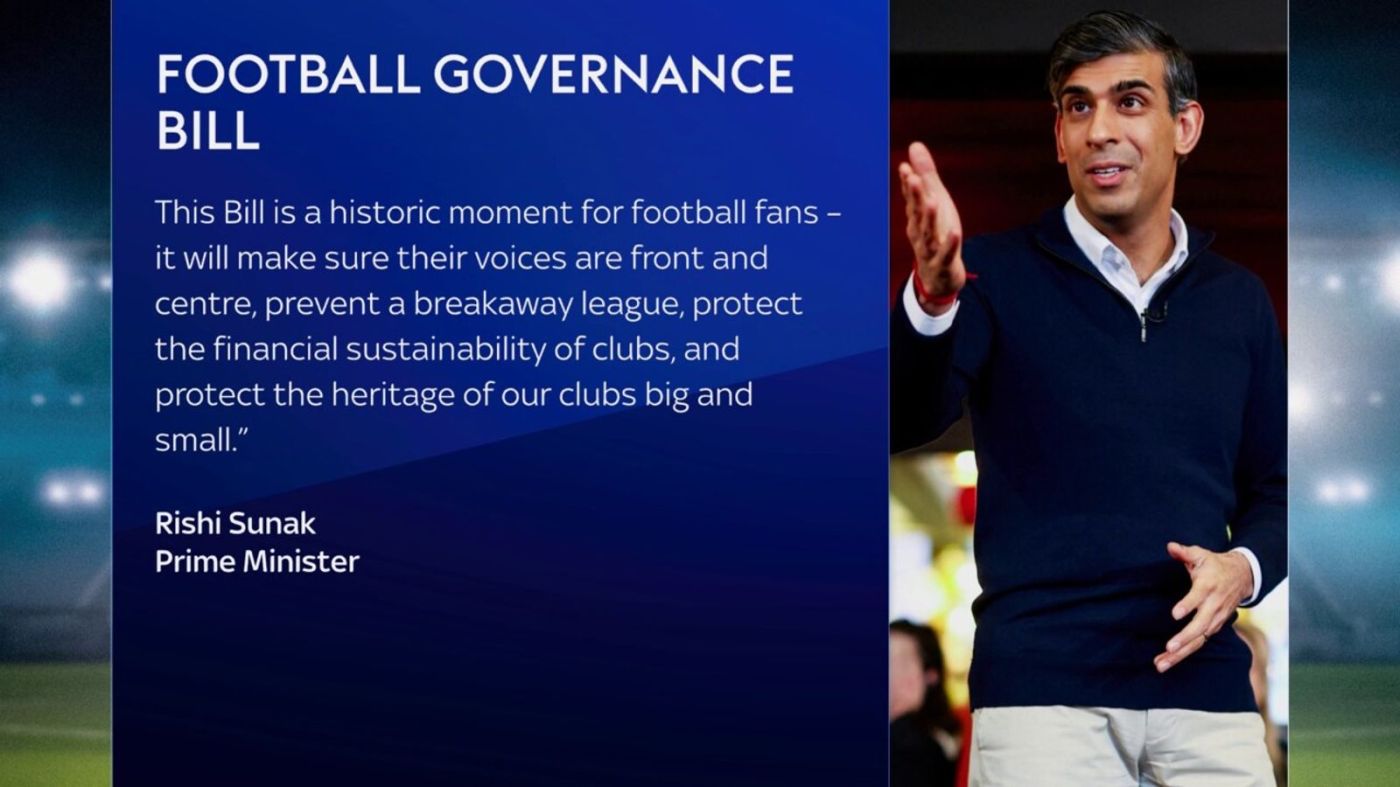
The prospect of introducing a new football governance bill in the UK parliament has sparked widespread discussions and reactions within the football community. At the heart of this bill is the appointment of an independent football regulator that will exert influence across the top five leagues in England. This move comes in the aftermath of a fan-led review in 2022, prompting the government to take concrete steps to address the challenges faced by clubs in the country.
UK Prime Minister Rishi Sunak expressed the significance of this regulatory development, emphasizing its transformative impact on the sport. Sunak stated, “It is a historic moment for football fans. It will make sure their voices are front and center. Football has long been one of our greatest sources of national pride. But for too long some clubs have been abused by unscrupulous owners who get away with financial mismanagement, which at worst can lead to complete collapse – as we saw in the upsetting cases of Bury and Macclesfield Town.”
Moreover, the chairperson of the English Football League, Rick Parry, has highlighted the potential of the regulator in addressing the financial fragility that exists within the sport. Parry remarked, “If delivered on the right terms, this landmark legislation can help fix the game’s broken financial model by offering the independent input ultimately needed to help ensure that all clubs can survive and thrive in a fair and competitive environment.”
On the other hand, the Premier League has conveyed cautious sentiments regarding the implications of such legislation. They emphasized the need for a balanced approach that preserves the competitiveness and appeal of English football. Notably, they remain committed to supporting the broader footballing ecosystem through substantial funding distribution.
The proposed regulatory framework also aims to implement a stringent licensing system for clubs, potentially requiring them to engage with fans on critical off-the-pitch decisions. This move is aligned with the broader objective of safeguarding the interests of clubs and ensuring their long-term viability.
In addition to the immediate impacts on domestic football, the establishment of a regulator is poised to prevent Premier League clubs from participating in breakaway leagues such as the European Super League. This stance comes in the wake of a favorable judgement obtained by the Super League from the European Court of Justice, signaling a pivotal regulatory intervention to preserve the integrity of the English football landscape.
 World of sports
Leave a comment