
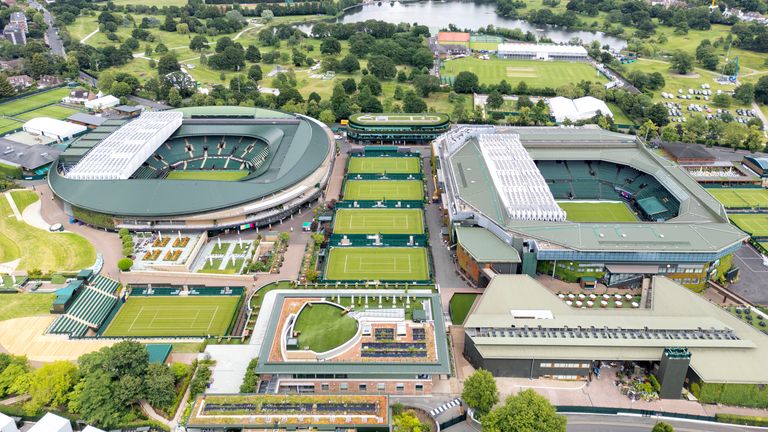
Wimbledon’s ambitious plans for expansion have stirred significant debate among locals and stakeholders alike. The project, approved by London’s deputy mayor for planning, Jules Pipe, will see the All England Club make a substantial move into Wimbledon Park, a decision that has not come without controversy.
Set to triple the size of the current site, the plans include the construction of 39 new courts, featuring a prominent 8,000-seat show court that aims to enhance the event’s standing in the international tennis community. This expansion comes as the All England Club seeks to develop its facilities for the tournament, which has long been a hallmark of the sport. The recent approval from the Greater London Authority follows a recommendation from GLA planning officers, citing various benefits the project is expected to bring not only to the tournament but also to the surrounding community.
The All England Club’s acquisition of the neighbouring Wimbledon Park Golf Club in 2018 for an estimated £65 million positions it strategically for this expansion. The planned development encompasses not just the new courts but also aims to incorporate a new 23-acre public park, designed to offer recreational space to the community. Moreover, designated north and south player hubs are part of the project, intended to streamline operations and enhance the overall experience of players and visitors alike.
With the main grounds projected to grow almost three times their current footprint, Wimbledon anticipates a significant operational shift, allowing it to host its qualifying tournaments within the vicinity of SW19—where the main event occurs—rather than relying on the existing facility in Roehampton, which is a few miles away. This logistical improvement is expected to streamline the tournament’s operations and heighten the experience for both players and fans.
Completion of the project is targeted for 2030, and if all goes as planned, the championship’s capacity will escalate from 42,000 to a staggering 50,000 spectators. Beyond the immediate benefits to the tournament itself, the project aims to provide various advantages linked to heritage preservation, open space, recreation opportunities, and community engagement initiatives.
However, the £200 million project faces opposition from local advocates who are concerned about its environmental impact. Wandsworth Council has shown signs of resistance, as it has indicated its intentions to refuse aspects of the project that infringe on its land. Compounding the matter, local groups, residents, and politicians have voiced their displeasure, arguing that the proposed development is excessive for the area and could lead to significant ecological disruption. Reports suggest that around 2,000 trees are at risk of being felled across 75 acres of Metropolitan Open Land, territory that is meant for conservation and recreation.
Despite these objections, the All England Club asserts that the proposed expansion offers considerable social, economic, and environmental benefits, claiming it will ultimately enhance the quality of life for local residents. Liberal Democrat MP for Wimbledon, Paul Kohler, has strongly expressed his opposition to the plans. In a statement on X, he emphasized that if Pipe endorses the transformation of Wimbledon Park into what he describes as a “concrete industrial tennis complex,” it would represent a grave disregard for the local population’s sentiments and well-being.
As the project unfolds, there remains an important layer of oversight. The Deputy Prime Minister, Angela Rayner, holds the authority to either endorse or reject the application within a week, ensuring that the decision is not solely in the hands of local authorities. This ongoing dialogue reflects the complexity of urban development and the delicate balance between enhancing public amenities and preserving community integrity.
 World of sports
Leave a comment