
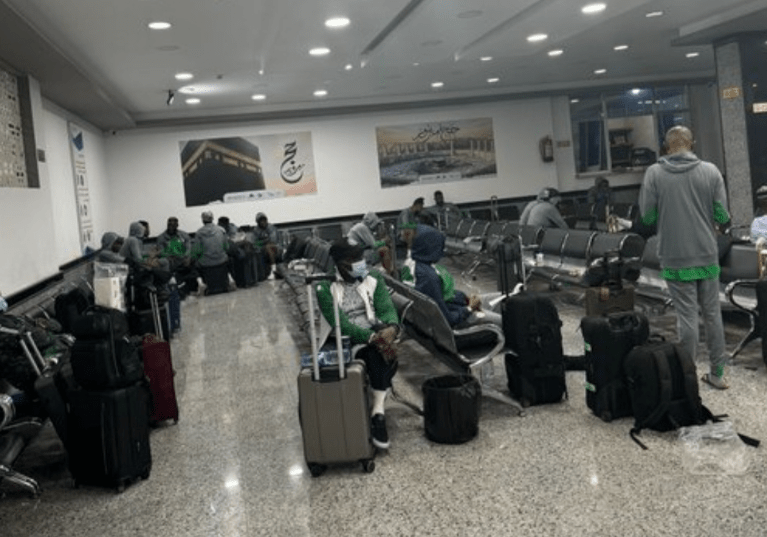
Nigerian national football team, the Super Eagles, has made the decision to boycott their upcoming Africa Cup of Nations qualifier match in Libya after facing an alarming situation that left them stranded overnight at an airport. This incident has emerged as the players were scheduled to arrive in Benghazi on Sunday, but due to unforeseen circumstances, their flight was diverted to Al Abraq, a location significantly further away from their intended destination, approximately 230 kilometers (143 miles) from Benghazi.
According to a Nigeria Football Federation (NFF) official who spoke to BBC Sport Africa, the players felt “completely abandoned” as they were also reportedly locked inside the airport building after attempting to make alternative travel arrangements. Team captain William Troost-Ekong conveyed the team’s distress and emphasized that they resolved not to participate in the match, appealing for intervention from the Nigerian government to assist in their safe return.
In the wake of these distressing developments, Nigeria’s minister of sports development, Senator John Owan Enoh, expressed that the primary focus was ensuring the team’s safe return home. Meanwhile, the Libyan Football Federation (LFF) has publicly conveyed their concerns regarding the situation but has denied any allegations of foul play or intentional misconduct regarding the diversion of the Super Eagles’ flight. They clarified their commitment to respect their Nigerian counterparts and reassured that the flight diversion was not a deliberate act.
The Confederation of African Football (Caf) has responded by establishing communication with representatives from both Libya and Nigeria following reports of the Super Eagles being “stranded in disturbing conditions.” Caf further announced that the matter would be escalated to its disciplinary board for a thorough investigation, promising that appropriate actions would be taken if any of their statutes or regulations had been violated.
Troost-Ekong provided updates on social media, stating that the squad anticipated departing Libya around Monday afternoon, indicating that arrangements were underway to refuel their plane. In line with their distressing experience, Senator Enoh directed the NFF to formally lodge a complaint with Caf concerning the squad’s treatment in Libya. NFF media manager Promise Efoghe disclosed that no clear rationale for the decision to divert their flight had been communicated to them, as no officials from the Libyan Football Association had provided clarifications or assistance during this crisis.
The players expressed their outrage through social media, highlighting that they were left without basic necessities, such as food, Wi-Fi, or even a place to rest, with the Super Eagles’ social media account publishing images of players slumped over airport seating in their time of distress. Troost-Ekong has been vocal about the team’s collective decision to withdraw from the match, denouncing the treatment they experienced as “disgraceful behavior.”
The LFF, while acknowledging the report, attributed such disruptions to routine air traffic protocols and logistical challenges, expressing hope for a resolution grounded in goodwill and understanding. This unfolding situation has been particularly contentious, especially after Libya raised complaints about their experience in Nigeria during the reverse fixture, where they asserted that they faced logistical difficulties and unfavorable treatment during their travels.
Troost-Ekong further described the treatment of the Nigerian squad upon their arrival in North Africa as “mind games,” a claim that the LFF has firmly denied, maintaining that there has been no deliberate orchestration of the events leading to this crisis. They underscored that providing a safe footballing environment aligns with their values and principles, dismissing any insinuations of foul play.
The road journey from Al Abraq to Benghazi was anticipated to exceed three and a half hours. Still, Troost-Ekong emphasized the team’s reluctance to undertake such travel, citing severe security concerns in Libya, where the country is divided between two competing administrations, one in the eastern region and another in the west at the capital, Tripoli. This political instability has added to the team’s unease regarding potential travel in the region.
Furthermore, Efoghe disclosed that the Nigerian embassy in Tripoli was essentially “handicapped” due to the prevailing political climate and was unable to provide assistance in this precarious situation. Troost-Ekong made a firm statement regarding their unwillingness to travel by road in Libya, even with assurances of security, proclaiming that it was not safe under the current circumstances. The players echoed their apprehensions regarding the quality of accommodations and provisions that might have been offered to them if they proceeded with the match.
In the context of the tournament’s standings, Nigeria had previously secured a 1-0 victory over Libya in their recent encounter in Uyo, leading Group D with seven points, while Libya sits at the bottom of the table with just one point, facing imminent elimination from the competition.
 World of sports
Leave a comment