
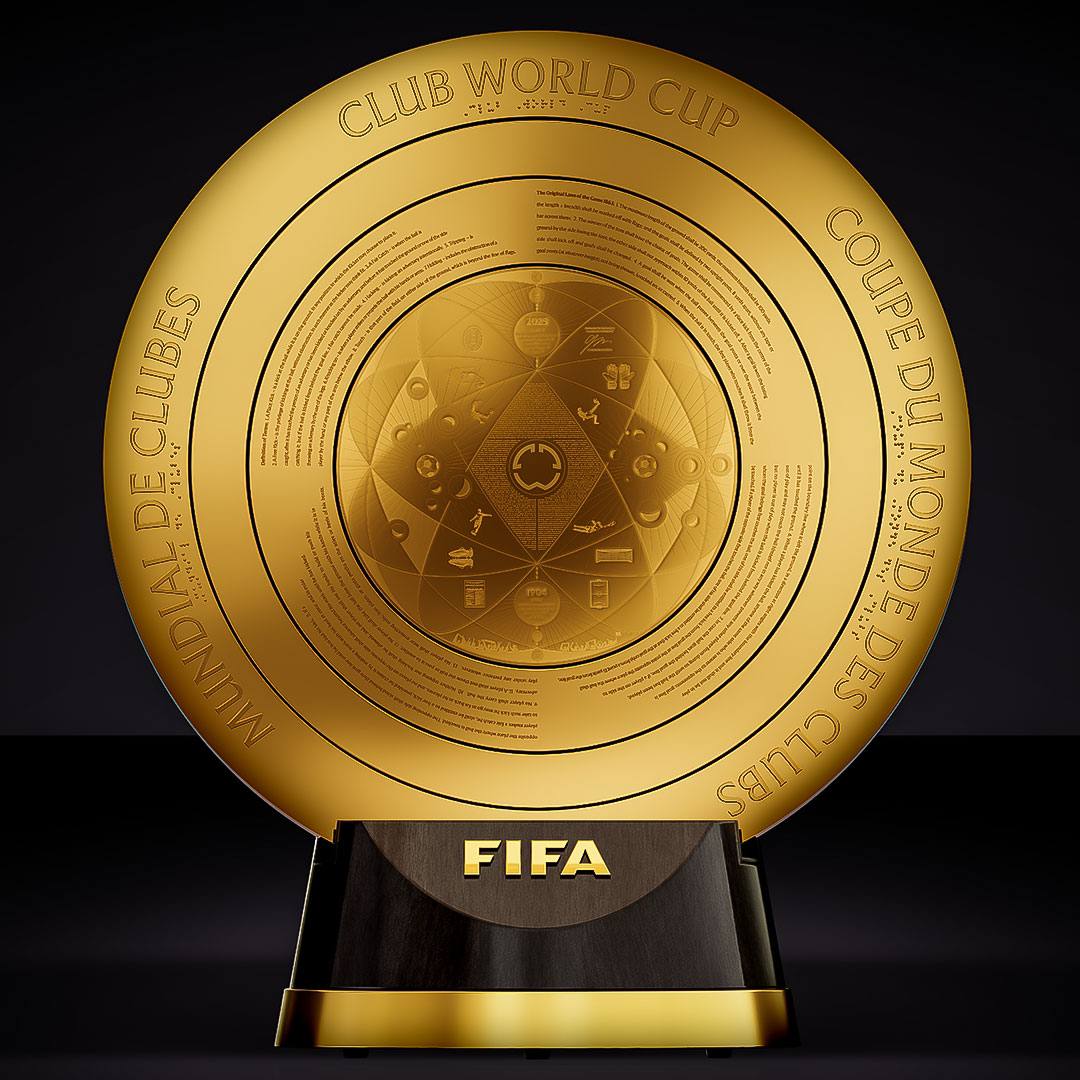
FIFA introduced a new golden trophy on Thursday, crafted in partnership with Tiffany & Co., for the controversial and newly enlarged Club World Cup. This announcement has sparked diverse reactions, especially given the expansion of the tournament, which has generated considerable discussion among players, leagues, and regulatory bodies.
The trophy, featuring a luxurious 24-carat gold-plated finish, will be presented to the winners of this highly anticipated event, scheduled to occur in the United States next year. This trophy symbolizes not only a prestigious accomplishment but also a pivotal moment in club football history, as it provides a platform for teams worldwide to compete at an elevated level.
Despite strong opposition from players’ unions and leagues concerned about the increasing mental and physical strain on athletes, FIFA seems to have a well-defined vision for the tournament’s future. The trophy includes space to engrave the logos of winning clubs for the next 96 years, reflecting FIFA’s long-term investment in the competition and its participants.
FIFA president Gianni Infantino expressed this vision in a statement: “Innovative, inclusive, groundbreaking, and truly global, the new 32-team FIFA Club World Cup deserves a trophy that represents all of this.” He stressed that the trophy is both prestigious and timeless—serving as a beacon of the future while drawing inspiration from the rich history of football.
Released images from FIFA showcase the trophy’s distinctive design, which consists of several discs that can shift from a shield shape to a “multifaceted and orbital structure.” This innovative design is visually appealing and functional, incorporating engravings in 13 different languages and Braille, thereby ensuring its universal appreciation. The trophy rests on a sleek black base, prominently featuring FIFA’s emblem rendered in gold lettering.
FIFA has emphasized that this trophy is more than a mere accolade; it is influenced by notable elements in exploration and science, such as “NASA’s Voyager deep-space missions in the 1970s, the periodic table, maps of pioneering journeys, and astronomy.” This connection to exploration speaks to the tournament’s goal of advancing into uncharted territories in club football.
Moreover, each tournament winner will receive a replica of the trophy, making it a treasured symbol of success for clubs participating in this esteemed event. Tiffany & Co. CEO Anthony Ledru remarked, “The FIFA Club World Cup Trophy is the next chapter in our long history of creating the world’s most revered symbols of athletic achievement,” highlighting the synergy between FIFA and Tiffany & Co. in producing a trophy that epitomizes excellence.
The expanded Club World Cup is set to occur in June and July next year, growing from seven teams to 32. While this enlargement has largely been welcomed by leading European clubs, it has raised alarms among players and organizations like FIFPRO. The world players’ union has expressed concerns regarding the heightened demands on players, and some athletes, including this year’s Ballon d’Or winner Rodri, have suggested that they are on the verge of considering strike action due to the rising number of matches.
As these debates continue, FIFPRO’s European chapter has allied with domestic leagues to challenge FIFA’s moves regarding new and larger men’s competitions, working to advocate for player health and safety. Meanwhile, FIFA aims to establish the new format of the Club World Cup as one of the leading club competitions worldwide, alongside prestigious tournaments such as the Premier League and Champions League. The journey ahead is filled with both opportunities and hurdles, as the football community prepares for this important transition in club competition.
 World of sports
Leave a comment