
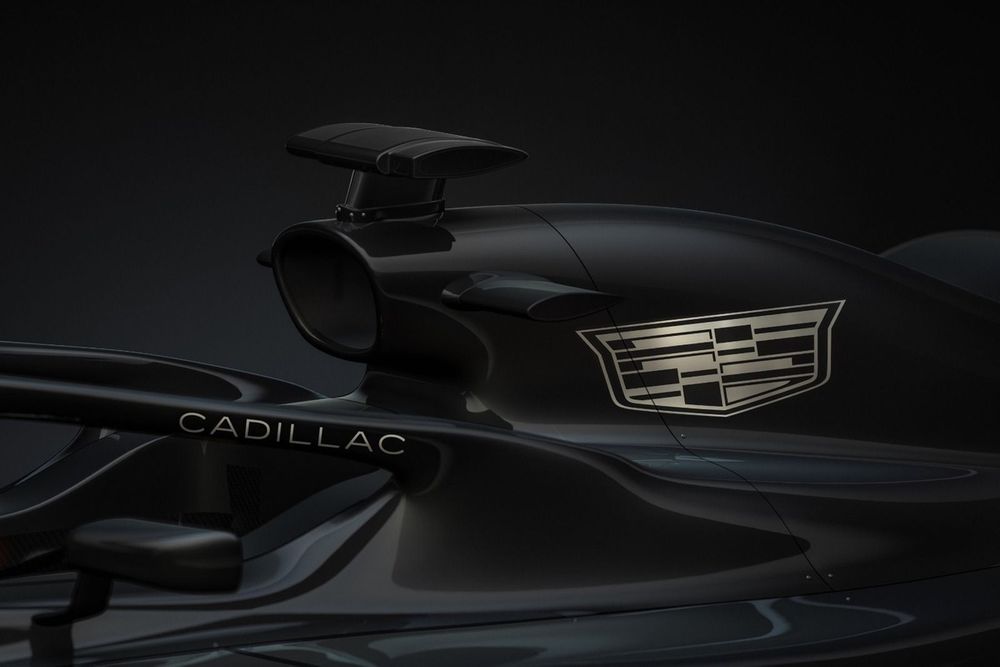
General Motors, through its Cadillac brand, is set to join the Formula 1 grid as a new 11th team starting in the 2026 season, following an ‘agreement in principle’ with the organization. This development represents a significant change in the Formula 1 landscape, which has maintained a stable count of 10 teams since 2017.
After American team Andretti’s previous bid, supported by GM-owned Cadillac, was turned down by F1 for the upcoming seasons, a revised proposition featuring General Motors as a key player appears to have shifted the situation dramatically. Encouraging discussions have progressed rapidly, leading to what was once deemed an improbable outcome.
In a statement released by both F1 and General Motors on Monday evening, it was confirmed that “a Cadillac team” would be joining the grid in 2026, with plans to develop and operate its own engine “by the end of the decade.” This commitment underscores General Motors’ dedication and investment in the sport, showcasing their intent to make a lasting impact.
FIA president Mohammed Ben Sulayem, a long-time advocate for adding an 11th team, expressed that the governing body is “fully supportive” of General Motors’ entry into F1 in 2026. His endorsement suggests renewed enthusiasm from the FIA for expanding the championship and diversifying the teams involved.
Although F1 had previously rejected Andretti’s initial application at the start of the year, they kept the possibility open for 2028, contingent on increased commitment from the automotive manufacturers. F1 noted that it has “maintained a dialogue with General Motors and its partners at TWG Global regarding the feasibility of an entry” and is now proceeding with the application process for joining the grid. This ongoing conversation highlights the governing body’s proactive efforts to welcome new teams and continue the sport’s growth.
In recent years, F1 has experienced substantial expansion in the U.S. market, with three races occurring each season in the country. This surge in interest has become a significant factor in attracting major automotive manufacturers, making General Motors’ Cadillac a vital participant in the American automotive landscape and encouraging a closer connection between traditional motorsports and new market opportunities.
Instead of Andretti Global, which initially proposed the entry, the statement referred to TWG Global as GM’s partner in F1. This company now oversees American motorsports operations under the new leadership of CEO Dan Towriss, following Michael Andretti’s decision to step back from direct management. The shifting leadership dynamic indicates a positive trajectory for partnerships, focusing on cooperation rather than confrontation.
It has been noted that a significant factor in the swift advancement of talks was Michael Andretti’s departure, which seemed to strain relationships with crucial F1 stakeholders due to his aggressive tactics in trying to secure a spot on the grid. This change may lead to a more constructive approach in future negotiations, emphasizing collaboration.
Similar to Audi, who plans to join by acquiring the Sauber team in 2026, General Motors’ intent to produce its own engine for the team is particularly appealing. This initiative is expected to enhance competitiveness within the sport, as developing proprietary engines could drive innovation and performance enhancements across all teams.
Nevertheless, due to time constraints, General Motors will have the option to use an engine supplied by another manufacturer for the 2026 and 2027 seasons, with the goal of unveiling their own engine by 2028. This transitional phase illustrates the complexities involved in entering a fiercely competitive environment like Formula 1, where timing and strategic foresight are critical for achieving success.
 World of sports
Leave a comment