
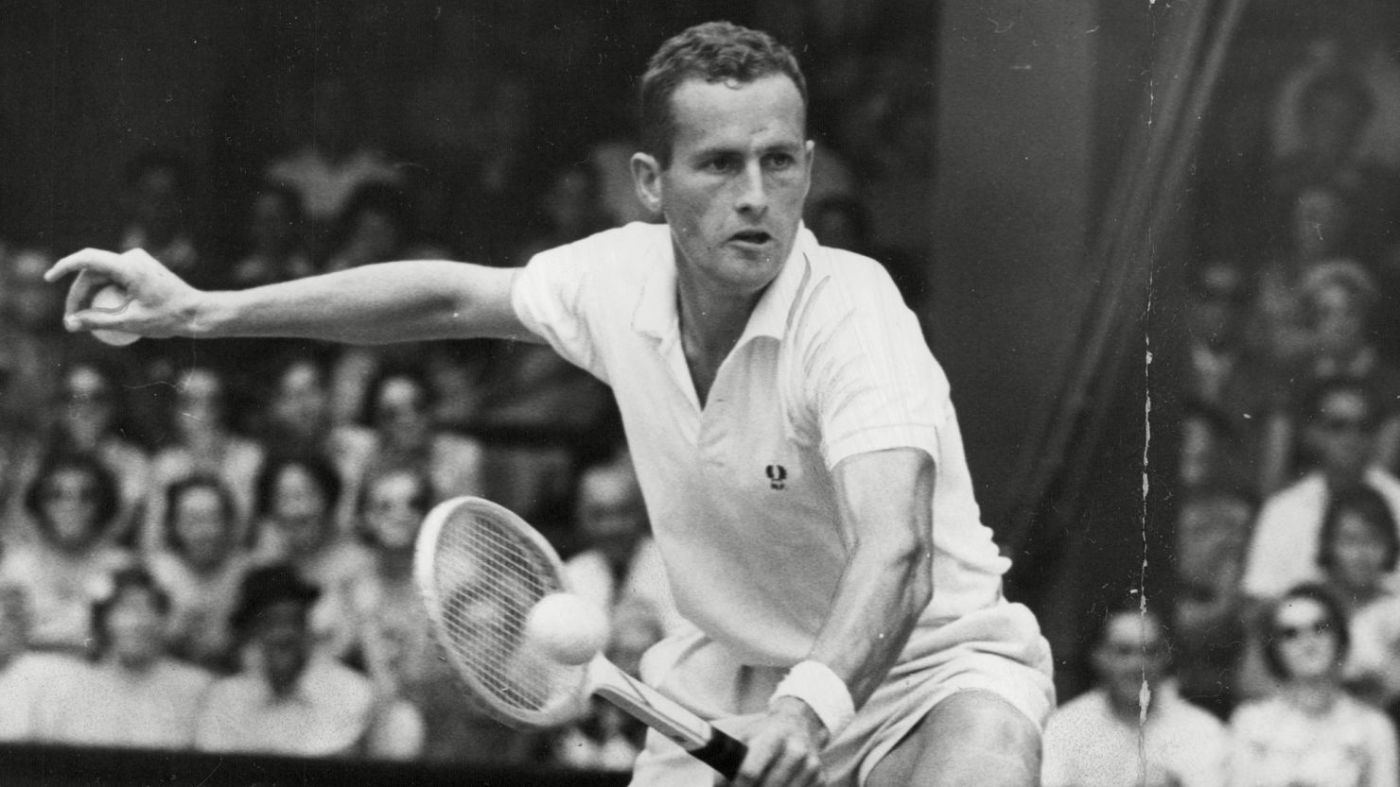
Former Wimbledon champion Neale Fraser has sadly passed away at the age of 91, leaving behind a remarkable legacy in the world of tennis.
The Australian tennis icon claimed the Wimbledon singles title in 1960, a crowning achievement that solidified his place in the history of the sport. Additionally, Fraser distinguished himself by winning the US National Championships in both 1959 and 1960 during a time when professional tennis was not the norm, highlighting his talents in an era defined by amateurism. His prowess on the court extended beyond singles play; he secured an impressive 11 men’s doubles titles and five mixed doubles titles at Grand Slam events, showcasing his all-around skill and versatility. His excellence was further recognized when he ascended to the men’s singles world number one ranking in 1959.
Fraser’s contributions to tennis were not limited to his playing career. He was also a significant figure in the Davis Cup, representing Australia as a player on four victorious teams. His leadership skills were evident when he took on the role of captain for Australia’s Davis Cup team for an impressive 24 years, during which he led the team to four additional titles, reinforcing his commitment to the sport and mentoring future generations.
In a heartfelt tribute, Tennis Australia remarked, “A true legend of Australian tennis, who will be missed by so many around the world,” reflecting the profound impact Fraser had on the tennis community both nationally and internationally.
Fraser’s rivalry with compatriot Rod Laver is particularly noteworthy; he triumphed over Laver to secure both the Wimbledon and US titles in 1960. Laver paid homage to his late friend, expressing his sorrow, “I am deeply saddened to hear of the passing of my dear mate and fellow lefty, Neale Fraser. He was a true gem in a golden era of Australian tennis legends – an incredible world number one, a Grand Slam champion, and a Davis Cup icon.” Laver also acknowledged the role Fraser played in his own development as a player, stating, “Neale bested me in two major finals, pushing me to become a better player.” He extended his condolences to Fraser’s wife, Thea, and his extended family, emphasizing the deep personal connection they shared.
Former Wimbledon champion Pat Cash, who was part of the Australia team that won the Davis Cup in 1983 and 1986 under Fraser’s guidance, also reflected on Fraser’s impact. Cash described Fraser as a paternal figure, stating, “He just knew how to make you feel important and play your best.” This sentiment resonates with many who had the privilege of knowing Fraser or being influenced by his remarkable journey in the world of tennis.
Fraser’s passing marks the end of an era, but his legacy will undoubtedly live on through the lives he touched and the generations of players he inspired. He will be remembered not just for his outstanding achievements but also for his contributions to elevating Australian tennis on the global stage.
 World of sports
Leave a comment