
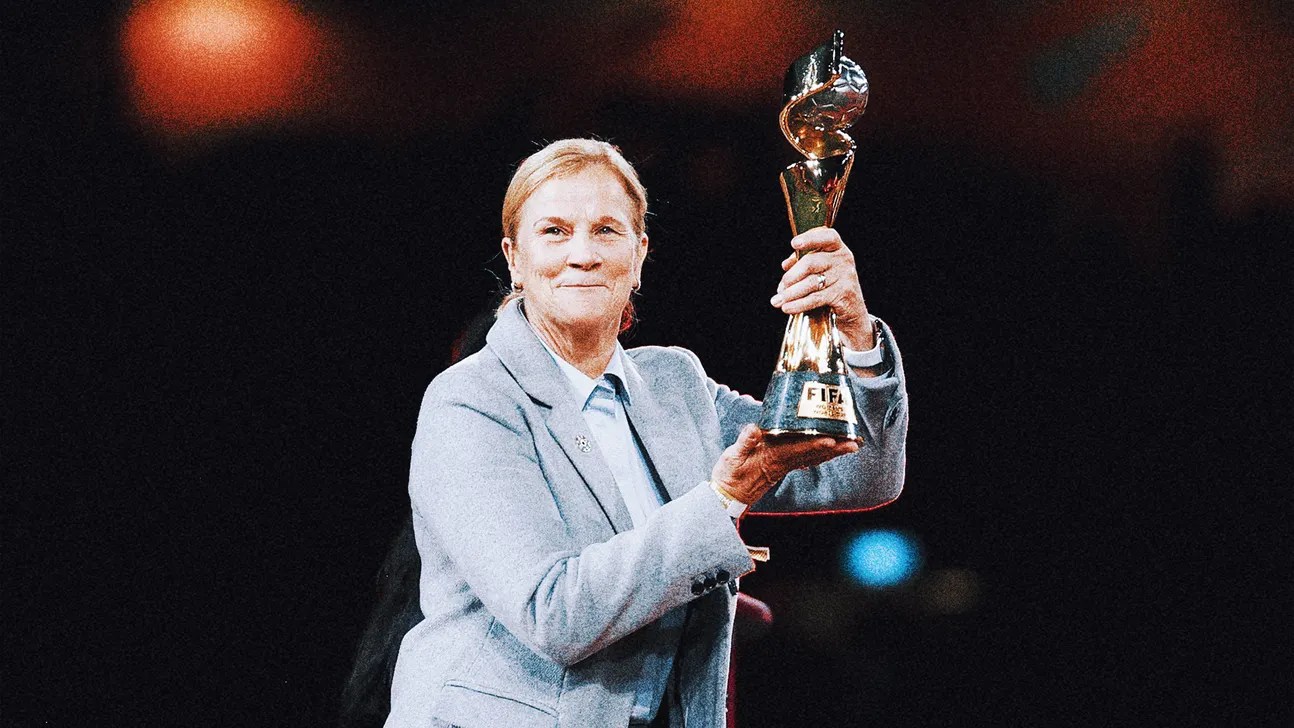
Jill Ellis, former head coach of the US Women’s National Team, is now the Chief Football Officer at FIFA.
Ellis will work alongside Arsène Wenger, who is FIFA’s Chief of Global Football Development, in a newly created position. The role will “encompass key technical areas connected to the development of the game across the world,” which is particularly significant as FIFA seeks to bolster its focus on growing football as a global sport. The inclusion of a female figure like Ellis in such a high-profile position underscores the ongoing efforts within sporting organizations to diversify leadership roles and promote women’s contributions to the sport.
Ellis will leave her role as President of the San Diego Wave to assume this new role. The 58-year-old joined the NWSL expansion side in 2021, ahead of their inaugural season, and has played a crucial part in the team’s development during her time there. Her experience as a coach and her success with the U.S. Women’s National Team, where she led the team to two World Cup victories, positions her well to tackle the challenges ahead at FIFA.
FIFA said in a statement: “In joining FIFA, Jill Ellis will serve as part of the world governing body’s executive management team, driving the development and implementation of FIFA’s global football strategy.” This clearly indicates that Ellis’s responsibilities will significantly influence how FIFA implements its initiatives globally, particularly in promoting women’s football and ensuring equitable development opportunities for all.
The news comes alongside mixed reactions from the sporting community, with many citing the consistent controversy surrounding Ellis. Earlier this year, allegations of creating a toxic working environment hit the two-time Women’s World Cup winner. Former San Diego Wave employee Brittany Alvarado released a statement on social media, alleging ‘life-altering’ abusive treatment under Ellis that had a ‘devastating’ effect on her and her colleagues’ mental health. These serious accusations have raised eyebrows and sparked discussions about workplace culture within sports organizations.
The Wave stated the accusations were ‘categorically false.’ Importantly, both Ellis and the club were later found not to have violated any law or NWSL policy after an investigation. Following the investigation results, Ellis filed a defamation lawsuit against Alvarado. The lawsuit alleges that false claims were made and the statements were supported by a fake email, pointing to the complexities and challenges that come with public figures navigating allegations of misconduct.
Following the announcement of her new role, Ellis said: “FIFA has a unique ability, through football, to unite communities and to drive the game’s development worldwide. Having experienced football, from grassroots programmes up to senior national-team level, I’ve seen first-hand its transformative power.” This statement reflects her commitment to leveraging her experience to inspire and uplift communities through football, emphasizing the sport’s potential as a tool for social change.
For many, the news leaves a bad taste in their mouths. Critics point to FIFA’s consistent inadequacy towards the women’s game and question its approach to those they hire. Concerns regarding how FIFA addresses issues related to the treatment of women in the sport and the ongoing controversies surrounding key figures like Ellis create a complex landscape that demands careful attention and decisive action moving forward. There is a lingering sentiment within the community that actions speak louder than words, and stakeholders are eager to see tangible improvements in both the governance and support of women’s football globally.
 World of sports
Leave a comment