
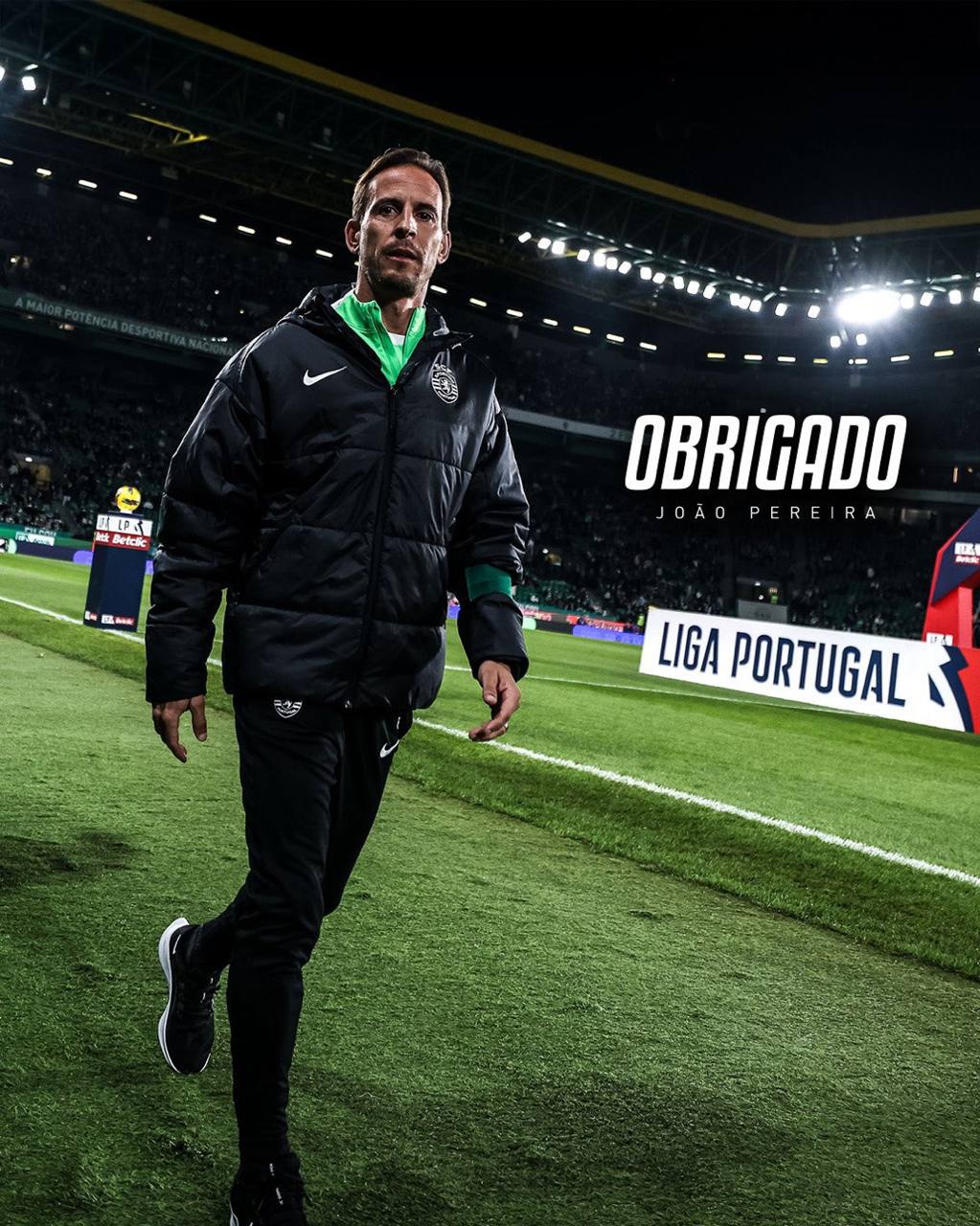
Sporting Lisbon sacked manager Joao Pereira on Christmas Day, just a month after his appointment, highlighting the pressures of professional football where performance is prioritized over sentiment.
Pereira, 40, is a former full back who enjoyed three separate spells playing for the club, showcasing a deep-rooted connection with Sporting Lisbon. His transition from player to coach seemed promising; after retiring, Pereira moved into coaching with the Portuguese outfit, spending two years in charge of their Under 23 team. This experience was intended to prepare him for the demands of first-team football, and he was promoted to lead Sporting’s reserve side at the start of this season.
However, the coaching spells can be very different from playing, as Pereira quickly discovered. Under his leadership, the team managed to win just three of his eight games in charge after assuming control of the first team on November 11. A particularly heavy blow came in the form of a home defeat, where his team suffered a damaging 5-1 loss to Arsenal in the Champions League. This result not only affected team morale but also raised questions about Pereira’s tactical decisions and ability to manage a high-stakes environment.
In fact, Pereira recorded an unfortunate piece of history, becoming the first Sporting boss ever to lose four of his first five games in management. Despite these struggles, there were faint glimmers of hope as his side displayed signs of turning things around, achieving a three-game unbeaten run leading up to Christmas. These performances, however, were not enough to alter the club’s trajectory or the perception of their new manager.
On Christmas Day, the club announced news of Pereira’s dismissal with a brief statement at 11.54 pm, indicating the urgency felt by management regarding the team’s poor showing in both domestic and European competitions. Pereira’s appointment followed Amorim’s departure last month, who had left the club to take over at Manchester United after an impressive tenure where he secured Sporting’s first league title in over two decades, and then repeating that success the following season. His departure had left a significant void and heightened expectations for his successor.
At the time of Amorim’s departure, Sporting was positioned at the top of the Portuguese league and second in the Champions League Group Stage. After taking over, Pereira faced the daunting task of maintaining these standards but, unfortunately, during his brief tenure, the team slipped to second place domestically, only one point adrift of fierce rivals Benfica. Furthermore, they found themselves in 17th place in Europe’s elite club competition, following disappointing performances, including a loss to Club Brugge. This predicament left Sporting in a precarious situation, battling to qualify for the knockout stages after Amorim led them to three victories from their first four games, including a remarkable 4-1 triumph against Manchester City.
Leading up to Christmas, reports trickled in from Portuguese media that Pereira was under significant pressure, with speculation mounting about his future. It was believed that club officials were planning to convene a meeting with him after the Christmas break to discuss the direction of the team going forward. Meanwhile, Amorim began his new journey at Manchester United, where he has faced a mixed starting period, adapting to the demands of the Premier League and managing expectations at one of the world’s most renowned football clubs.
This turmoil within Sporting Lisbon reflects larger themes in football management, where success can often be fleeting and the stakes are incredibly high, emphasizing the constant pressure managers face to perform and deliver results quickly.
 World of sports
Leave a comment