
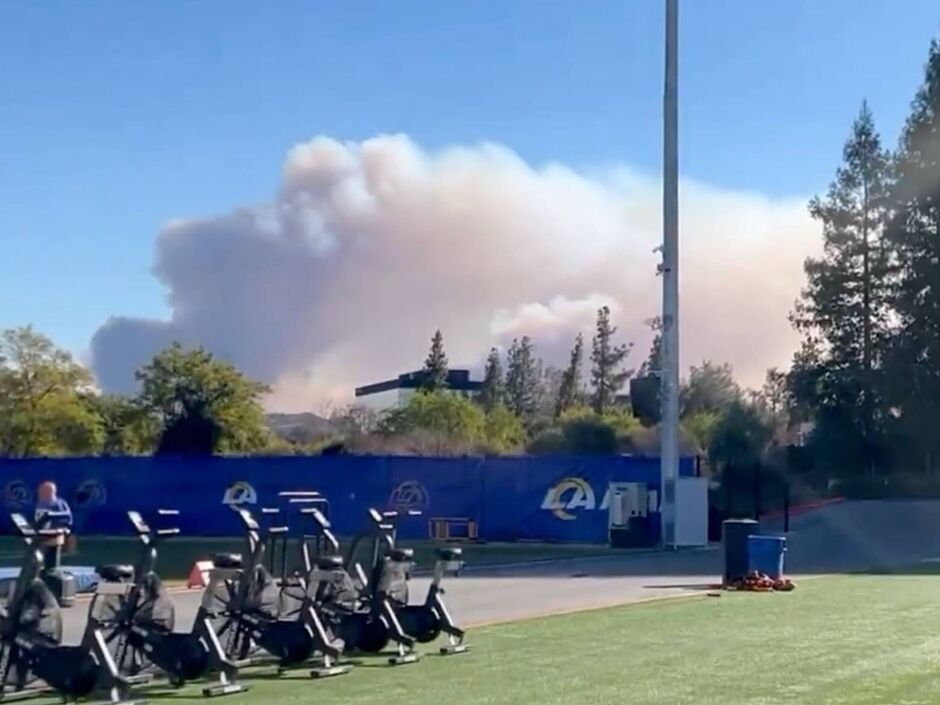
The NFL has officially relocated the Rams’ wild-card playoff matchup against the Minnesota Vikings, shifting the game a significant distance of 350 miles to Arizona due to the relentless wildfires ravaging the Los Angeles region.
This decision to move the game was made amidst ongoing devastation from wildfires that have drastically affected Southern California. In its announcement, the league emphasized that the move was taken “in the interest of public safety,” a clear indication of their commitment to safeguarding not only the players and team staff but also the fans who would potentially attend the game.
Despite the fact that the wildfires were not directly threatening SoFi Stadium in Inglewood, where the matchup was supposed to take place, the NFL acted out of an abundance of caution. Concerns about deteriorating air quality and the strain on the local community, as well as the potential heavy demands placed on law enforcement and emergency services, drove the decision to relocate the event.
The Los Angeles Rams did not hold practice on Wednesday, and even though they returned to prepare for their upcoming game on Thursday, they decided to leave early. Their post-practice media availability was canceled as reports surfaced of a new fire outbreak in the West Hills area of Los Angeles. This situation underscores the serious impact the wildfires have on the team’s preparations, as they navigate the uncertainty surrounding their environment.
As the Rams and their fellow city rivals, the Los Angeles Chargers, gear up for crucial playoff games this coming weekend, Rams head coach Sean McVay put things into perspective by stressing that the fires in California represent challenges that extend far beyond the realm of football. He articulated the team’s primary concern: the safety and well-being of their players and staff during this challenging and dangerous time, while also attempting to maintain focus on their game preparations.
Quarterback Matthew Stafford shared his personal experience, conveying hope that the upcoming game might offer a much-needed respite for the community members who have faced significant trials over recent days. “We’ve lost power in our area for a couple of days,” he admitted, reflecting the turmoil that many are experiencing. “In our case, we’ve been fortunate; losing power is the least of our worries. However, it’s painful to witness the destruction on the news and in person.”
Stafford continued, revealing the emotional toll that the wildfires have taken. “Driving around and seeing all of this devastation is just incredibly disheartening. It’s evident that a lot of individuals are working tirelessly to control the fires and to restore normalcy as swiftly as they can.”
This weekend, the Chargers, who have secured the fifth seed in the AFC playoffs, will face off against the fourth-seeded Texans in Houston. Both Los Angeles teams are focusing on their games while being mindful of the broader crisis impacting the community.
Historically, this is not the first occurrence in which a high-stakes NFL game has had to be relocated due to wildfires in Southern California. A notable example came in 2003 when the Chargers, then located in San Diego, had to shift a Monday Night Football game against the Miami Dolphins to the home stadium of the Arizona Cardinals. Such instances serve as a reminder of the ongoing environmental challenges that the region faces, as well as the NFL’s commitment to prioritizing the safety of its players and fans amid unforeseen circumstances. Through these challenges, the spirit of sportsmanship and community resilience continues to shine, as teams and players strive to support those affected while seeking to bring some joy to a beleaguered populace.
 World of sports
Leave a comment