
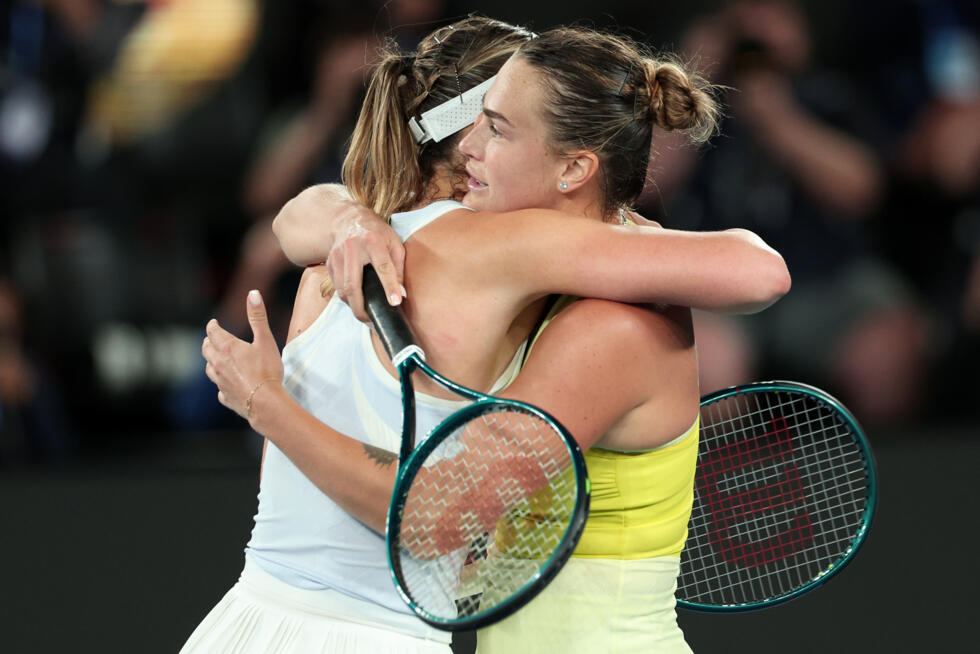
Aryna Sabalenka is on the brink of making history as she aims to become the first woman in 26 years to win three consecutive Australian Open titles. She reached the final in Melbourne after delivering a dominant performance against Paula Badosa, ultimately clinching the match with a score of 6-4, 6-2.
The Belarusian top seed, who has previously referred to Badosa as her “soulmate,” initially faced challenges when she fell behind early in the match. Badosa, competing in her first major semi-final, took an early lead of 2-0, putting pressure on Sabalenka. However, the Spanish 11th seed quickly found herself on the back foot, winning only four of the next 16 games as Sabalenka began to find her rhythm. This shift in momentum highlighted Sabalenka’s adaptability and competitive spirit, as she swiftly turned the tables on her opponent.
In the final, Sabalenka will go up against either Iga Swiatek or Madison Keys, with the opportunity not just to defend her title, but to match the remarkable achievement of Martina Hingis, who won three consecutive Australian Open titles from 1997 to 1999. Reflecting on this potential milestone, Sabalenka expressed her pride and excitement, saying, “Just thinking about it gives me goosebumps. I am so proud of myself and my team for reaching this point.”
She added that being in such a significant position is a profound honor: “It’s a privilege, and if I get the chance to write my name in the history books, it would mean the world to me.” This clarity of purpose is evident in her journey; early on, her aspirations were focused on merely winning a single Grand Slam. “Now that I have this opportunity, it feels surreal and incredible,” she emphasized, showing how much her perspective and goals have evolved.
This match marked the 20th consecutive victory for Sabalenka at the Australian Open, solidifying her reputation as a formidable player on this specific stage. As the tournament progresses, she is set to maintain her world number one ranking if Swiatek does not advance past the semi-finals. Conversely, if Swiatek progresses, then the winner of the championship match will claim the top spot, raising the stakes for the final showdown.
Should Swiatek make it to the final alongside Sabalenka, it would create a highly anticipated matchup, as this scenario would mark the first time since 2018 that the Australian Open women’s final features the top two seeded players. Badosa, who caused an upset by defeating American third seed Coco Gauff in the quarter-finals, started the match with confidence. Her early break of serve caught Sabalenka off guard, demonstrating her powerful game. However, Sabalenka’s experience soon took over; she managed to recover from her initial nerves and clinched four games in a row, showcasing why she is a two-time defending champion.
Throughout the match, both players maintained an intense focus and displayed minimal interaction, underscoring the highly competitive nature of their encounter. Yet, there were moments that revealed the bond they share. After Badosa struggled at the start of the second set, both players exchanged smiles and gestures of encouragement, highlighting the respect they have for one another despite the intense rivalry on the court.
As the match progressed, Badosa began to falter, and she struggled with her service game, particularly when she conceded a break with consecutive double faults. This misstep allowed Sabalenka to seize control of the second set decisively. With another double fault from Badosa granting Sabalenka a second break opportunity, Sabalenka capitalized on her momentum and sealed her victory with one of her remarkable 32 winners, completing the match in just one hour and 26 minutes.
After the contest, Sabalenka was seen offering consolation to Badosa in the players’ area, showcasing her sportsmanship. “It was an extremely tough match against a friend, and I’m so happy to see her performing at such a high level,” Sabalenka commented, reflecting on the emotional complexity of competing against someone she regards highly. In their interactions after the match, Sabalenka noted their mutual decision to separate their friendship from their competitive drive: “After battling several times, we’ve talked and agreed to set aside our personal connection when we play. Today, we both wanted it so badly.” This highlights the intricate balance of friendship and rivalry that exists in the world of professional tennis, making every match an emotional journey for the athletes involved.
 World of sports
Leave a comment