
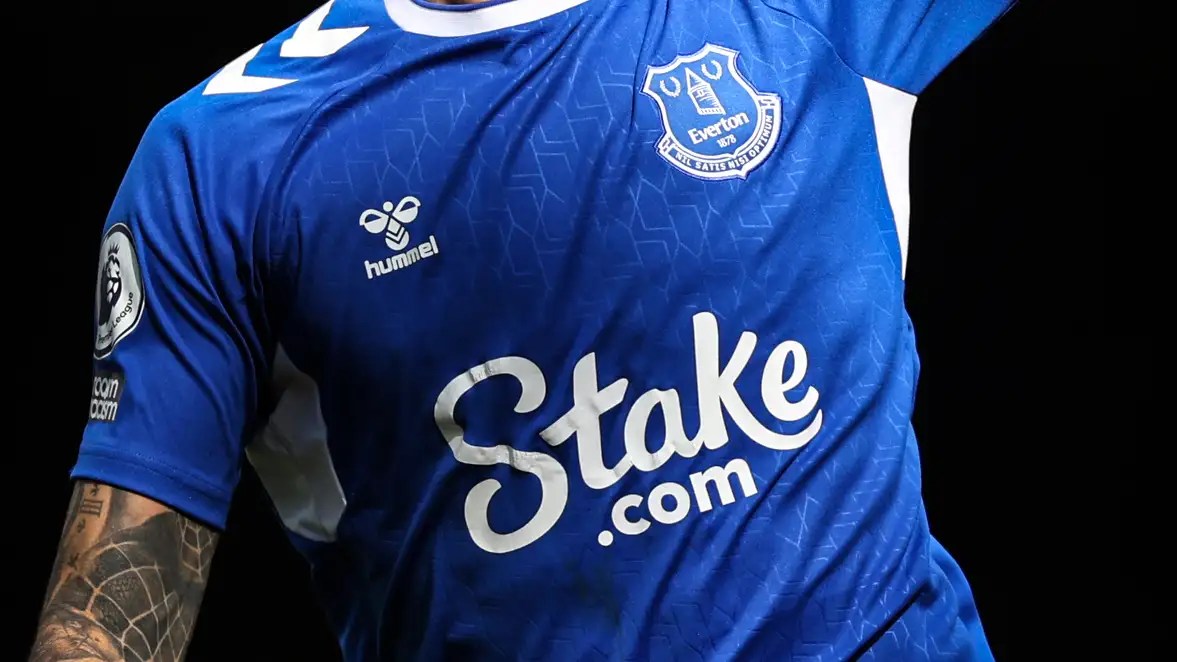
Everton’s decision to withdraw its front-of-shirt sponsorship comes on the heels of a significant investigation initiated by the Gambling Commission, which aims to scrutinize the implications of gambling advertisements on the general public, especially the youth.
As reported by The BBC, the Gambling Commission has focused its investigation on a highly controversial advertisement that featured adult film actress Bonnie Blue. The ad, which was filmed outside Nottingham Trent University, contained explicit sexual references and prominently displayed the logo of Stake, causing a considerable uproar. Critics have argued that such advertisements utilize sexualized imagery to market gambling, particularly to younger audiences who may be more impressionable. In response to the widespread backlash, activists reached out to the UK Culture Secretary, demanding intervention, which subsequently led the Gambling Commission to take potential regulatory actions.
In its formal warning to Everton, the Gambling Commission emphasized the club’s responsibility to ensure that any gambling platforms promoted through their merchandise are not accessible to users in Great Britain. This caution extends beyond Everton, affecting Nottingham Forest and Leicester City, who are also sponsored by gambling firms—Kaiyun and BC.Game—that do not hold the necessary licenses in the UK. The regulator has made it clear that clubs that fail to comply with the UK’s gambling regulations could face severe consequences. Club officials found guilty of promoting illegal betting could potentially face prison sentences of up to 51 weeks or incur substantial fines.
In light of the investigation findings, Stake, the Australian-based betting company, has announced its decision to cease operations in the UK market. The Gambling Commission confirmed that Stake’s British division will stop accepting new registrations immediately and will officially shut down by March 11. The decision to exit the UK market was made in collaboration with TGP Europe, the company managing Stake’s UK gambling license, under a white-label arrangement.
In their statement, Stake articulated that this move was part of a strategic plan to disengage from white-label agreements and shift focus toward obtaining local licenses through their in-house operations. They emphasized their intent to grow in key regulated markets, pointing to recent successful expansions into places like Italy and Brazil as examples of their potential for growth outside the UK.
Despite Stake’s upcoming departure, Everton has indicated that it does not intend to find a replacement for them as its primary shirt sponsor. Stake, which brands itself as the “world’s leading cryptocurrency casino and sportsbook,” allows users to place bets on a variety of sports and engage with virtual casino games. Nonetheless, under the current UK gambling regulations, customers located in Britain are prohibited from using cryptocurrencies such as Bitcoin for betting.
While the investigation by the Gambling Commission primarily scrutinized Stake’s involvement in the contentious advertisement, Bonnie Blue, whose real name is Tia Billinger, has not been implicated in any wrongdoing as part of this inquiry. Interestingly, earlier this year, she made headlines for attempting to break a world record related to sexual partners, which, while sensational, was unrelated to the ongoing gambling investigation. Additionally, it is worth noting that the controversial video featuring her was not officially released by Stake and has since been taken down from public platforms.
The entire situation surrounding Stake’s advertising scandal has sparked a renewed discussion regarding the appropriateness and impact of gambling sponsorships in the realm of professional football. As part of a broader movement, Premier League clubs have agreed to eliminate gambling companies as front-of-shirt sponsors by the end of the 2025-26 season, which marks a pivotal shift in the landscape of sports advertising. However, clubs will still be permitted to display gambling advertisements on their shirt sleeves and digital boards within stadiums, underscoring that while the industry is facing growing scrutiny, it continues to be a complex issue that is likely to develop further in the coming years, as clubs navigate the balance between sponsorship revenue and social responsibility.
 World of sports
Leave a comment