
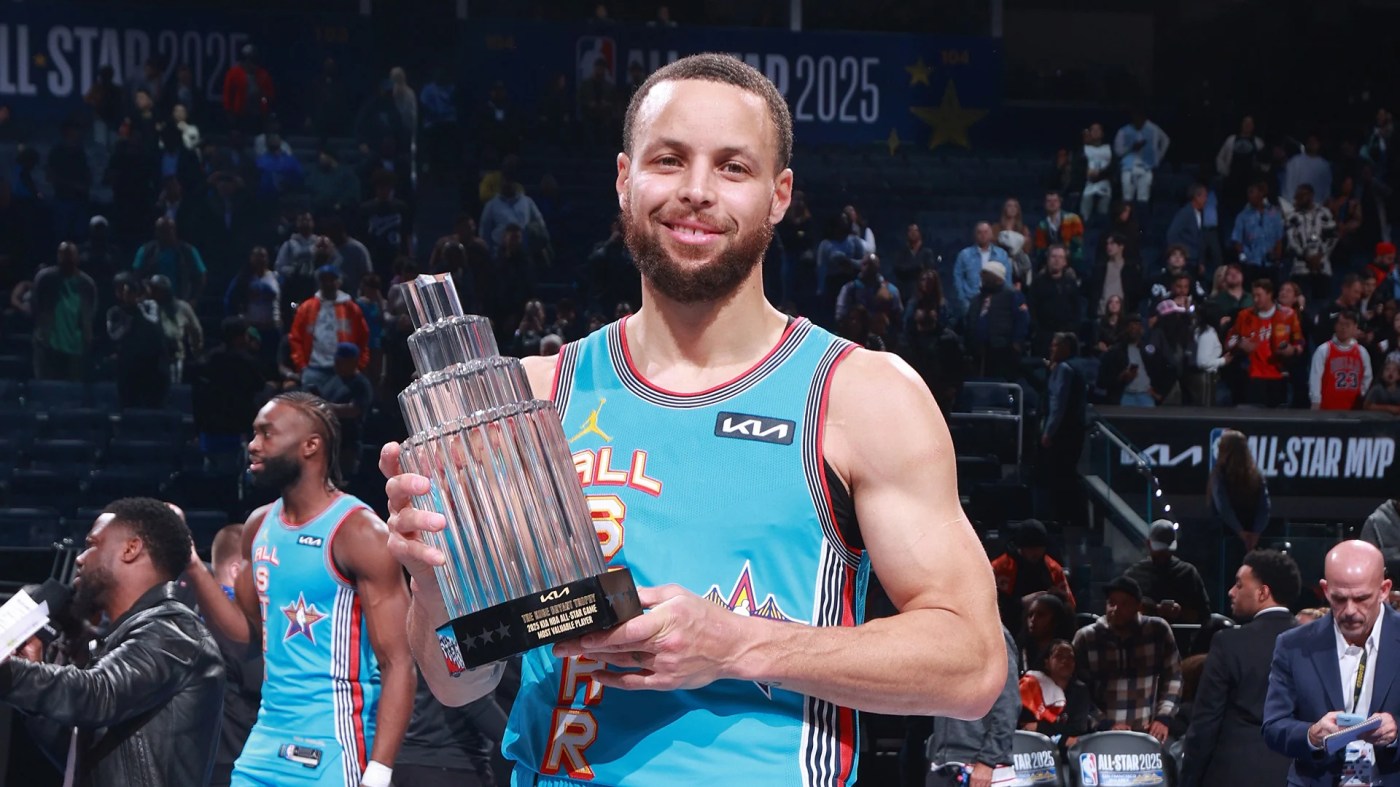
Steph Curry achieved a significant milestone by winning the Kobe Bryant MVP trophy while leading Shaquille O’Neal’s team, known as Shaq’s OGs, to victory in the All-Star title event held at the Chase Center in San Francisco. This event not only celebrated individual prowess but also emphasized teamwork and competitive spirit, encapsulating the essence of the NBA.
For this year’s All-Star weekend, the NBA introduced an exciting new format that involved four teams, each helmed by a legendary figure from basketball history. These teams battled it out in a single-elimination tournament, featuring two semi-final matches followed by a championship game. The objective behind this change was to inject fresh energy into the All-Star Game, aiming to restore the level of competitiveness that had diminished in previous years.
Curry, now at the seasoned age of 36, showcased his incredible skills and leadership during the final match, scoring 12 pivotal points. His efforts culminated in a decisive 41-25 triumph over Chuck’s Global Stars. After the game, he expressed his enjoyment of the format. “I had a lot of fun,” he remarked. Curry observed a notable shift in the atmosphere compared to previous exhibitions, commenting that “the intensity was definitely different than last year,” and he appreciated this change as “a step in the right direction.” He recognized the novelty of the format and the ongoing adjustments participants were making: “It’s something new, everybody is still trying to figure it out.”
The championship team, under the guidance of the charismatic four-time NBA champion Shaquille O’Neal, brought a unique flair to the game. Among the other coaching legends were the two-time NBA champion Kenny Smith, 11-time All-Star Charles Barkley, and three-time WNBA champion Candace Parker, each leading different teams. This diversity among coaches added a layer of nostalgia and excitement to the tournament, drawing on their illustrious careers and established legacies.
Curry’s performance throughout the competition was nothing short of impressive. He scored a total of 20 points, including eight critical points during the semi-final matchup, where his team secured a 42-35 victory against Candace Parker’s Rising Stars. His stellar showing not only earned him the MVP title but also placed him in the ranks of elite NBA players—Curry became the 15th individual in league history to clinch the All-Star MVP award more than once, underscoring his continued excellence as a player.
The recent All-Star game faced some backlash, particularly as both teams piled on an astonishing total of 397 points during the previous year’s event held in Indianapolis. Acknowledging these concerns, organizers hoped that the new tournament-style approach would rekindle the competitive atmosphere that had waned. One of the most notable changes was the switch to a scoring format where games were played to a threshold of 40 points rather than through the traditional method of four quarters. This adjustment aimed to enhance the urgency and significance of each scoring opportunity.
Curry himself championed the NBA’s attempt to innovate the All-Star format. He indicated that it represented “a good step in the right direction to reinvigorate the game in some way,” showing optimism about the future of the event. His viewpoints were shared by Damian Lillard, a guard from the Milwaukee Bucks, who was also part of the victorious team. Lillard echoed Curry’s sentiments, remarking, “I think they’re just looking for a more competitive game and trying to find ways to create that, and it was a little bit more competitive than they have been the last few years.” He further underscored the importance of providing entertainment alongside competitiveness, noting that this year’s event succeeded in striking a better balance.
Nevertheless, there were mixed reviews regarding the new format. Draymond Green, Curry’s teammate on the Golden State Warriors, who was serving as an analyst during the broadcast, offered a sharp critique. When prompted to assign a rating to the newly instituted format, Green bluntly replied, “Ten being the best? A zero. It sucks. Awful.” He voiced his disappointment regarding the structure, emphasizing how players work tirelessly over the course of a whole year to earn All-Star status, only to find themselves constrained to a game limited to just 40 points. He lamented, “You work all year to be an All-Star and you get to play up to 40 (points) and then you’re done.”
This blend of perspectives highlights an ongoing dialogue within the NBA regarding the evolution of the All-Star Game. It illustrates the challenge of balancing entertainment value with the spirit of competition. As the league continues to experiment with different formats, the voices and experiences of its star players will undoubtedly play a pivotal role in shaping the future landscape of the All-Star event, ensuring it remains relevant and engaging for fans and participants alike.
 World of sports
Leave a comment