
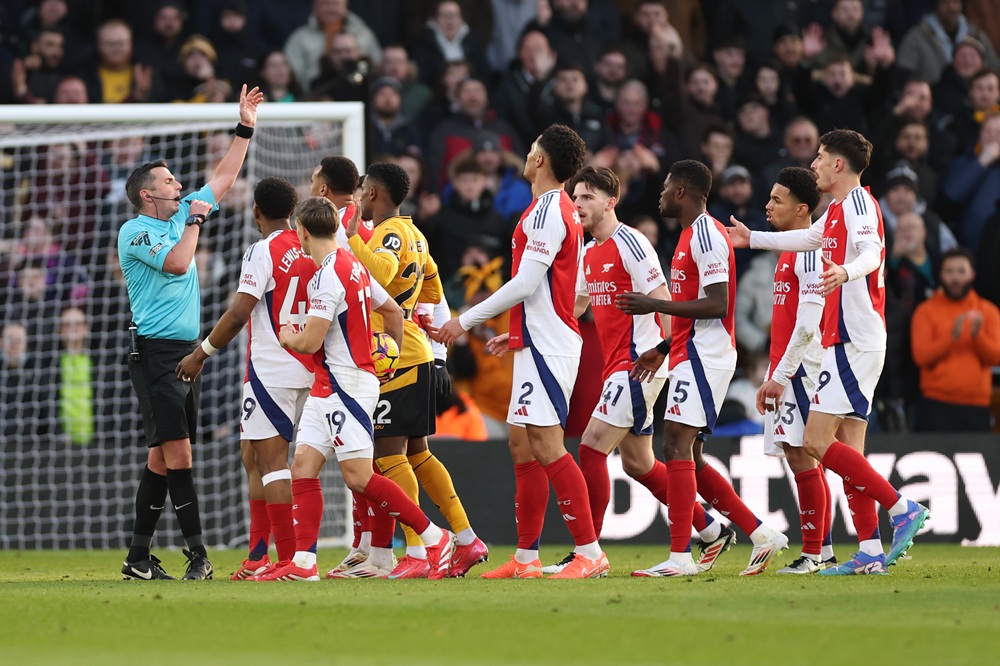
Arsenal has been penalized with a fine of £65,000 due to their inability to manage player conduct following Myles Lewis-Skelly’s contentious red card during their 1-0 Premier League win against Wolverhampton Wanderers at Molineux on January 25.
The Football Association (FA) charged Arsenal for failing to ensure that their players “did not behave in an improper manner” after referee Michael Oliver sent Lewis-Skelly off in the 43rd minute for a challenge on Matt Doherty. In the immediate aftermath of the dismissal, a cluster of Arsenal players surged toward Oliver, vocally protesting the decision and exhibiting palpable frustration. The heated exchange illustrated not only the tension on the pitch but also the emotional investment of players in critical moments such as this.
Following the incident, Video Assistant Referee (VAR) Darren England reviewed the challenge and upheld Oliver’s ruling, categorizing it as serious foul play. In response to this decision, Arsenal made the decision to appeal the red card, ultimately resulting in the overturning of Lewis-Skelly’s initial three-match suspension. This successful appeal offered a measure of vindication for Arsenal, yet the club still acknowledged the FA’s charges, which led to a fine being imposed by an independent regulatory commission.
The fine of £65,000 was a clear indication of the FA’s emphasis on maintaining high standards of conduct within the sport. Despite winning the match, Arsenal’s disappointment was evident, and this incident served as a reminder of the governing bodies’ commitment to uphold respect for match officials and their decisions. The club’s management had to grapple with the balance between defending their players and recognizing the rules that govern player behavior during matches.
Further complicating matters, following the match, the referees’ body Professional Game Match Officials Limited (PGMOL) confirmed that they were looking into reports of “threats and abuse” directed toward Michael Oliver and his family on social media platforms. This alarming revelation highlights the severe pressures referees face, extending beyond the field to their personal lives. The rise of online hostility against officials raises critical questions about the culture surrounding officiating in sports, with many urging for increased protections for referees to deter such behavior.
As Arsenal reflected on their victory, the situation surrounding Lewis-Skelly’s red card ignited ongoing discussions about the consistency of officiating, the reactions of players, and the broader implications for the game. Fans and analysts alike are likely to continue debating the merits of specific officiating decisions and the conduct of players during high-stakes matches. This incident may prompt the FA to reevaluate their guidelines on player behavior and reaffirm the importance of clear lines of communication between referees and players, especially during emotionally charged moments in the game. The ramifications of this incident are expected to resonate throughout the league, influencing discussions on sportsmanship, referee accountability, and the overall atmosphere of competitive football.
 World of sports
Leave a comment