
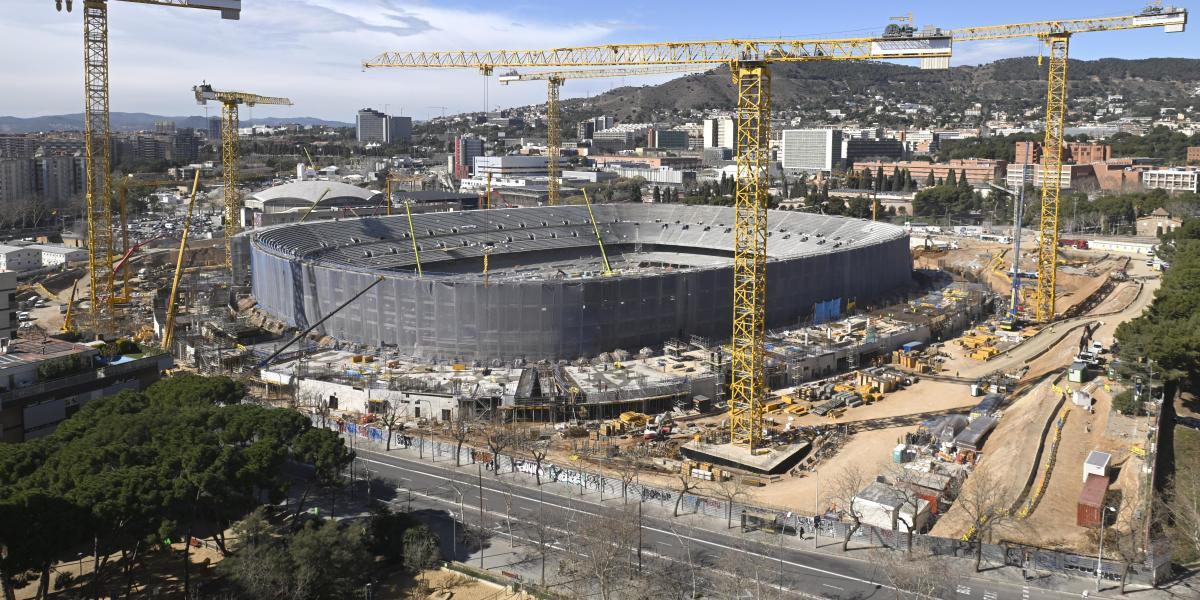
Barcelona may find itself waiting until 2026 before it can return to its historic home at Camp Nou due to significant delays in the stadium’s renovation project. This situation not only poses logistical challenges but also has profound financial implications for the renowned football club.
Currently, the team is playing its home matches at the Estadi Olímpic Lluís Companys in Montjuïc, having made the move at the start of the 2023/24 season, while their iconic Camp Nou is undergoing an extensive renovation estimated to cost around £1.25 billion (€1.5 billion). Initially, the club had anticipated a triumphant return to Camp Nou by 2024. However, recent reports from Relevo suggest that the timeline has shifted dramatically, with the earliest possible return now projected for October 2025. Even more concerning, there is a chance that the team may not be able to return until January 2026—a wait that is stretching beyond what fans and club officials had hoped for.
The longer the renovations take, the more financial strain the club faces. Barcelona has been struggling with financial difficulties for an extended period, and the delayed renovation of their stadium signifies ongoing loss of potential revenue. The Camp Nou, with a capacity of 105,000 spectators, offers income opportunities that the club simply is not capitalizing on while they are stationed at a temporary venue. Currently, the Estadi Olímpic Lluís Companys accommodates about 55,000 fans, which leads to a stark decline in matchday revenue, ticket sales, and the overall financial robustness that a full-capacity crowd at Camp Nou would generate.
The impact of this delay is compounded by the competitive landscape of football. As the club waits to reclaim its home turf, pressing matches lie ahead, including the challenge against Benfica in the first leg of their round of 16 Champions League tie scheduled for Wednesday. These critical fixtures place additional pressure on the team as they strive to perform at high levels amid uncertain circumstances.
Moreover, the absence from Camp Nou affects more than just finances; it also influences team morale and fan engagement. The excitement, energy, and culture associated with home matches at Camp Nou are irreplaceable elements of the Barcelona experience. As fans watch their beloved team compete in a temporary setting, the longing for a return to their historical ground grows stronger, reinforcing a sense of nostalgia and pride that is emblematic of the club’s legacy.
In conclusion, the ongoing delays in the Camp Nou renovation project extend well beyond mere construction timelines; they cast a long shadow over Barcelona’s financial stability and competitive positioning. This situation serves as a reminder of the deep connections between a football club, its home, and its supporters. As Barcelona navigates these challenges, both the team and its fans eagerly await the day when they can once again fill the stands of Camp Nou, celebrating their shared heritage and championing their future successes.
 World of sports
Leave a comment