
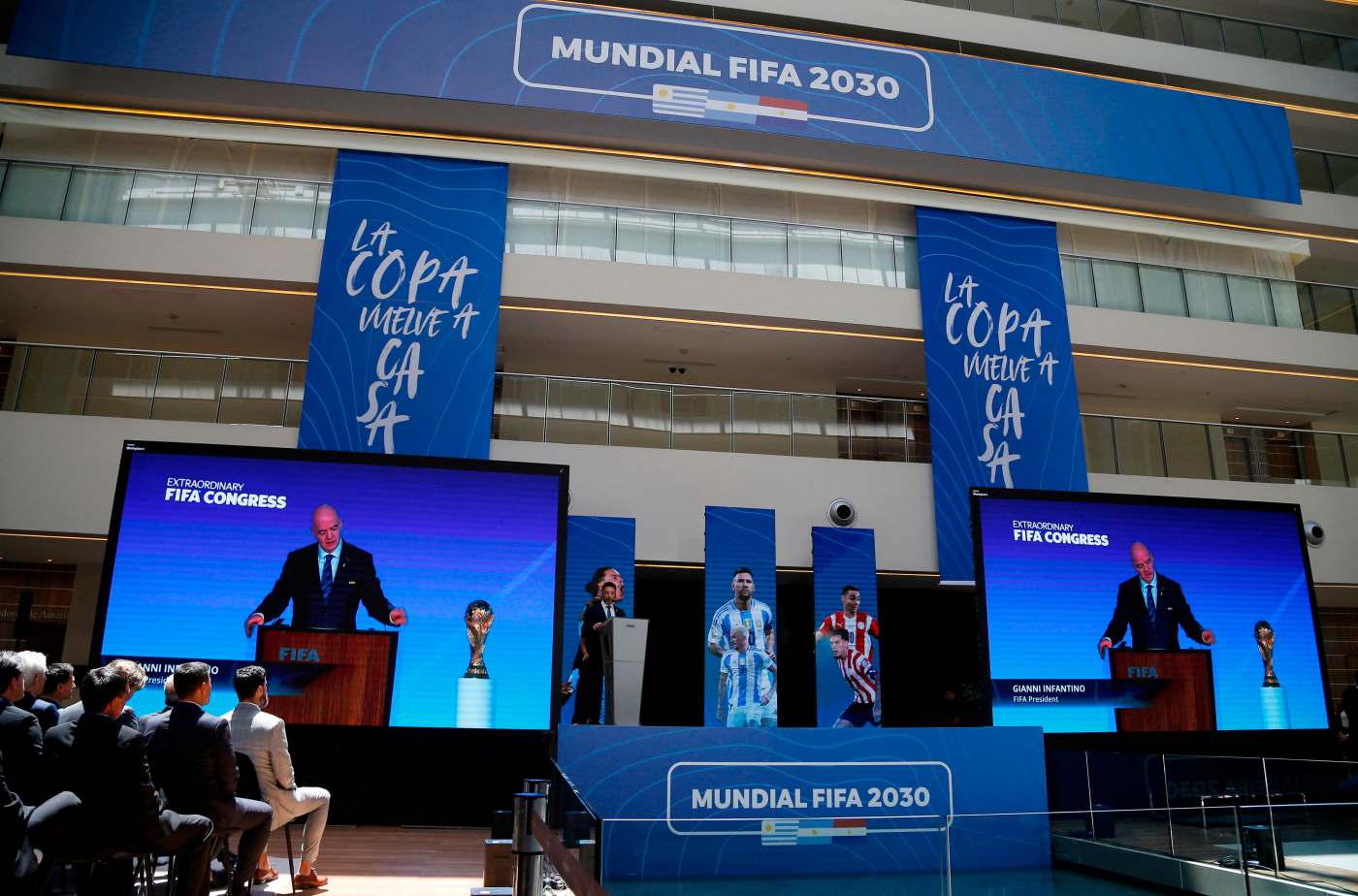
FIFA is currently deliberating a proposal to expand the 2030 World Cup format from 48 to 64 teams, a potential change that could significantly alter the tournament’s dynamics. This suggestion was put forth during a FIFA Council meeting by Ignacio Alonso, the president of the Uruguayan Football Association. The initiative seeks to commemorate the centennial celebration of the inaugural World Cup, which took place in Uruguay back in 1930.
Set to be co-hosted by Spain, Portugal, and Morocco, the 2030 tournament promises to be a historic occasion, especially with the unique addition of three opening matches to be held in Uruguay, Argentina, and Paraguay. This move is designed to reconnect football fans with the tournament’s legacy and honor its roots, as 1930 was a pivotal year in the history of international football.
A spokesperson for FIFA elaborated on the initiative, stating, “A proposal to analyse a 64-team FIFA World Cup to fete the centenary of the FIFA World Cup in 2030 was spontaneously raised by a FIFA council member during the ‘miscellaneous’ agenda item at the FIFA council meeting held on March 5, 2025. The discussion on this idea was embraced, acknowledging FIFA’s responsibility to thoroughly evaluate any recommendation made by its council members.” This reflects FIFA’s willingness to consider innovative ideas that could enrich the global football experience.
Should the new 64-team structure be adopted, it would open the doors for nearly a third of FIFA’s 211 member associations to compete in the finals. This broadened access could lead to a more diverse representation at the tournament, allowing nations that typically find it challenging to qualify for such a prestigious event to showcase their talent on an international stage. This change could inspire greater enthusiasm among fans and players alike, creating an atmosphere filled with anticipation and celebration.
As the world looks forward to the upcoming World Cup in 2026, set to take place in the USA, Canada, and Mexico, which will feature the expanded 48-team format for the first time, discussions about further expansion for 2030 are particularly timely. The excitement surrounding the World Cup seems to be growing, and if FIFA decides to implement this proposed change, it could lead to an unprecedented celebration of football during its centenary year. A 64-team format would not only emphasize the importance of unity in global sports but also provide a larger platform for emerging football nations to make their mark in the world of competitive football. As these discussions evolve, the football community eagerly anticipates the outcomes and the impacts they will have on the beautiful game.
 World of sports
Leave a comment