
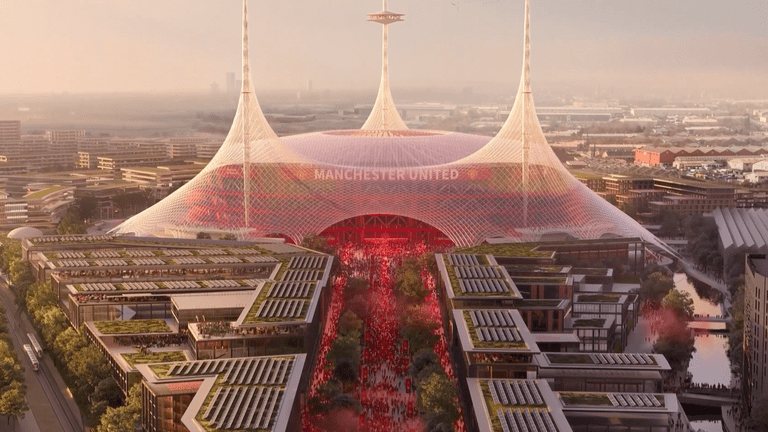
Manchester United have confirmed their groundbreaking plans to leave Old Trafford and construct a new, state-of-the-art stadium with an impressive capacity of 100,000 seats. This monumental project is set to begin on club-owned land adjacent to the historic Old Trafford site. With a construction timeline of five years, the new stadium will not only be the largest in the United Kingdom but will also set a new standard for modern sports venues.
Co-owner Sir Jim Ratcliffe has expressed a clear vision for this iconic football stadium, emphasizing the importance of government backing to bring this ambitious project to fruition. He aims for the stadium to provide a transformative experience for fans, bridging the legacy of Old Trafford with cutting-edge facilities. “By building next to the existing site, we will be able to preserve the essence of Old Trafford while creating a truly state-of-the-art stadium,” Ratcliffe stated, highlighting the intention to honor the club’s storied history while moving forward with innovative designs.
The architectural prowess behind the new design is led by Lord Norman Foster, who has conceptualized an umbrella-like structure that will not only enhance the aesthetic appeal but also incorporate sustainable features. This ambitious design will enable the harvesting of solar energy and rainwater, aiming to position the club as a leader in environmental sustainability in sports venues.
An exciting aspect of the new stadium is the plan for three masts, which will increase its visibility from 40 kilometers away. Interestingly, it is rumored that on a clear day, the stadium could be seen from the outskirts of Liverpool. This has led to grand aspirations of transforming the venue into a global destination, with Foster calling it “one of the most exciting projects in the world today.”
While the proposal has sparked enthusiasm among many, it has also raised significant concerns within Manchester United Supporters Trust (MUST). Members are wary about the implications for fans, particularly regarding ticket prices and the overall match-day experience. A spokesperson for MUST voiced the organization’s apprehensions, stating, “The announcement of plans to build a brand new stadium adjacent to Old Trafford is clearly very big news for United fans.” They underscored the need for further consultations to ensure that the club’s decisions align with fan desires, especially regarding the atmosphere and financial accessibility of attending matches.
Despite the exciting prospects this new stadium brings, urgent questions remain regarding funding, given the club’s existing debt of over £1 billion. Ratcliffe has acknowledged the financial difficulties Manchester United has faced, revealing that the club would have faced a cash crisis without significant recent cost-saving measures. This situation raises critical concerns about the potential impact of the new stadium on the club’s financial commitments and future investments in player acquisitions.
The proposed construction of Manchester United’s new stadium is set to redefine not just the club’s footprint but also its role within English football. Positioned to surpass Wembley Stadium’s 90,000 capacity, it will rank as the second largest stadium in Europe, following Barcelona’s Camp Nou. As the club embarks on this monumental journey, it faces the dual challenge of maintaining the legacy of Old Trafford while addressing the fans’ concerns and aspirations for the future.
 World of sports
Leave a comment