
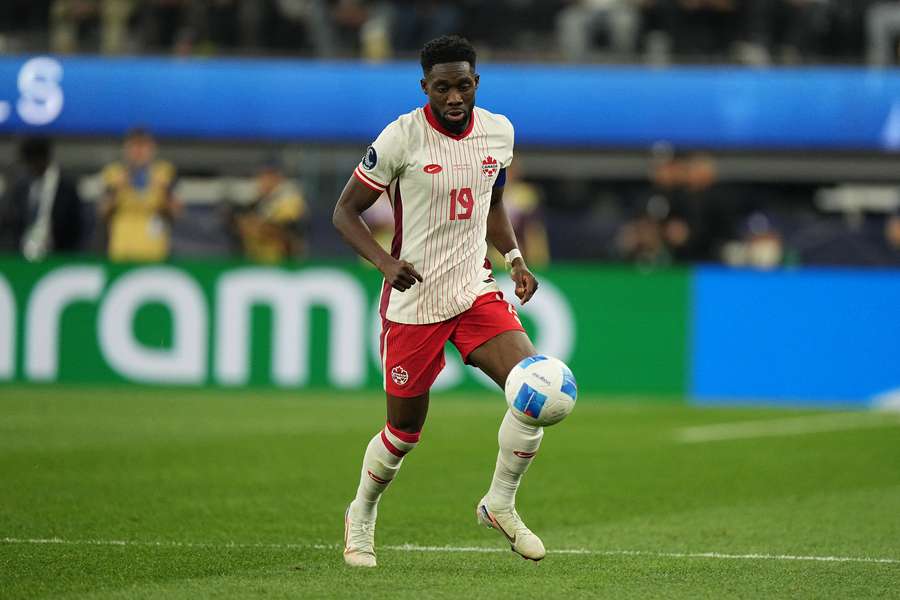
Bayern Munich has publicly condemned Canada Soccer for what it perceives as negligence after Alphonso Davies returned from international duty with a serious injury: a torn anterior cruciate ligament (ACL). This injury represents a significant hurdle for the young defender, who is now anticipated to be sidelined for a minimum of six months, adversely affecting both his club and the Canadian national team.
Davies suffered his injury just 12 minutes into Canada’s 2-1 victory against the United States during the Concacaf Nations League third-place match this past Sunday. His abrupt exit raised alarms, and although Canada Soccer initially provided reassurance regarding his fitness, further examinations conducted in Munich confirmed the severity of his condition. As a result, Bayern’s medical staff are now tasked with overseeing his rehabilitation process, while the team must consider how to adjust their strategies in his absence.
At a press conference held on Friday, Bayern’s sporting director Christoph Freund voiced his dissatisfaction with the protocol followed by Canada Soccer. He strongly criticized the decision to allow Davies to undertake a lengthy 12-hour flight back to Germany before performing comprehensive medical tests. Freund characterized this approach as “borderline” and “negligent,” indicating a lack of sufficient care in handling injuries of this nature. His comments reflect Bayern’s broader commitment to their players’ health and underscore the responsibilities that national federations hold in ensuring the well-being of athletes.
In a follow-up interview with the German tabloid Bild, Bayern’s CEO Jan-Christian Dreesen amplified the club’s concerns by demanding “complete clarification of the events” that led to Davies’ injury. Dreesen’s remarks included accusations of “gross negligence” against Canada Soccer and hinted at potential legal actions that Bayern may consider pursuing to address the matter. This proactive stance from Bayern illustrates the seriousness of the issue and raises questions about how player health is prioritized during international fixtures.
Dreesen expressed alarm over the apparent carelessness of sending an injured athlete on a long-haul flight without a thorough medical assessment. He stated, “Phonzy (Davies) is not at fault; he’s the captain and he wants to take responsibility.” This insight highlights not only Davies’s character and leadership but also emphasizes the critical need for appropriate health protocols in international competitions, especially with Canada set to co-host the World Cup in 2026. The implications of this injury are far-reaching; without proper management, the risk of long-term damage to premium talents like Davies could hinder a nation’s performance on a world stage.
It’s also pertinent to note that Bayern faces additional challenges, having already lost center-back Dayot Upamecano to a long-term leg injury during the same international break. Furthermore, the absence of captain Manuel Neuer compounds these difficulties, placing considerable strain on the squad as they prepare for future matches within a demanding league and tournament schedule.
Bayern’s statement of grievance and the unfolding drama surrounding Davies’ injury raises critical discussions concerning the roles and responsibilities of national teams and clubs in safeguarding players’ health. BBC Sport has reached out to Canada Soccer for commentary on this developing situation; their response will be awaited with interest, especially as it pertains to evolving medical protocols and player welfare initiatives to prevent such incidents from occurring in the future. This case serves as a pivotal reminder that the intersection of professional sports and athlete health management requires ongoing vigilance and collaboration between teams and their national federations.
 World of sports
Leave a comment