
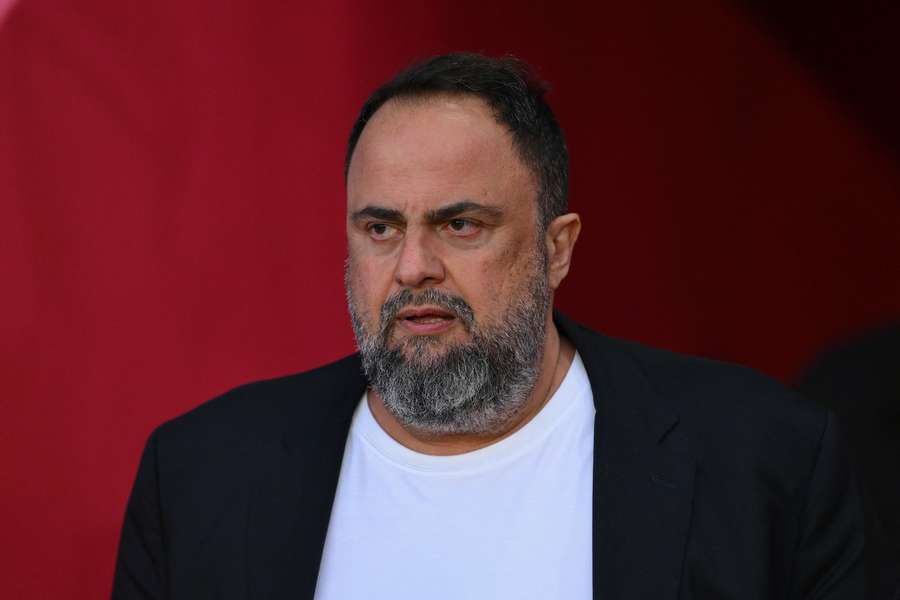
Evangelos Marinakis, the owner of Nottingham Forest, has taken significant steps to distance himself from the club’s day-to-day operations amid concerns regarding conflicts of interest with his other football club, Olympiakos. According to Sky Sports News, this strategic move is likely a temporary solution aimed at ensuring compliance with UEFA regulations.
Marinakis has officially withdrawn his position at Companies House, effectively signaling that he no longer exercises control over Nottingham Forest’s daily operations. While he still retains ownership of the club, he has placed all his shares into a blind trust. This legal arrangement prevents him from influencing the club’s management decisions, thereby aligning with UEFA’s stringent rules, which prohibit any individual from controlling two clubs that compete in the same competition.
This situation arises as both Nottingham Forest and Olympiakos are in contention for places in the next season’s Champions League. With Olympiakos sitting comfortably at the top of the Greek Super League—13 points clear of their nearest competitors—while Nottingham Forest stands a chance to move up to third place in the Premier League if they secure a victory in their game in hand against Brentford, the stakes are indeed high.
The steps taken by Marinakis have been referred to as a technicality by some insiders, describing it as important “housekeeping.” However, UEFA views such matters with utmost seriousness, emphasizing the integrity of their competitions. If UEFA were to determine that Marinakis still wielded effective control over Forest, they would be obliged to impose sanctions that would bar the club from participating in the Champions League, should they qualify.
According to the governing body’s regulations, the club that finishes higher in its domestic league would have the right to compete, while the other would be ineligible. Given Olympiakos’ strong league position, Marinakis’ actions are clearly aimed at safeguarding Nottingham Forest’s potential Champions League aspirations.
Furthermore, this restructuring has resulted in changes to Forest’s board. Three board members have been compelled to resign in light of these developments, making way for the trustees who now oversee Marinakis’ shareholdings. This modification aligns with financial regulations governing blind trusts, which stipulate that the controlling trustees must comprise the majority of a club’s board to maintain compliance with UEFA’s rules.
In summary, while Marinakis maintains ownership of Nottingham Forest, the measures he has enacted reflect a careful consideration of regulatory compliance and the critical distinction between ownership and operational control in the highly competitive landscape of European football. The implications of these changes will undoubtedly impact Nottingham Forest’s strategic direction as they pursue their ambitions on the pitch.
 World of sports
Leave a comment