
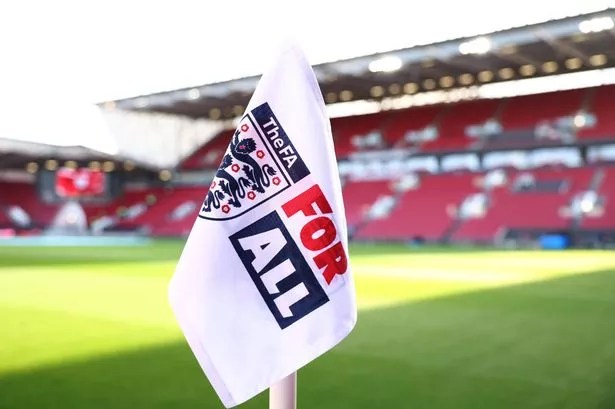
The Football Association (FA) has made an announcement confirming that transgender women will no longer be permitted to participate in women’s football in England effective June 1, 2025. This decisive move follows a significant change in the law, as declared by the UK Supreme Court on April 16, which ruled unanimously that a woman is defined by biological sex under equality law. This ruling has created a pivotal shift in the landscape of women’s sports in the country.
According to the FA, this policy revision aligns with their commitment to ensure that football is accessible to as many individuals as possible, while also adhering to the legal frameworks and international football policies put forth by governing bodies such as UEFA and FIFA. The FA stated, “As the governing body of the national sport, our role is to make football accessible to as many people as possible, operating within the law and international football policy defined by UEFA and FIFA.”
Prior to this decision, the FA had allowed transgender women to compete in women’s football, a policy that was shaped by expert legal counsel and was intended to promote inclusivity. However, the recent Supreme Court ruling has prompted them to reassess their approach. The FA added, “This is a complex subject, and our position has always been that if there was a material change in law, science, or the operation of the policy in grassroots football, then we would review it and change it if necessary.”
As a result of the Supreme Court’s ruling, the FA has stated explicitly that the participation of transgender women in women’s football will be curtailed, and they are in communication with registered transgender women players to inform them about these upcoming changes and to explore continued involvement in the sport.
In a related development, the Scottish FA has also enforced a similar ban on transgender women participating in women’s football, which will take effect from the start of the next season. This decision means that only players who are born biologically female will be eligible to play in competitive female football from the U13 level and upwards. It is noteworthy that, as per reports, there are currently no registered transgender women players in Scotland, but the implications of these policy changes may reverberate throughout the football community, affecting discussions around inclusivity and gender identity in sports moving forward.
This policy shift from both the FA and Scottish FA undoubtedly brings forth a myriad of opinions and emotions, particularly among those who advocate for equality and inclusiveness in sports. As these organizations navigate the implications of the new law and its application, it will be essential to monitor the reactions from players, advocates, and the wider community as they seek to find a balance between legal compliance and equitable opportunities in the realm of football.
 World of sports
Leave a comment