
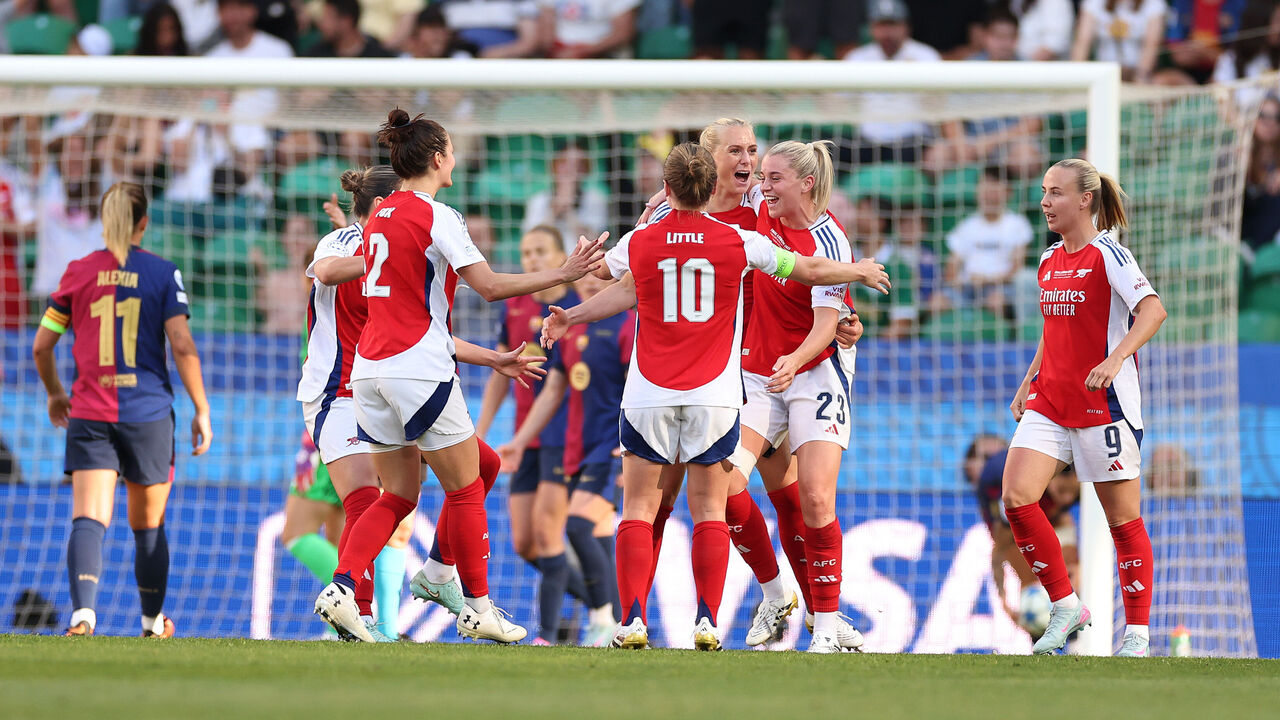
Stina Blackstenius propelled Arsenal to victory against Barcelona in Lisbon; Claudia Pina struck the crossbar for Barcelona in the second half, but they were unable to penetrate the solid Arsenal defence. This victory marks the second time and the first occurrence since 2007 that Arsenal has claimed the Women’s Champions League title.
In a captivating matchup, Stina Blackstenius emerged as the hero for Arsenal, scoring a decisive goal in the second half that led to a narrow 1-0 victory over Barcelona, securing the Women’s Champions League final in Lisbon. The stakes were high as Barcelona entered the match as the clear favourites, having dominated women’s European football in recent years by winning three of the last four titles. Their formidable reputation placed immense pressure on Arsenal, who had proven themselves to be resilient throughout the tournament, particularly in their impressive semi-final triumph over the record-holding Lyon.
Despite some inconsistent performances leading into the final, where they conceded a concerning 13 goals across their last three Women’s Super League (WSL) games, Arsenal displayed remarkable defensive strength when it mattered most. With Daphne van Domselaar reinstated as the goalkeeper, the Gunners successfully maintained a clean sheet, showcasing their ability to adapt and rise to the occasion under pressure.
This victory is especially significant for Arsenal as it establishes them as the only English club to have won the Women’s Champions League and marks their first title since their inaugural win in 2007. While every member of the squad played a crucial role in this achievement, it was Blackstenius’ crucial strike in the 75th minute that ultimately secured the victory. She skillfully received a reverse pass from fellow substitute Beth Mead, displaying her poise and proficiency as she placed the ball expertly across goal, leaving the Barcelona goalkeeper with no chance of responding.
Although this was not Arsenal’s first goal of the match, as they had an earlier effort disallowed for offside, it showcased their attacking prowess. Irene Paredes inadvertently turned a delivery from Frida Maanum into her own net, but VAR intervention revealed an offside in the buildup, leading to the goal being cancelled.
In the opening half of the match, Arsenal created several noteworthy chances, with Frida Maanum particularly impressive as she forced an excellent save from Cata Coll. However, the tide shifted in the second half as Barcelona increased their dominance in both possession and shot opportunities. Claudia Pina came agonizingly close to equalizing when her strike hit the crossbar early in the second half. Former Manchester United full-back Ona Batlle also had a near-miss, as she tried to break through Arsenal’s staunch defence.
Ultimately, it was Blackstenius’ pivotal goal that propelled the underdogs to victory, breaking the longstanding stranglehold of Lyon and Barcelona over the Women’s Champions League trophy. This win positions Arsenal as the first team to secure the trophy outside of the traditional powerhouses since Frankfurt’s success in 2015.
Following this significant achievement, Arsenal will be placed directly into the league phase of the upcoming season, joining Chelsea in bypassing the qualifying round that typically follows a second-place finish in the WSL. As the Gunners revel in their historic feat, the future looks bright for Arsenal, solidifying their status in the annals of women’s football history and signaling a promising horizon for the club. The victory not only showcases the talent and hard work of the team but also inspires a new generation of players and fans eager to see women’s football continue to grow and thrive at both national and international levels.
 World of sports
Leave a comment