
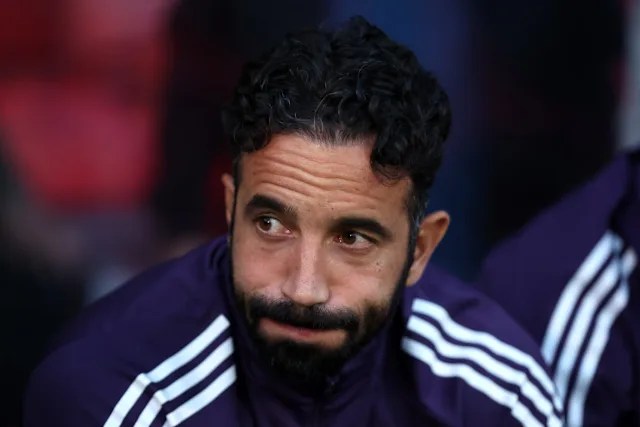
Manchester United head coach Ruben Amorim is believed to still have the confidence of the club’s ownership, despite facing a surprising defeat in the Carabao Cup against League Two team Grimsby Town. This unexpected turn of events has triggered discussions among supporters and analysts regarding his future at the club, particularly given the circumstances surrounding the match.
Following the game, Amorim’s statements raised eyebrows and stirred speculations about his job security. His team had to rally from two goals down after being significantly outperformed early on by their lower-league opponents. Although they managed to equalize, the match ultimately culminated in a devastating penalty shootout loss, igniting concern about the team’s morale and performance.
Nevertheless, insiders at the club maintain that there is no immediate cause for concern from the ownership suite. They assert that the long-term project under Amorim’s guidance is still in its infancy, and they are committed to a patient approach, firmly believing that impulsive decisions based on a single disappointing outcome would be misguided. The ownership seems focused on achieving stability rather than succumbing to knee-jerk reactions prompted by recent struggles.
This viewpoint is bolstered by the substantial investment the club has made in reinforcing the squad, with around £200 million allocated to bolster attacking options during the summer transfer window. The club’s ongoing negotiations regarding potential transfers of players like Alejandro Garnacho, Antony, and Rasmus Hojlund to teams such as Chelsea, Real Betis, and Napoli highlight their commitment to building a competitive roster while supporting Amorim’s vision.
The recent defeat serves as a sober reminder of the pitfalls of hasty decision-making, particularly as the ownership reflects on the previous season when they backed Erik ten Hag with a similar financial commitment but chose to dismiss him just weeks into the campaign. Clearly, they are mindful of avoiding a repeat of that situation and seem focused on fulfilling their long-term ambitions rather than making impulsive changes based on short-term setbacks.
The loss against Grimsby represents a notable inflection point, as it stands as the first instance in which Manchester United has been bested by a team from a lower division. In addressing the media post-match, Amorim approached the situation with determination, opting to shift the focus to the club’s upcoming fixtures rather than dwelling on past missteps. “Let’s concentrate on the next match, and then we can take time to reflect on everything,” he remarked with confidence.
He further emphasized the necessity of preparing adequately for the road ahead while underscoring the importance of maintaining a proactive attitude. Still, his comments left some room for interpretation, leading to speculation about whether the mounting pressure was affecting his outlook. Observers are keen to understand Amorim’s perspective further, especially following the team’s struggles to perform consistently.
This isn’t the first occasion that Amorim’s role has drawn scrutiny. Reports during the previous season indicated that he had previously expressed a willingness to step down, although this was never confirmed by official sources. The emotional weight of leading such a high-profile team is clearly evident, as he has been candid about how disappointment impacts him, referring to it as “an ego thing” during the summer.
As he prepares to meet the media again before a crucial Premier League match against Burnley, the anticipation is palpable regarding how he will address both his players’ and his own motivations. Following the matchup with Burnley, United’s fixture list becomes even more taxing, with crucial clashes against rivals Manchester City, Chelsea, and Liverpool all looming, amplifying the pressure for a turnaround.
Within the squad, members are experiencing a pivotal moment. While there was a notable show of unity and support for Amorim during pre-season, the inconsistencies in performances—especially from key contributors such as midfielder Kobbie Mainoo and goalkeeper Andre Onana—have sparked doubt. Mainoo, who played the entire match, has thus far not made a strong case for his inclusion in future matches, particularly following Onana’s costly error leading to Grimsby’s second goal.
Additionally, questions have been raised regarding tactical decisions made during the penalty shootout, particularly with the approach taken concerning forward Benjamin Sesko. As he faced physical challenges due to cramping after completing his first competitive 90 minutes since April, the choice to have him take penalties in such conditions has been met with scrutiny.
In summary, the upcoming weeks are poised to be crucial not only for Amorim’s future at Manchester United but also for the performance of the squad as they navigate a series of demanding fixtures that will test their resilience and collective spirit. Their responses to these challenges may well dictate the direction of the team’s season and the coach’s standing within the club. As the pressure mounts, both player performances and managerial decisions will be under intense scrutiny in the battles to come.
 World of sports
Leave a comment