
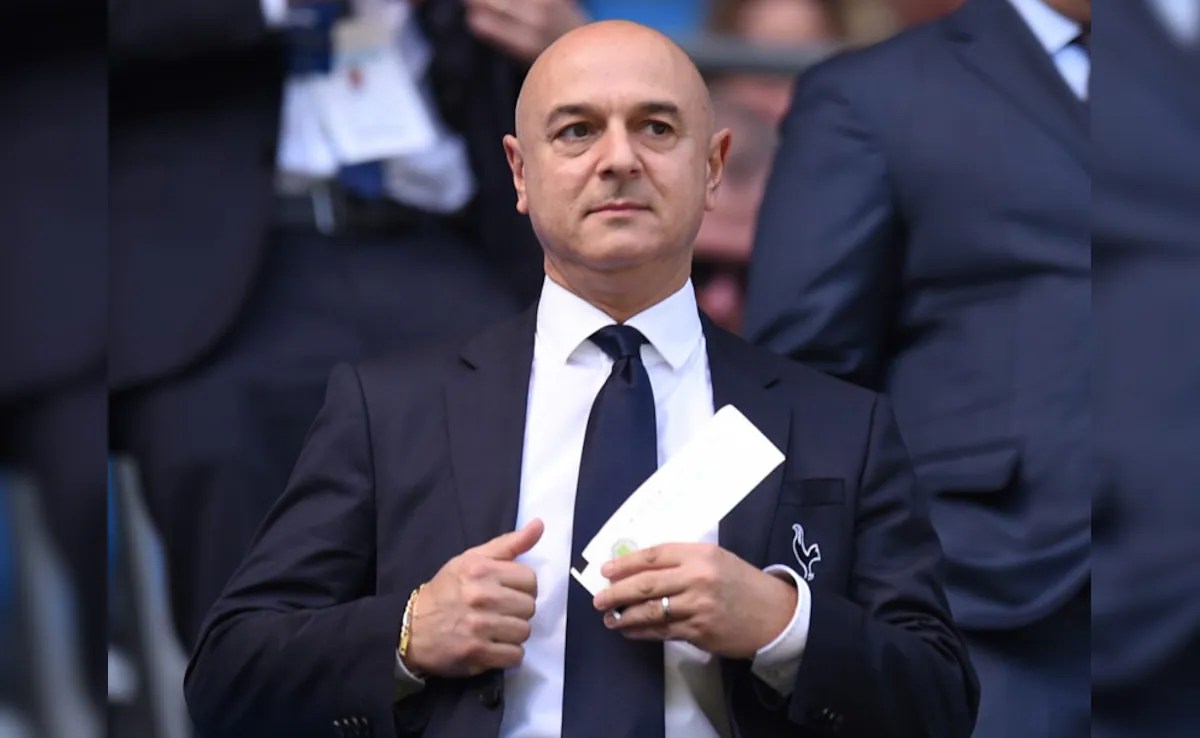
Daniel Levy has officially stepped down as the executive chairman of Tottenham Hotspur after a remarkable tenure that lasted nearly 25 years. This significant transition marks a pivotal moment for the club, which has experienced both notable successes and significant challenges during Levy’s time in office.
According to Sky Sports News, the primary shareholders of Spurs, the Lewis family, remain steadfast in their commitment to the long-term future of the club and have no intentions of selling their shares. This reassured position comes amidst speculation and discussions around potential changes in club ownership, which have circulated within football circles for an extended period.
Levy’s departure has ignited further conjecture about the Lewis family’s plans, with some suggesting it could foreshadow a possible sale of the club. However, sources have conveyed to Sky Sports News that the decision to transition leadership was firmly rooted in a pursuit of long-term success, particularly in building upon the foundations laid by the club’s recent achievements, such as its triumph in the Europa League.
A representative close to the Lewis family emphasized their enduring connection to Tottenham Hotspur: “Generations of the Lewis family have supported this special football club, and they are committed to delivering what the fans crave—more victories and success.” This dedication has sparked a wave of changes at the club, aiming to bring in fresh perspectives and approaches. The new leadership team, comprising Vinai Venkatesham, Thomas Frank, and Peter Charrington, is seen as critical to steering the club into a promising new era.
Levy became the chairman of Spurs after acquiring a stake from Lord Alan Sugar in December 2000, subsequently becoming the longest-serving chairman in the Premier League. He oversaw numerous transformations, including the development of a cutting-edge training facility and the iconic Tottenham Hotspur Stadium. Despite these successes, he often faced backlash from supporters due to perceived shortcomings in investment for player transfers, a recurring theme that resonated deeply within the fanbase.
This summer marked a noteworthy transition for the club as Levy appointed Thomas Frank as the new manager for the men’s team and Martin Ho to lead the women’s side, following the exits of previous managers Ange Postecoglou and Robert Vilahamn, respectively. These appointments signal the club’s ambition to improve its competitive standing in both men’s and women’s football.
Throughout Levy’s tenure, Tottenham secured several accolades, including the League Cup and the Europa League, while making a historic run to the Champions League final under Mauricio Pochettino, a high point that remains fresh in the memories of fans.
In his departure statement, Levy expressed immense pride in the collective accomplishments achieved alongside executives and staff, noting, “We have built this club into a global heavyweight competing at the highest levels of football. More than just success, we have fostered a strong sense of community.” He acknowledged the various hurdles encountered throughout his time at the helm, taking the opportunity to thank the fans for their steadfast support, even during tough times.
At the decision-making level, the past few months have seen significant restructuring, with Vinai Venkatesham stepping into the role of Chief Executive Officer (CEO) and Peter Charrington taking on the newly formed position of non-executive chairman. An official club statement highlighted that these developments are integral to the club’s long-term ambitions and stressed that there would be no shifts in the ownership or shareholder framework.
In an interview with The Overlap earlier this August, Levy tackled the criticism he faced during his tenure, particularly from Spurs fans who have staged protests against him and the ENIC Group, which holds a stake in the club. The 63-year-old acknowledged that he believes he will only be fully appreciated for his contributions after stepping away from the club, stating, “When I’m not here, I’m sure I’ll get the credit.” This insight illustrates the complex nature of leadership in sports, where decisions can be both transformative and contentious.
As Tottenham Hotspur embarks on this new chapter under fresh leadership, there is a renewed focus on creating a foundation for sustained achievement, with the Lewis family’s long-term vision fueling strategic planning. The club’s future is rich with potential and will undoubtedly impact both its leadership trajectory and its performance on the field, as it strives to synchronize its aspirations with those of its devoted supporters. With the changes now taking shape, the hope among fans is that the club can propel itself back to the forefront of English and European football.
 World of sports
Leave a comment