
Mexico, Costa Rica, and Jamaica are set to collaborate with the United States in their bid to host the 2031 Women’s World Cup, promising to deliver the most extensive competition ever witnessed in the tournament’s history. This alliance not only highlights a significant milestone for the region but also underscores a collective commitment to advancing women’s soccer across North America and beyond.
In a momentous announcement made in New York on Monday, representatives from the soccer federations of the four nations unveiled their joint aspirations to orchestrate a grand event comprising 48 teams and 104 matches. This venture represents a unified effort that aims to enhance the visibility and popularity of women’s sports, embodying a deep-rooted commitment to fostering equality in athletics.
Historically, the United States has been viewed as the frontrunner for hosting this prestigious tournament, with plans to serve as the main hub for the majority of the matches. While Mexico’s participation was anticipated, the inclusion of Costa Rica and Jamaica adds a layer of solidarity and collaboration that emphasizes the strength found in unity. Notably, the last Women’s World Cup held within the CONCACAF region took place in 2015, hosted by Canada, reinforcing the importance of this upcoming tournament for the region.
The U.S. has not been the host of the Women’s World Cup since 2003, with its previous hosting also occurring in 1999. The renewed focus on the 2031 tournament follows the withdrawal of a planned joint bid with Mexico for the 2027 competition, a strategic decision that paved the way for Brazil to host the first Women’s World Cup in South America.
FIFA had earmarked North America or Africa for the 2031 event, and following an announcement in April, it became clear that the U.S.-led preliminary bid was the sole valid proposal received. As the final details of the bidding process are set to be released next month, FIFA is expected to endorse this ambitious project at its scheduled meetings in Vancouver in the coming spring, barring any complications.
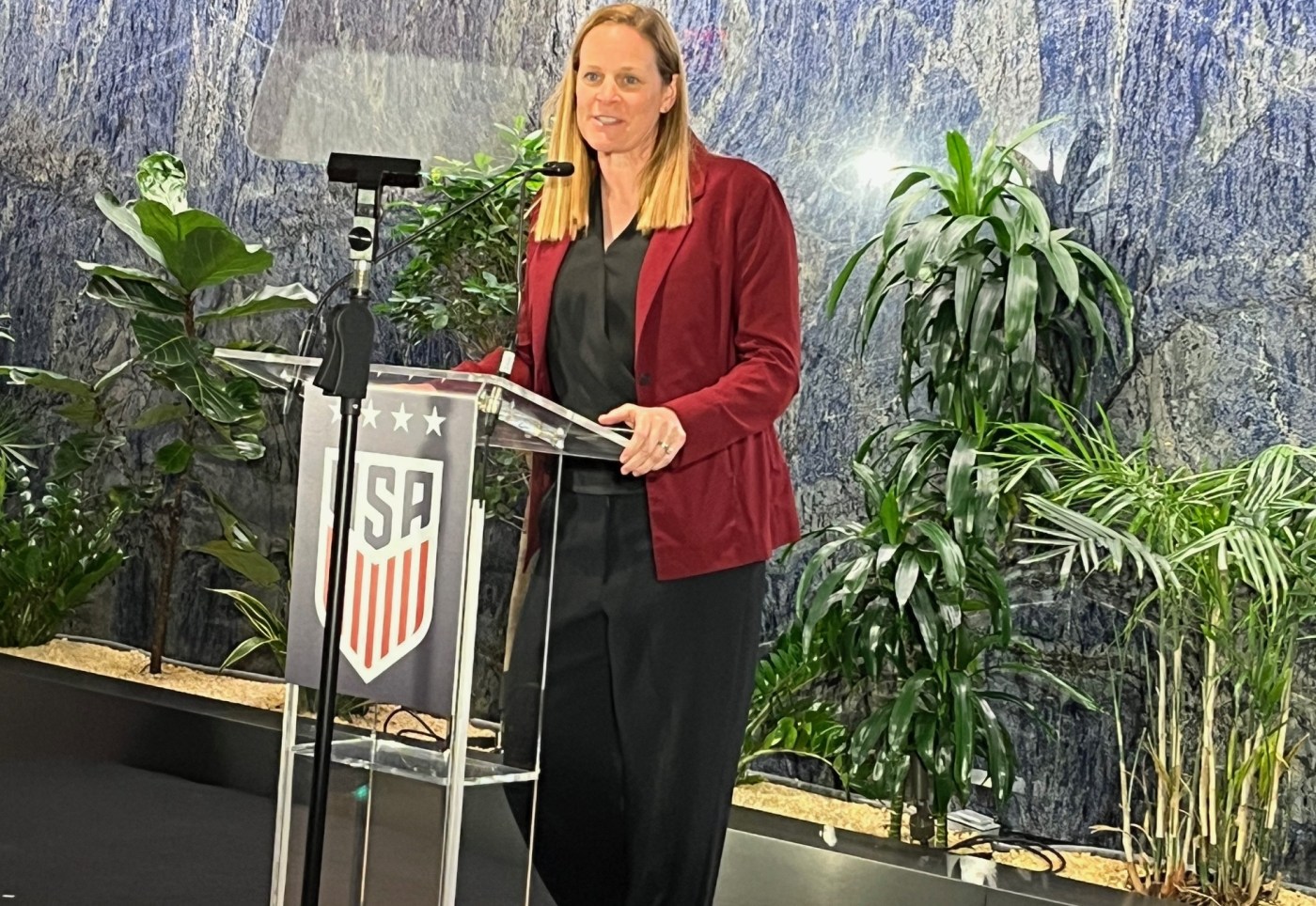
“Together, we possess an extraordinary opportunity to stage the largest and most transformative Women’s World Cup in history, one that will ignite passion in a new generation of fans and foster the growth of the women’s game throughout our entire region and across the globe,” stated Cindy Parlow Cone, the President of the U.S. Soccer Federation. Her remarks reflect a forward-thinking vision for the tournament, asserting that the event will lay the groundwork for ongoing advancements in women’s soccer, creating a legacy that extends well beyond the year 2031, and establishing a new benchmark for the sport internationally.
Hosting the Women’s World Cup in North America would also occur five years after the men’s tournament, which is scheduled to take place in the summer across the United States, Mexico, and Canada. This joint hosting not only emphasizes the rich soccer culture in the region but also offers a unique opportunity to showcase women’s sports on an equal footing with their male counterparts.
Historically, the Women’s World Cup has only been held in more than one country once, which was in 2023 when it took place in Australia and New Zealand. Additionally, for the 2035 competition, FIFA has announced that it will either be hosted in Europe or Africa, with expectations that it will take place throughout the United Kingdom, embracing England, Scotland, Wales, and Northern Ireland.
“Concacaf is wholeheartedly in favor of this four-nation bid, which exemplifies our One Concacaf philosophy,” remarked Victor Montagliani, the president of the federation. His endorsement resonates with a broader commitment to promoting women’s football, indicating that the confederation is more dedicated than ever to uplift and support the women’s game.
The United States has a multitude of options regarding venues for the matches, while Mexico is inclined to consider three major cities that will host the upcoming men’s competition: Mexico City, Monterrey, and Guadalajara. Furthermore, Costa Rica is poised to nominate its national stadium located in San Jose, and Jamaica faces the challenge of upgrading its national stadium in Kingston to meet the required standards for a World Cup event.
“It is no small task for a nation as small as ours to host World Cup matches,” expressed Jamaican federation President Michael Ricketts. He articulated the significance of the opportunity, emphasizing that this development is “absolutely tremendous.” His comments reflect the pride and excitement that comes with the prospect of participating in such a grand event.
Costa Rica has previously proven its capability as a host nation, having successfully organized women’s youth World Cups in 2014 and 2022. This experience enhances the region’s capacity to effectively manage a high-caliber global tournament, setting the stage for a truly spectacular celebration of women’s soccer in 2031, fostering empowerment, and inspiring future generations of athletes. Overall, the combined efforts of these four nations present an exciting chapter in the evolution of women’s sports, aiming to break boundaries and establish a legacy that extends far beyond the limitations of the pitch.
 World of sports
Leave a comment