
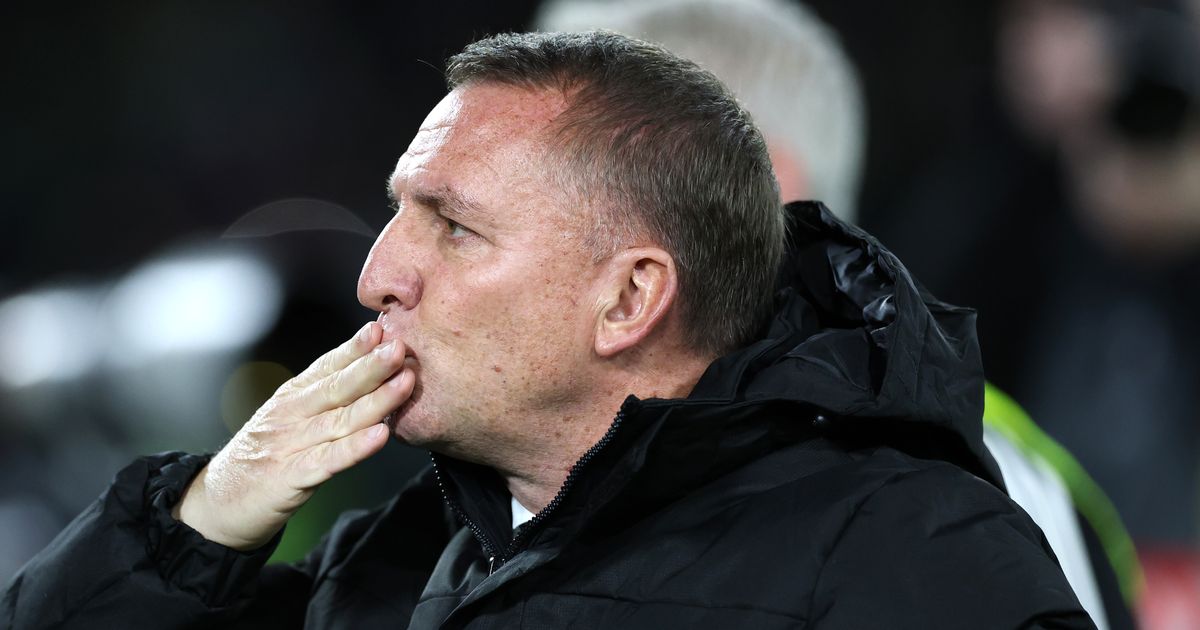
Celtic has officially announced that Brendan Rodgers has stepped down as manager, effective immediately. The departure of the 52-year-old coach comes in the wake of a disappointing 3-1 loss to Hearts, which has left the team languishing eight points behind the leaders in the Scottish Premiership. In the interim, Martin O’Neill will take over managerial duties—marking his return to the club after previously guiding Celtic from 2000 to 2005.
Celtic’s leadership shared that Rodgers submitted his resignation on Monday evening, an announcement that has stirred significant reactions throughout the Scottish football community. The team has struggled, suffering an unexpected 2-0 defeat against Dundee on October 19. This recent match against Hearts resulted in consecutive league losses for the first time since the beginning of 2023. A notable own goal by defender Dane Murray, along with goals from Hearts’ Alexandros Kyziridis and Lawrence Shankland, allowed Derek McInnes’s side to secure a decisive victory at Tynecastle Stadium.
In their official statement regarding Rodgers’ abrupt exit, Celtic remarked, “Celtic Football Club can confirm that football manager Brendan Rodgers has today tendered his resignation. It has been accepted by the Club, and Brendan will leave his role with immediate effect. The Club appreciates Brendan’s contribution to Celtic during his two successful periods at the Club. Brendan leaves Celtic with our gratitude for the role he has played during a notable period of success for the club, and we wish him the best in his future endeavors. The process to appoint a new permanent manager is underway, and the Club will provide updates to supporters as soon as possible.”
Furthermore, Celtic confirmed that O’Neill, along with former midfielder Shaun Maloney, will lead the team during this interim phase. O’Neill, now 73 years old, is a revered figure among Celtic fans, having achieved considerable success during his first tenure, which included seven major trophies, among them three league titles. Additionally, he famously guided the club to the UEFA Cup final in the 2002-03 season, narrowly missing out on victory in a thrilling 3-2 match against José Mourinho’s Porto.
In his official remarks regarding O’Neill’s return, the club stated, “We are pleased that former Celtic manager, Martin O’Neill, alongside former Celtic player Shaun Maloney, have accepted the responsibility of overseeing Celtic first-team matters during this interim period. More information will be provided shortly.”
Following Rodgers’ resignation, principal shareholder Dermot Desmond issued a striking statement criticizing the former manager, highlighting his disappointment in how recent events transpired. He noted, “Brendan Rodgers has today tendered his resignation as manager of Celtic Football Club. I want to acknowledge Brendan’s contributions during his two managerial spells, where he brought significant success that is now part of the club’s modern history. However, I must also voice my profound disappointment regarding the manner in which things have unfolded in recent months.”
Desmond elaborated on the initial reasons for bringing Rodgers back two years prior, emphasizing the trust placed in him to lead the club into a new era of sustained success. However, this trust was shaken by what Desmond described as questionable conduct and communication from Rodgers. He recounted a June meeting where both he and Chief Executive Michael Nicholson expressed their keen interest in offering a contract extension, affirming the club’s full support and long-term commitment to him. Despite this, Desmond claims that Rodgers later implied in press conferences that the club had not shown any intention to extend his contract—a statement Desmond characterized as “simply untrue.”
The shareholder went on to mention that meetings with Rodgers had been frequent, including regular discussions about the club’s strategies and priorities. He asserted that every player acquisition and departure during Rodgers’s tenure had occurred with the manager’s full knowledge and approval, dismissing any claims to the contrary as “absolutely false.” Desmond expressed frustration with the public remarks made by Rodgers regarding club operations, stating that they were unexpected and not previously discussed in a constructive manner.
Despite the opportunities provided for Rodgers to address his concerns, Desmond claimed he could not identify a single instance where the club had failed to support him. Instead, he described Rodgers’s actions as divisive and misleading, which contributed to a toxic environment around the club and fostered negative sentiments towards both the executive team and the Board. Some of the criticism directed at club officials and their families was characterized as unwarranted and unacceptable.
Desmond concluded by reaffirming the commitment of every board and executive team member to the club’s success, stating that recent failures were not due to the club’s structure but rather stemmed from one individual’s desire for self-preservation. He emphasized the longstanding success of Celtic’s operational model, which includes clear roles for the manager, Chief Executive, and Board.
Looking ahead, Desmond expressed a collective ambition to ensure the club’s continued domestic success and to achieve further progress in Europe. He reiterated that all generated income would be reinvested into the club’s goals and for the betterment of Celtic Football Club. He underscored that Celtic is greater than any single individual, urging a focus on restoring harmony, strengthening the team, and continuing to foster a club that reflects its values and traditions, while striving to meet the expectations of its dedicated supporters.
As the club transitions under interim leadership, Celtic faces not only the challenge of transitioning personnel but also the vital task of restoring momentum and morale among the players and fans alike. The immediate future will be critical for Celtic as they navigate this period of uncertainty, aiming to unite the club and rally towards common goals, all while carefully considering the appointment of a new long-term manager who can drive the club forward in both domestic competitions and on the European stage.
 World of sports
Leave a comment