
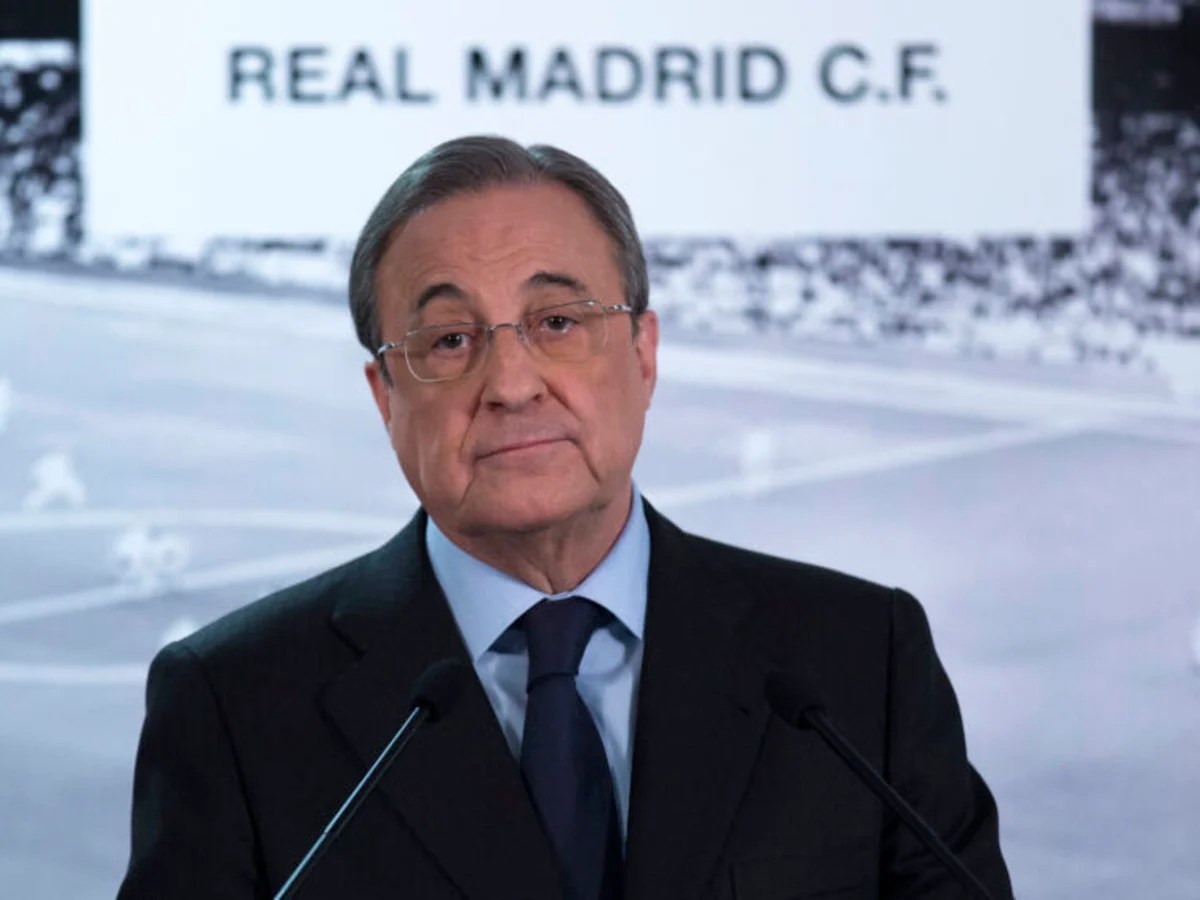
After a protracted series of courtroom disputes and unsuccessful negotiations, Real Madrid, along with A22 Sports Management—the organization behind the controversial European Super League—are gearing up to initiate a lawsuit against UEFA, seeking an extraordinary €4.5 billion in damages. This legal action is rooted in a pivotal antitrust ruling by the European Union, which alleges that UEFA has abused its dominating position in European football, effectively inhibiting fair competition within the sport.
The European Super League, initially introduced as a revolutionary concept in competitive football, has once again captured headlines, with stakes that have now reached unprecedented levels. Real Madrid and A22 Sports Management have officially declared their intent to pursue legal action against UEFA for a staggering €4.5 billion. This figure not only represents supposed lost profits but also reflects reputational damages and competitive harm attributed to UEFA’s monopolistic practices.
According to reports from AS, legal representatives for both Real Madrid and A22 are actively preparing the lawsuit, marking a significant strategic shift after experiencing months of futile discussions and numerous unproductive meetings with UEFA. The impasse has grown increasingly frustrating, prompting Madrid and A22 to adopt a more confrontational approach.
This decision follows a favorable ruling from a Madrid court, which dismissed UEFA’s appeals and affirmed that UEFA had “seriously infringed European Union free competition rules.” For Florentino Perez, the president of Real Madrid, this legal backing serves as a pivotal moment he has awaited for a long time. The ruling empowers the club to actively seek justice and reclaim substantial financial losses they believe were incurred due to UEFA’s alleged unjust practices.
The legal battle’s origins date back to April 2021 when twelve premier European clubs, including Real Madrid, Barcelona, Manchester United, and Juventus, announced the formation of the Super League. This initiative was designed as a rival to the revered UEFA Champions League and was anticipated to offer higher revenues alongside a modernized framework for elite competition, featuring dedicated tiers for both men’s and women’s football. However, the project faced immediate backlash and unraveled within just 48 hours. Public protests erupted, government representatives denounced the venture, and UEFA, with FIFA’s backing, issued threats of severe repercussions. Consequently, the “Big Six” clubs from England rapidly withdrew, leaving Real Madrid and Barcelona to navigate the aftermath almost independently.
Despite such setbacks, Perez remained defiant, asserting that UEFA’s operational model represented a “monopoly that stifles innovation and undermines fair competition.” With support from Bernd Reichart, the CEO of A22, the push for legal recourse gained momentum. Their efforts culminated in a landmark ruling from the Court of Justice of the European Union (CJEU) in December 2023, which declared that UEFA’s stringent requirements for sanctioning new competitions contravened European Union law.
The CJEU’s decision was later corroborated by Spain’s Audiencia Provincial, which established that UEFA had abused its dominant position by blocking the Super League. This landmark ruling not only lent credibility to Real Madrid’s long-standing assertions but also opened the floodgates for what could emerge as the most high-stakes lawsuit in the annals of football history.
In the wake of the CJEU’s ruling, both UEFA and A22 endeavored to explore possible avenues for reconciliation. Key figures participated in negotiations, including Bernd Reichart from A22, Teodoro Teodoridis from UEFA, and representatives from both Real Madrid (Anas Laghrari) and Barcelona (Fernando Ledesma). Initially, there was hope for progress as discussions appeared to make headway, particularly concerning broadcasting rights and the governance framework for future competitions.
Nevertheless, these talks ultimately disintegrated when the parties could not reach an agreement on competition formats. Insiders suggested that UEFA was perceived to be “stalling to buy time,” with no genuine intention to broker a deal. The break in talks left Madrid and A22 feeling that litigation was now their only viable option to accomplish their objectives.
While Barcelona’s president, Joan Laporta, seemed to adopt a more conciliatory approach, aligning himself closer with UEFA’s European Football Clubs (EFC, formerly known as the European Club Association), Perez remained resolute in his position. In recent events, Laporta has sought to mend ties with UEFA and foster collaborative relationships. He even attended a meeting held in Rome, organized by Paris Saint-Germain’s president Nasser Al-Khelaifi, wherein UEFA chief Aleksander Ceferin was also present. During this meeting, Laporta expressed, “By attending this gathering, we aim to cultivate rapport and facilitate progress toward an agreement.”
Conversely, Perez interprets the ruling as a validation of his perspective and a crucial opportunity to challenge UEFA’s extensive grip on European football. The approaching lawsuit, which may unfold across various jurisdictions, signifies the culmination of years of subterfuge and contention—one that could fundamentally alter the financial and governance structures within the sport. The ramifications of this legal dispute have the potential to drastically impact club operations, regulatory frameworks, and the formats through which competitions are administered across European football, drawing keen interest from stakeholders eager to witness how this legal saga will transpire. As the landscape of football governance is poised for potential transformation, all eyes are on the developments of this high-stakes legal confrontation.
 World of sports
Leave a comment