
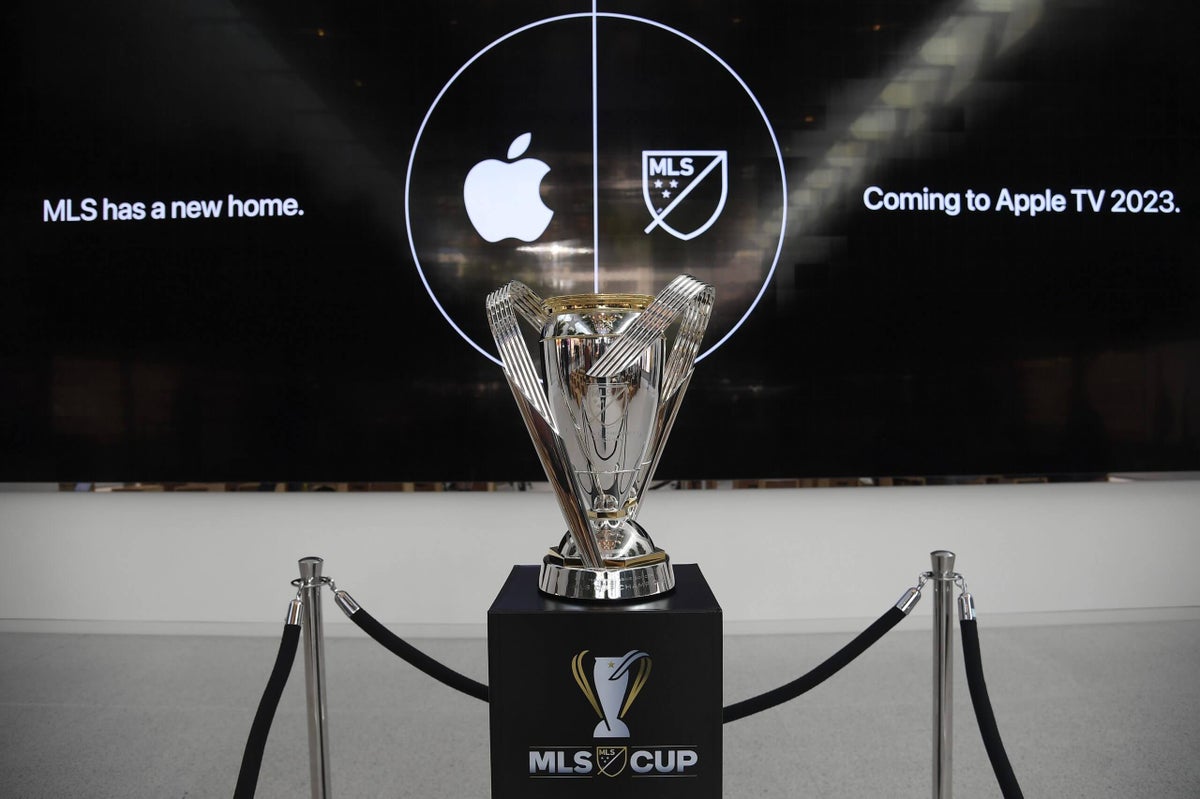
Major League Soccer (MLS) and Apple are poised to make important changes to their landmark streaming partnership, which is now set to conclude in 2029—approximately three-and-a-half years earlier than was initially planned. This groundbreaking adjustment represents a significant evolution in their collaboration, signaling a more agile and responsive approach to the broadcasting of MLS games and the generation of revenue.
As part of the restructured deal, MLS is expected to receive $200 million for the 2026 season, as reported by Sportico. Following this, the league anticipates earnings of $107.5 million during the 2027 “sprint” season, which is a unique and shorter format tailored to fit within a reimagined calendar. For the subsequent two seasons, 2027-28 and 2028-29, MLS is slated to secure $275 million each year. These financial figures indicate that the average gains for MLS align closely with the previous economic structure but favor a more immediate influx of cash. Reports suggest that this restructuring results in an increase of roughly $50 million in total receipts through mid-2029 when compared to prior expectations. Furthermore, Apple made a notable concession by relinquishing its right to terminate the agreement after 2027, reflecting a robust commitment to strengthening this partnership.
The impetus for these changes arises from two pivotal strategic shifts within MLS and the streaming landscape. First, the league’s decision to unify the previously separate Season Pass into Apple TV’s primary bundle starting in 2026 is a significant move toward streamlining user access. Second, MLS is preparing to transition to a fall–spring calendar beginning in 2027, a change intended to align the league more closely with international soccer calendars. By incorporating MLS games into Apple TV’s core offerings, both entities can enhance their outreach, effectively combining sports content with a varied selection of high-value entertainment, which can enrich the overall consumer experience.
The revised financial framework not only accelerates MLS’s revenue generation ahead of the post-World Cup media cycle but also strategically positions the league to assess its market standing and explore future growth opportunities sooner. This is particularly relevant as interest in soccer in North America is anticipated to surge following the 2026 World Cup. Such heightened attention presents a critical opportunity for MLS to engage with a wider audience and capitalize on the sport’s growing popularity.
The agreement originally established in 2022, which spanned a decade, was a significant milestone for American sports leagues, as it consolidated all matches onto a single streaming platform while eliminating local blackouts. This innovative approach was designed to create a unified viewing experience for fans, setting a new benchmark for sports broadcasting in the age of digital consumption.
With the new timelines clearly defined, MLS is set to finalize its shift to Apple TV’s primary offerings by 2026 and will adhere to the newly organized schedule through the 2028–29 season under the modified payment terms. This early conclusion of the agreement not only provides MLS an expedited chance to re-enter the media rights marketplace but also opens the door to potentially lucrative negotiations in the near future. Negotiating a new rights deal or extending its current agreement with Apple at the end of this term could offer immense strategic advantages, especially as soccer’s profile continues to rise in North America.
Apple’s ongoing efforts to enhance its sports portfolio, including the recent acquisition of Formula 1 broadcasting rights, further underscore its ambitions within the competitive streaming arena. This partnership between MLS and Apple signifies not only a commitment to enhancing the financial stability and growth prospects for the league but also marks an important milestone in how sports content is distributed and consumed in a rapidly changing digital landscape. The collaboration sets the stage for an exciting future, one where both parties can explore new avenues for fan engagement and revenue generation in the evolving world of sports entertainment.
 World of sports
Leave a comment