
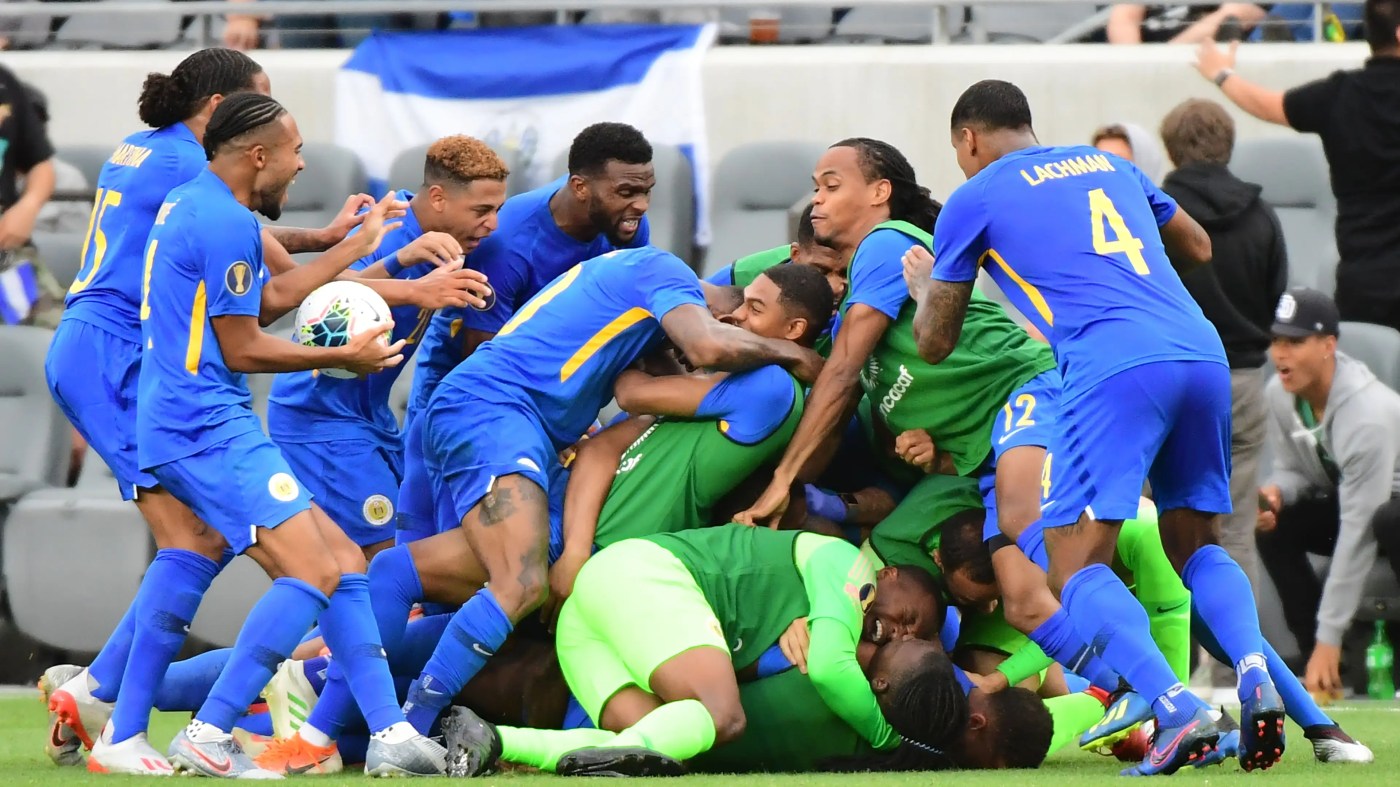
The small Caribbean island of Curacao has made headlines by becoming the smallest nation ever to qualify for the World Cup, a remarkable achievement that was sealed through a draw against Jamaica, managed by former England boss Steve McClaren. This historic milestone not only highlights the rising prominence of Curacao in international football but also symbolizes a new era for a nation that has often been overlooked on the global stage.
Before Curacao’s breakthrough, Iceland held the title for the smallest nation to qualify for the prestigious tournament, having reached the finals in 2018. However, Iceland’s population far exceeds that of Curacao, which is home to just over 150,000 residents—an amount that places the island’s demographics on par with smaller cities in the UK, like Cambridge or Huddersfield. Geographically, Curacao covers an area of only 171 square miles, rendering it smaller than the Isle of Man.
The match against Jamaica was pivotal, as it ended Jamaica’s hopes of qualifying for a World Cup for the first time since 1998. In a dramatic turn of events, McClaren resigned following the goalless draw, a game where his team sought a win at home in Kingston to advance. The match featured a particularly intense moment when an injury-time penalty awarded to Jamaica was controversially overturned by VAR after a review, highlighting the increasing influence of technology in modern football.
At the helm of Curacao’s success is coach Dick Advocaat, who, at 78 years old, is set to make history as the oldest manager to participate in a World Cup. He will surpass the record previously held by Otto Rehhagel, who was 71 when he led Greece in the 2010 World Cup. Advocaat assumed his role less than a year ago, stepping in after a contentious payment dispute between players and the national football association was resolved. His main goal has been clear: steer Curacao towards World Cup qualification, a feat that reflects his extensive coaching experience with multiple national teams and clubs across Europe and beyond.
Situated just off the coast of Venezuela, Curacao gained the status of an autonomous country within the Kingdom of the Netherlands in 2010, a significant political shift following the dissolution of the Netherlands Antilles. Remarkably, just a decade ago, Curacao’s FIFA ranking languished at a lowly 150th position, but consistent hard work and dedication have propelled them to the 82nd spot in the current rankings—a testament to their growth and determination.
The upcoming 2026 World Cup will feature an expanded format consisting of 48 teams, an increase from the previous 32. This new structure, paired with automatic qualifications granted to host nations Canada, Mexico, and the United States, has created a more favorable environment for smaller nations like Curacao. This will allow them to shine on the world stage, joining an exciting group of first-time entrants including Cape Verde, Uzbekistan, and Jordan.
Excitement within the Curacao camp is palpable, especially from players like midfielder Juninho Bacuna, who has a history with clubs such as Huddersfield, Rangers, and Birmingham City. Bacuna expressed his thrill at the prospect of the World Cup, remarking, “It’s surreal and marks one of the most significant achievements for Curacao.” He acknowledged that just a few years prior, such an accomplishment would have seemed unimaginable. “To be a part of this and see our collective dream become a reality would be absolutely incredible.”
In their impressive qualifying campaign, Curacao demonstrated remarkable strength and resilience, winning seven of their ten matches and finishing the process unbeaten. However, their dreams almost faced an interruption during a tense match against Jamaica when a penalty was awarded to Jamaica due to what seemed to be a foul in the dying moments of the game. The referee initially pointed to the spot, igniting a wave of jubilation from Jamaican fans. Yet, he was soon advised by VAR officials to check the video replay, leading to a momentous reversal that left the crowd in uproar. This incident illustrates how fine margins and technology play critical roles in high-stakes matches.
At the World Cup, Curacao will not be alone; they will be joined by fellow CONCACAF nations Haiti and Panama. Meanwhile, Jamaica will have to enter the Intercontinental play-offs to secure their place. Haiti also has a compelling story, as they marked their return to the World Cup for the first time since 1974 after defeating Nicaragua 2-0 in their qualifying match.
Advocaat’s coaching career has been storied, encompassing roles with various national teams as well as club management across different leagues. Having previously guided the Netherlands, United Arab Emirates, South Korea, Belgium, Russia, Serbia, and Iraq, he has achieved substantial success, including leading the Netherlands to the quarter-finals of the 1994 World Cup. His varied experience makes him an invaluable asset for Curacao, especially during this defining period in their footballing history.
The presence of a prestigious coach like Advocaat has significantly impacted Curacao’s national team, as Bacuna highlighted the respect and reverence players have for him. “His reputation opens many doors; everyone knows that Dick Advocaat is a seasoned coach and commands respect,” Bacuna stated. The atmosphere within the team has transformed, and players have felt a sense of growth and purpose as they prepared for their upcoming matches.
Curacao’s squad is a unique blend of local and Dutch talent, with many players born in the Netherlands but eligible to represent Curacao through their familial connections. The team includes emerging stars like Joshua Brenet, a defender for Livingston, Ar’jany Martha from Rotherham, Middlesbrough’s Sontje Hansen, and Tahith Chong, who was born in Curacao and had stints in the Premier League with Manchester United. This multicultural composition not only enriches the team but also showcases the bridge between Curacao and the Netherlands in footballing talent.
For Bacuna, representing Curacao carries profound personal significance. It offers him the unique opportunity to play alongside his older brother, Leandro, who captains the national team. Bacuna’s decision to join the Curacao side in 2019 was pivotal; he recognized that the chance to wear the national colors alongside his brother was something special. Reflecting on his choice, he stated, “I was only 21 with time ahead to make my mark, but I realized my window to break into the Dutch national team was closing. So, I decided to take the path that would let me share the pitch with my brother.”
The progress that Curacao has made on the footballing front serves as an inspiration for younger generations and may encourage more players with Dutch heritage to represent this burgeoning side. Bacuna echoed this sentiment, stating, “As we witness the recent surge in our footballing stature, I believe more young players who qualify for the Dutch national team will choose to join Curacao, enriching our squad and fostering even greater strengths as we move forward.”
As Curacao prepares for their moment in the spotlight at the World Cup, the shared ambition of the players and coaching staff reflects a united spirit, signaling that this island nation is poised to capitalize on its well-deserved opportunity to shine on the global stage.
 World of sports
Leave a comment