
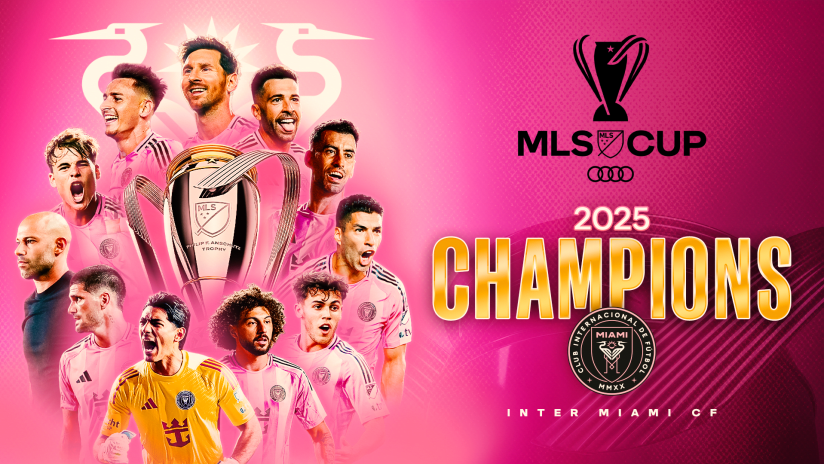
Lionel Messi has emerged as the marquee figure for Inter Miami, significantly impacting Major League Soccer and the broader soccer landscape in the United States. Even as he approaches the latter stages of his storied career at 38 years old, the Argentine superstar remains a vital catalyst, driving the league’s aspirations to elevate the profile of soccer in America.
Messi’s journey in MLS has been extraordinarily dynamic. He has attracted new fans to the sport, claiming back-to-back MVP awards while enchanting audiences far and wide. His unmatched skill, tactical wisdom, and leadership qualities have enhanced the league’s visibility, igniting discussions about MLS’s competitive stature compared to European leagues and inspiring a surge of interest in soccer across the nation.
Despite all his achievements, one elusive prize had remained out of reach for Messi: the MLS Cup trophy. However, on a thrilling Saturday afternoon, the atmosphere in the packed and vibrant Chase Stadium reached a fever pitch as the match concluded. In a tense finale that extended for almost nine minutes of stoppage time, Messi celebrated with his arms raised high, finally claiming the championship that so many had anticipated.
This particular match was a rollercoaster ride; it was one that Inter Miami could have lost, given the ebb and flow of play. Messi’s contributions proved decisive; he assisted Rodrigo De Paul’s goal in the 71st minute and later provided another critical assist as Miami achieved a 3-1 victory over the Vancouver Whitecaps. The match played out as a testament to Messi’s enduring brilliance and the resilience of his team in a high-pressure environment.
Much of the second half saw Vancouver seize control, overturning an initial 1-0 deficit and creating multiple chances that could have turned the game in their favor. Their offensive push showcased a well-organized strategy, putting Miami on the defensive. Yet, against the odds, Messi managed to intercept a misplayed ball from Vancouver’s Andres Cubas, sending a perfectly timed pass to De Paul who struck for the go-ahead goal, highlighting Messi’s ability to deliver in crucial moments even amidst overwhelming pressure.
In the hours leading up to the kickoff, however, the atmosphere around the stadium lacked the electric ambiance typical of a championship celebration. Streams of fans adorned in the club’s signature pink tones, alongside visitors clad in the white and blue of the Whitecaps, made their way to Commercial Boulevard in Fort Lauderdale. Despite being situated 35 miles away from Miami, the temporary stadium—adjacent to an executive airport—provided a quaint, familiar environment for spectators, reflecting the club’s transitional phase as they anticipate the opening of the new, state-of-the-art 25,000-seat Miami Freedom Park next spring, a part of a $1 billion mixed-use development project next to Miami International Airport.
As the game began, anticipation surged. This championship showdown featured two of the league’s highest-scoring teams, with Miami leading the regular season charts after netting 81 goals in 34 matches. On the flip side, Vancouver boasted a strong defense that had only allowed 38 goals all season, second only to the Philadelphia Union. The two teams, having not faced each other in regular season play, added an extra element of curiosity, as their prior meeting in the CONCACAF Champions Cup semifinals tilted in favor of Vancouver with a 5-1 aggregate.
Miami had fought valiantly through the playoffs with a minor setback against Nashville in the first round, scoring a remarkable total of 16 goals across four victories, showcasing their impressive offensive capabilities and strategic depth. The collective strength of the team, complemented by Messi’s presence, created an aura of confidence and determination.
Adding to the star-studded atmosphere, Canadian NBA legend Steve Nash ceremonially carried the trophy onto the field before the match, merging the worlds of basketball and soccer. Flags waved enthusiastically among dozens of Vancouver fans situated in one of the stadium’s ends, enriching the match’s cultural tapestry and underscoring the diverse appeal of soccer across North America.
The match wasn’t solely about Messi, even though he stood out. The clash also represented a farewell to two other legends, Sergio Busquets and Jordi Alba, who had achieved significant success alongside Messi at FC Barcelona before making their home in Miami. Their presence only heightened the stakes and emotions of the encounter, with the sentiments of nostalgia interwoven with the thrill of contest.
Vancouver’s pressing style intended to challenge Miami’s ability to construct their attacks. However, it took mere moments for Miami to effectively breach the Whitecaps’ defense. Within just eight minutes, a beautiful sequence unfolded involving Messi and three fellow Argentines; he deftly maneuvered past two defenders to deliver a pass to De Paul, who flicked it to Tadeo Allende, charging into space.
As Allende entered the penalty box, an unmarked Mateo Silvetti lurked, waiting for a potential tap-in. But the ball ricocheted off a backtracking defender, Edier Ocampo, and into the net, marking the first MLS Cup own goal in 15 years, a quirky yet pivotal moment that set the tone for the rest of the match.
As the game progressed, the Whitecaps displayed remarkable resilience through the latter portion of the first half, tightening their defensive line and forging quality chances. Notably, Sebastian Berhalter executed a well-placed free kick, almost leveling the match when Brian White attempted a header that landed in the hands of Miami’s goalkeeper, Rocco Rios Novo.
Moments later, Rios Novo faced another challenge as he blocked a point-blank shot from Emmanuel Sabbi, which was set up by none other than German star Thomas Müller. The tension mounted as these near-misses suggested that Vancouver was on the brink of turning the tide.
Despite trailing, the Whitecaps carried optimism into the second half, maintaining their assertiveness and forcing Miami’s defense into precarious positions. Coaches Gregg Berhalter and Mauricio Pochettino watched keenly from the stands as their tactical insights hung in the balance. A promising opportunity slipped by when Berhalter launched a free kick that sailed over the crossbar, encapsulating the frustration for Vancouver.
Miami briefly eased the pressure, and as Takaoka found himself out of position after a defensive play, Messi’s header grazed the goalpost — a reminder of the narrow margins prevailing in critical moments. The Whitecaps’ persistence paid off in the 60th minute when Ali Ahmed scored with a well-placed shot that deflected off Rios Novo and nestled into the net, igniting hope for Vancouver fans.
Just two minutes later, disaster struck for Miami; Sabbi’s powerful shot ricocheted off the right post, narrowly missing the go-ahead goal, while a follow-up attempt hit the left post, further escalating the tension. These near-misses haunted Vancouver, who were seemingly in control, only to be thwarted by an unexpected turnover from Cubas as he inadvertently surrendered possession to Messi.
In a stunning display of situational awareness, Messi instinctively sent a perfectly weighted pass along to De Paul, who took one touch and slotted the ball into the far corner of the net. Following the goal, the cheers from ecstatic fans resonated as they embraced their hero, chanting “Messi! Messi!”— a moment that epitomized the emotional connection between the superstar and his supporters.
As the match drew to a close, Vancouver’s urgent efforts to find an equalizer led to limited threats, as Miami’s defense adapted to the mounting pressure. In a final act of brilliance, Messi further sealed the victory by setting up Allende for a breakaway goal, affirming the Champions’ status of Inter Miami.
With that decisive moment, Messi achieved MLS Cup champion status for the first time—a landmark achievement that added to his illustrious list of accomplishments, culminating in 48 trophies throughout his remarkable career. Despite nearing the end of his playing days, there’s an undeniable sense that Messi’s extraordinary talent and drive are far from finished, suggesting there are still more dazzling performances ahead.
 World of sports
Leave a comment