
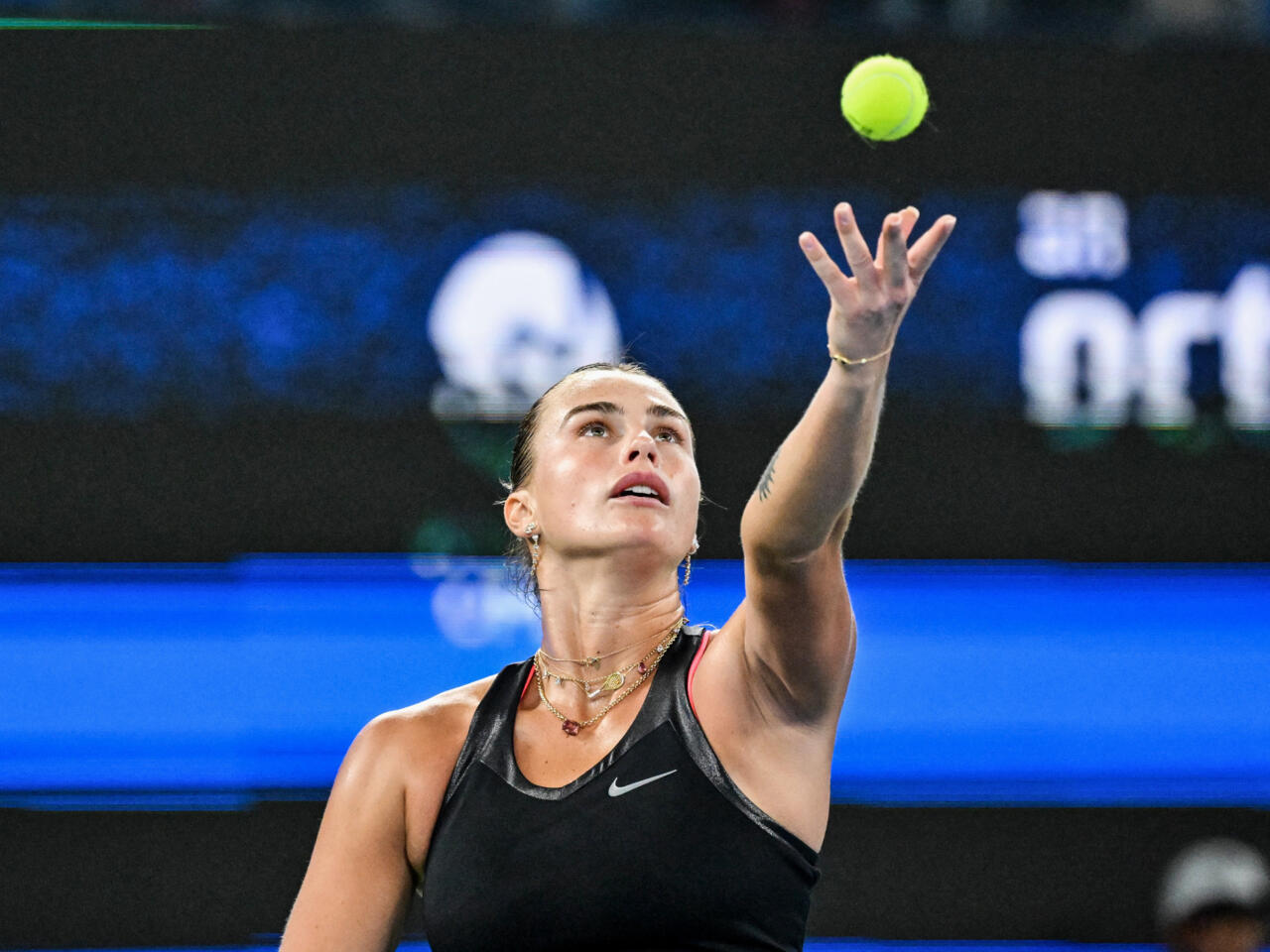
World No. 1 Aryna Sabalenka has recently made headlines for voicing her opposition to the participation of transgender athletes in women’s tennis, a topic that has sparked heated discussions within the sports community about fairness and equality in competition.
In an engaging interview with Piers Morgan, Sabalenka articulated her belief that allowing transgender women to compete alongside biological females raises significant ethical concerns. She stated that it may be inherently unfair for women to compete against individuals who, by her classification, are “biological men.” This discussion gained particular attention since it coincides with her promotional efforts for the upcoming exhibition match, termed the ‘Battle of the Sexes,’ against Nick Kyrgios, scheduled for December 28 in Dubai.
The current policies of the Women’s Tennis Association (WTA) permit transgender women to compete under specific conditions. They must declare their gender as female for a minimum of four years, maintain testosterone levels below 2.5 nmol/L for at least two years, and consent to testing protocols. Nonetheless, the enforcement of these rules can be adjusted on an individual basis by the WTA Medical Manager, allowing for variability that some argue could impact fairness.
Sabalenka, while affirming her respect for transgender individuals, expressed concern that they might possess inherent advantages in sports competition. She remarked, “That’s a tricky question. I have nothing against them. But I feel like they still got a huge advantage over women, and I think it’s not fair for women to face basically biological men.” In doing so, the Belarusian player underscored the extensive dedication and hard work female athletes invest throughout their careers to achieve their peak performance levels. It raises the question of whether it is indeed equitable for them to compete against those who may have innate physical advantages due to their biological makeup.
Nick Kyrgios, who has been vocal about various issues in tennis, supported Sabalenka’s stance, stating, “I think she hit the nail on the head.” Despite the absence of transgender athletes in recent competitive play, the historical aspects of this discussion cannot be ignored. A notable figure in this context is Renee Richards, a trailblazer who participated in the WTA Tour from 1977 to 1981 and went on to coach tennis icon Martina Navratilova, further emphasizing the nuanced history of transgender inclusion in sports.
Navratilova, celebrated as an 18-time Grand Slam singles champion, has also taken a firm position against the inclusion of transgender athletes in women’s sports, claiming that it undermines the integrity of female competition. On the other side of the debate, tennis legend Billie Jean King, who famously won the original ‘Battle of the Sexes’ in 1973, perceives the exclusion of transgender athletes as a form of discrimination, illustrating the division of opinions even among champions of the sport.
In 2024, the Lawn Tennis Association updated its regulations to prevent transgender women from competing in female categories at national and inter-club levels. This decision mirrors broader trends across various sports organizations, many of which are reviewing and modifying their governing policies regarding athletes who have experienced male puberty, creating restrictions that significantly impact transgender participation at elite levels.
Advocacy groups advocating for transgender rights argue that excluding these athletes amounts to discrimination and undermines their right to compete. The counter-narrative, however, suggests that the physical advantages gained from male puberty—such as differences in muscle mass and bone density—persist despite medical interventions and hormone therapy.
In the same interview, Sabalenka addressed recent comments made by Ukrainian player Marta Kostyuk, currently ranked No. 26 in the world. Kostyuk expressed feelings of disadvantage against competitors like Sabalenka and Wimbledon champion Iga Swiatek because they possess higher testosterone levels. Sabalenka responded sharply, saying, “All I hear here are just excuses,” pointing out that Kostyuk has considerable strength and fitness herself, arguing that issues of testosterone levels cannot singularly account for her competitive outcomes against top players.
The WTA has not provided immediate feedback regarding the pressing issues raised concerning transgender inclusion and the future of women’s tennis, leaving many questions unanswered as the discussion surrounding gender identity continues to evolve in the sporting world. The growing complexity of this debate reflects broader societal conversations about inclusion and fairness, underscoring the need for continued dialogue and reflection in the realm of competitive sports.
 World of sports
Leave a comment