
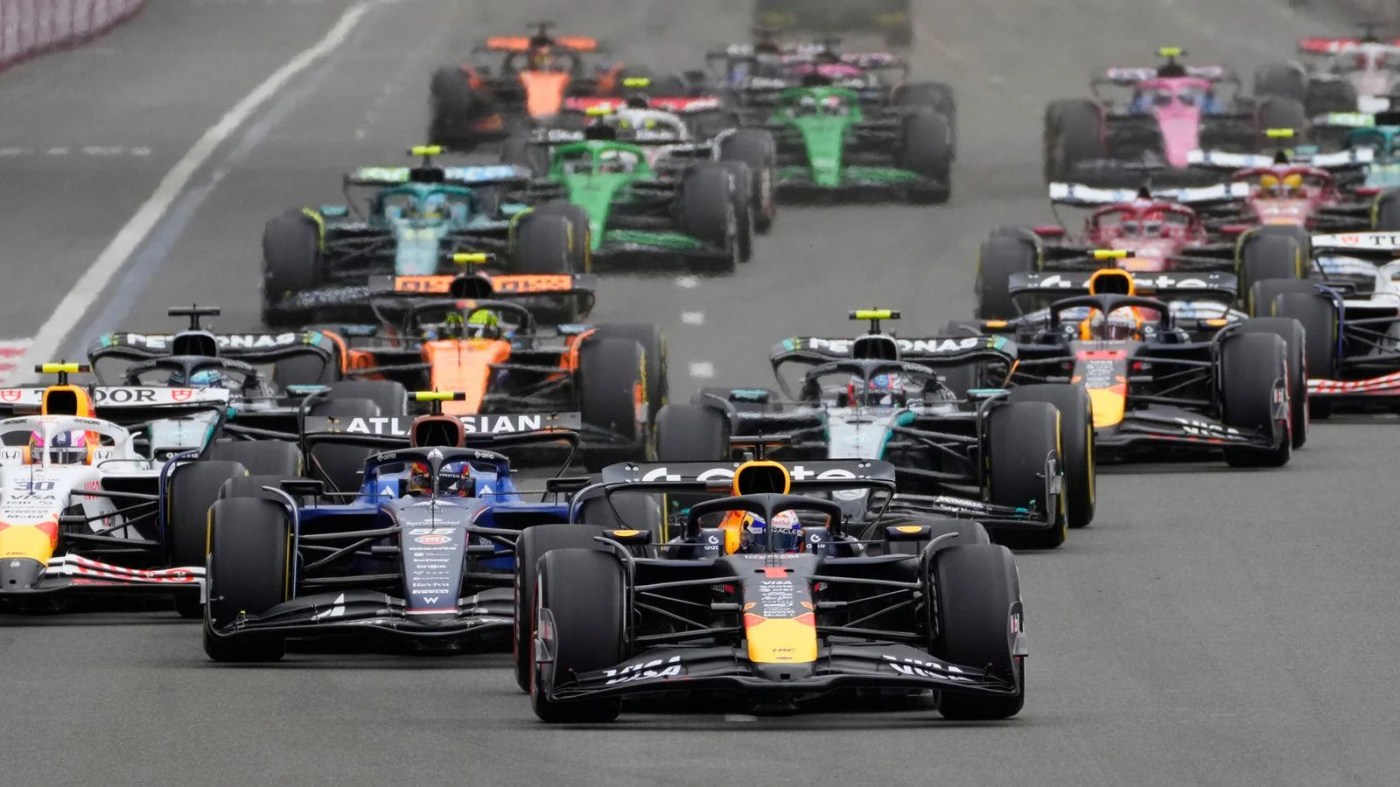
Formula 1 has revealed a significant transformation for the future of racing with the introduction of “Overtake Mode,” set to replace the Drag Reduction System (DRS) starting in the exciting 2026 season. This change marks a pivotal shift in the sport’s regulations, with the aim of making racing more competitive and engaging for both drivers and fans alike.
Under the new rules, drivers will be equipped with an innovative feature dubbed “Boost Mode.” This gives them the flexibility to maximize their car’s power at any point during a lap, a substantial advancement that allows a push of a button to unleash the engine and battery’s full capacity—comprised of 50 percent electrical power. This mechanism harkens back to the KERS system, which was part of F1 from 2009 to 2013, offering a thrilling glimpse into how power deployment can enhance racing dynamics.
Formula 1 officials emphasize that the redesigned cars will empower drivers like never before, demanding a sophisticated understanding of how to extract optimal lap times during both qualifying sessions and intense wheel-to-wheel combat on the track. The Overtake Mode, serving as a DRS substitute, can be activated when a driver is within one second of another car at designated detection points—a condition similarly required for prior use of DRS. The additional power available can be utilized wholeheartedly in one go or strategically spread throughout the lap, although the precise duration for using Overtake Mode remains to be officially confirmed.
This combination of Overtake Mode and the versatile Boost Mode is anticipated to significantly enhance the quality of racing. With the new cars designed to facilitate closer following of competitors, fans can expect a more thrilling viewing experience. Prominent Mercedes driver George Russell expressed optimism about the forthcoming regulations, asserting, “I think you will see more overtakes next year, but more overtakes in obscure locations—where we’ve never seen overtakes before.” He elaborated that if a driver finds themselves with a depleted battery while another driver charges ahead, that difference could lead to unexpected maneuvers in previously unconventional passing spots.
A particularly striking modification in the upcoming regulations will be the implementation of the much-discussed movable wings, referred to as “Active Aero.” These components will allow the vehicles to operate in a default mode for cornering, closing the wing flaps to enhance downforce. However, on specifically designated straights, drivers will have the capability to shift into “Straight Mode,” which opens the wings to increase drag and elevate top speed. The enhancement of top speeds leads to greater braking zones, potentially reviving the spectacle of drivers executing late-braking overtakes—a maneuver that the talented Daniel Ricciardo practiced to perfection during his tenure with Red Bull.
Delving into the technical specifications, the new power units will blend 50 percent internal combustion with an equal percentage of electric power. The elimination of the MGU-H component, paired with an increase in MGU-K power from 120kW to a formidable 350kW, will develop fresh strategies for energy management on the track. Drivers may need to adapt by lifting off the throttle towards the end of the straights to recapture electrical energy back into the MGU-K system, allowing them to leverage that stored electric power for a burst of acceleration out of corners. This nuanced approach could lead to fascinating racing scenarios, where one driver, by lifting into braking zones, provides an opportunity for another to make a daring inside move.
Williams driver Alex Albon remarked on the evolutionary path Formula 1 is taking, comparing it to Formula E: “Look at Formula E as a more extreme version as to where we’re going to go to. You can see how the drivers manipulate the racing and qualifying and how they deploy all these kinds of strategies to gain performance.” He noted that while the changes in F1 may not reach the extreme levels of Formula E, an emphasis on mental acuity and the ability to navigate complex demands will benefit those drivers who can adeptly balance skill and strategy on the track.
With these ambitious changes on the horizon, the 2026 F1 season promises an exhilarating new era that not only prioritizes competitive racing but also demands heightened prowess and strategy from the drivers behind the wheel. Fans can anticipate a thrilling spectacle as F1 embraces this transformative journey towards more dynamic and unpredictable race events.
 World of sports
Leave a comment