
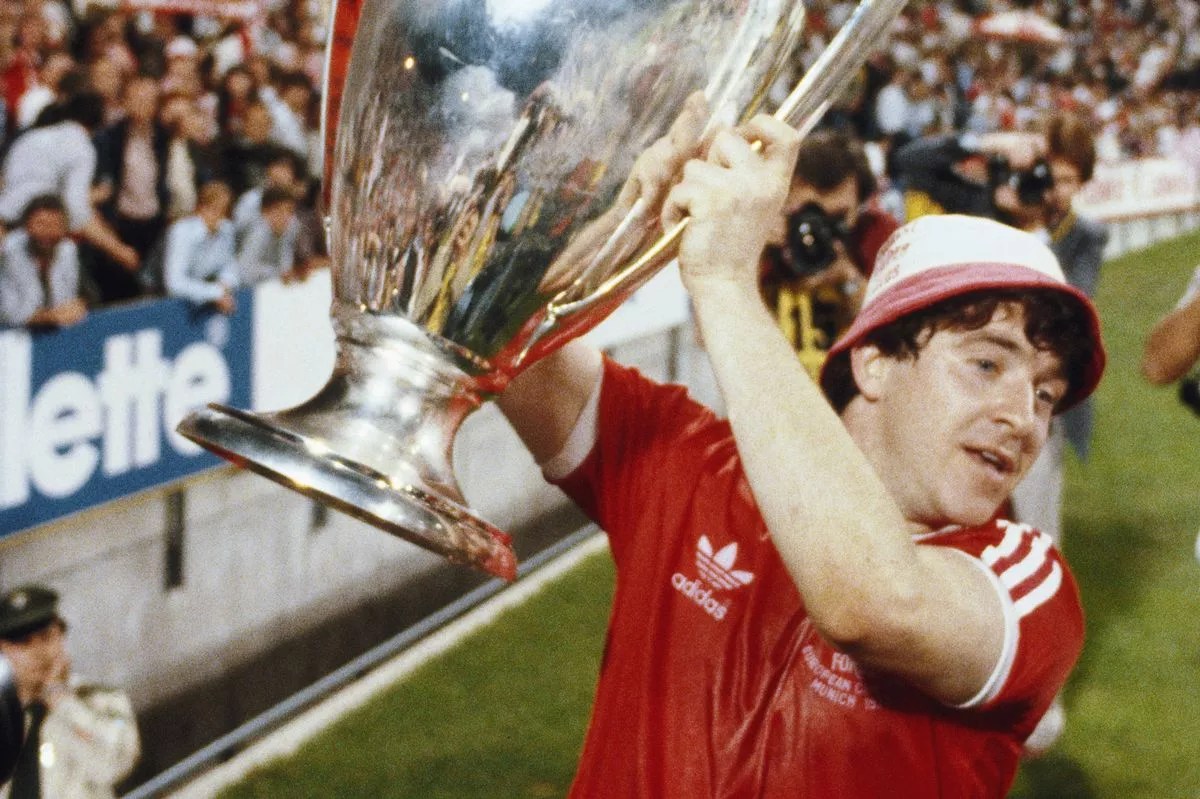
Former Scotland international and Nottingham Forest and Derby County winger John Robertson, hailed as “a Picasso of our game” by renowned manager Brian Clough, has sadly passed away at the age of 72. His contributions to football resonate deeply, leaving behind a legacy that celebrated his extraordinary talent and commitment.
Robertson’s career was marked by pivotal moments and brilliant displays on the pitch. He is perhaps best remembered for scoring the solitary goal that secured Nottingham Forest’s victory against Hamburg in the 1980 European Cup final, a monumental achievement that underscored his ability to shine on the grandest stages. Additionally, the previous year, he delivered the cross that led to Trevor Francis’ historic goal against Malmo, emphasizing his role as a key playmaker in the team’s campaign.
Playing for Scotland, Robertson’s talent was equally apparent. He etched his name in the annals of the national team’s history by scoring a memorable winning goal against England in 1981, a match that remains celebrated by fans for its intensity and significance. His performance at the 1982 World Cup in Spain further solidified his status as a top-tier player, as he found the net against New Zealand, showcasing his undeniable skill on an international platform.
Over the course of his career, Robertson earned 28 caps for Scotland, a reflection of his impact and dedication to the national team. Transitioning from player to coach, he served prestigious roles as an assistant manager alongside former teammate Martin O’Neill at various clubs, including Wycombe Wanderers, Norwich City, Leicester City, Celtic, and Aston Villa. His coaching philosophy and ability to develop players led to significant achievements, demonstrating his understanding of the game from a tactical and leadership perspective.
In his 2012 autobiography, “Supertramp,” Robertson provided insight into his transformative journey, detailing how Clough’s perception of him shifted over time. Initially viewed as a “scruffy, unfit, uninterested waste of time,” Robertson emerged as “one of the finest deliverers of a football I have ever seen, as fine as the Brazilians or the Italians.” This remarkable transformation speaks volumes about his determination and skill.
John McGovern, his captain at Nottingham Forest, likened Robertson to Ryan Giggs, but with the added advantage of being truly two-footed. This praise highlights not only Robertson’s versatility but also his exceptional technical ability that set him apart from many players of his era.
Born in the Viewpark area of North Lanarkshire, Scotland, Robertson began his football career with Drumchapel Amateurs and represented Scotland at youth levels before making the leap to Nottingham Forest in May 1970. He debuted later that same year and quickly became an integral part of the team.
Before Clough’s arrival at the club in 1975, Robertson found himself on the transfer list. However, under Clough’s guidance, his fortunes changed dramatically. He became a crucial player during a golden era for Nottingham Forest, famously appearing in 243 consecutive matches from December 1976 to December 1980. This extraordinary record exemplifies his resilience and dedication to the club’s success. He was instrumental in the team’s triumph in the 1978 League Cup final; scoring the vital penalty that secured victory against Liverpool.
In 1983, Robertson’s career took a turn when he was transferred to Derby County for a contentious fee that strained relationships between Clough and his former assistant, Peter Taylor. An early injury, however, hampered his progress at Derby, leading him to return to Nottingham Forest in 1985. Unfortunately, he struggled to recapture his previous form, ultimately moving on to non-league teams, including Corby Town, Stamford, and Grantham Town.
During his time at Nottingham Forest, Robertson’s list of honors includes the First and Second Division titles, the UEFA Super Cup, two Football League Cups, the 1978 FA Charity Shield, and the Anglo-Scottish Cup, highlighting his significant contributions and achievements within the club’s storied history. In 2015, the Nottingham Post recognized his legacy, polling him as one of the favorite all-time players of Forest, a testament to his impact on fans and the sport.
As O’Neill’s assistant, Robertson enjoyed success helping Wycombe Wanderers gain promotion from the Football Conference and Third Division, while at Leicester City, he played a pivotal role in their promotion to the Premier League and winning the League Cup. His coaching career reached impressive heights at Celtic, where he celebrated three Scottish Premier League titles, three Scottish Cups, one League Cup victory, and a remarkable run to the UEFA Cup final.
In his final coaching season with Aston Villa in 2010, the team finished as runners-up in the League Cup final, capping off a prolific career filled with triumphs, fond recollections, and an enduring influence on the world of football. John Robertson’s legacy continues to resonate with current players, coaches, and fans alike, ensuring that his contributions to the sport will not be forgotten for generations to come.
 World of sports
Leave a comment