
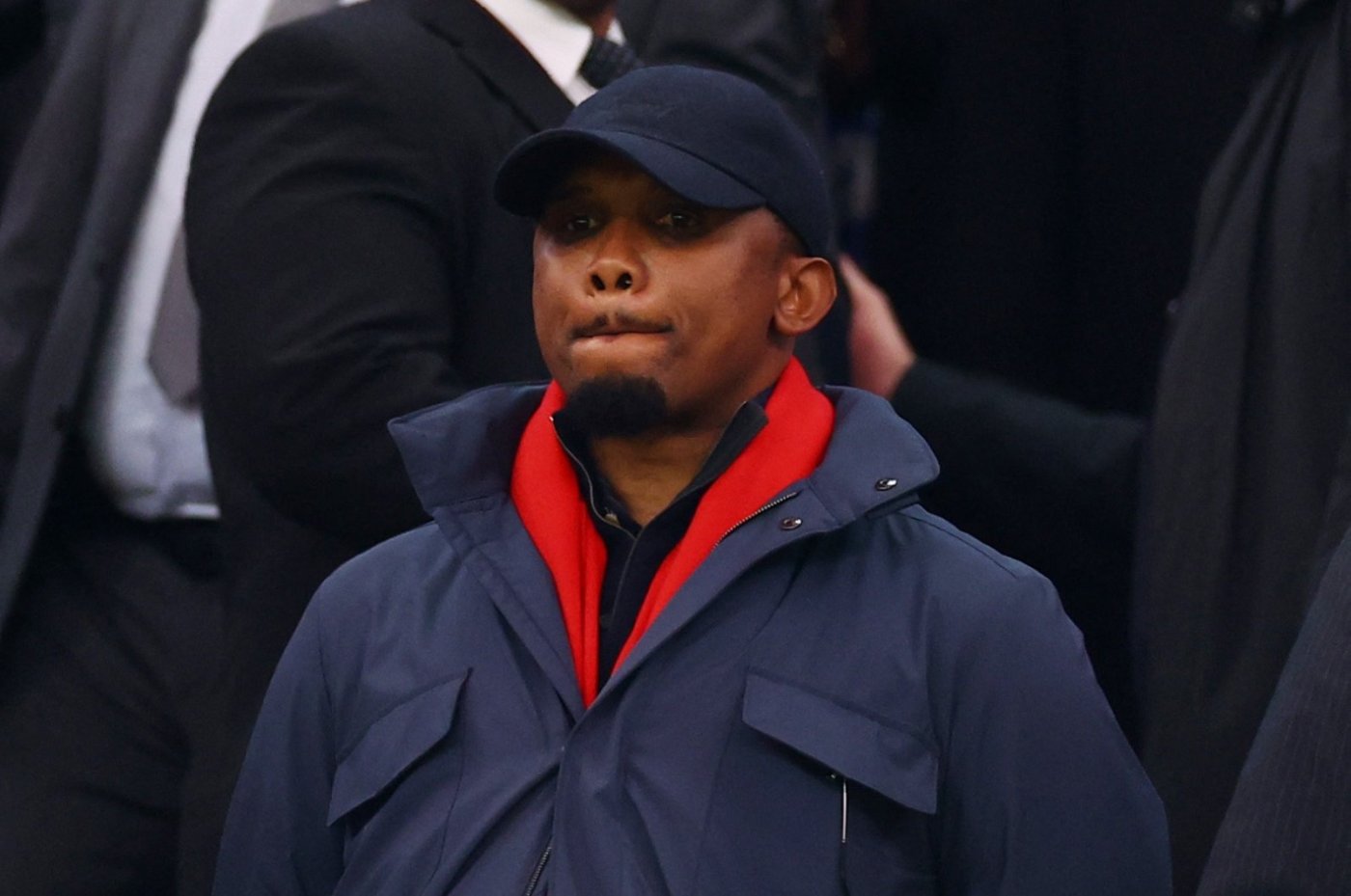
Samuel Eto’o, the former Cameroonian football star, has been sanctioned with a four-match ban and a fine of $20,000 (£14,960) after a disciplinary panel from the Confederation of African Football (Caf) found him guilty of misconduct. This ruling stems from an incident that took place during the quarter-finals of the 2026 Africa Cup of Nations, where Cameroon faced off against Morocco.
According to a statement released by Caf, Eto’o, who currently holds the position of president of the Cameroon Football Federation (Fecafoot), breached the organization’s principles relating to sportsmanship. The match saw the Indomitable Lions losing 2-0, and reports indicate Eto’o was seen displaying signs of anger directed at the officiating crew, which raised eyebrows and led to increased scrutiny. Caf President Patrice Motsepe, who was present during the match at the stadium in Rabat, reportedly witnessed Eto’o’s reactions, adding weight to the disciplinary review.
In the wake of this incident, Caf announced an investigation aimed at examining “violent confrontations and unacceptable behaviour of some players and officials” that occurred during the quarter-final matches. This development reflects growing concerns regarding player conduct and the integrity of football competitions across the continent, as governing bodies increasingly seek to uphold standards of professionalism.
Fecafoot responded to Caf’s disciplinary action by outright rejecting the decision, labeling the process as one that raises serious questions regarding the principles of a fair trial. In a statement released on Wednesday, the federation expressed its steadfast support for Eto’o, indicating that an appeal against the imposed sanctions is likely to be forthcoming. Fecafoot’s position underscores its commitment to backing its president amid the growing controversy.
Since stepping into the role of Fecafoot president in 2021, Eto’o’s image as a revered football icon has faced significant challenges, with controversies surrounding his governance and management style emerging over time. He has been subjected to multiple accusations related to improper conduct and mismanagement, and various stakeholders within the Cameroonian football community have raised alarms concerning potential irregularities within Fecafoot’s operations.
Despite these allegations, Eto’o has consistently defended his leadership and achievements, highlighting the positive strides he believes he is making for the future of football in Cameroon. However, the recent sanction adds another chapter to the narrative of his presidency, further complicating his efforts to reshape the federation’s reputation in the eyes of both national and international observers. As the appeal process unfolds, the implications of this incident could have far-reaching effects not just for Eto’o but for the broader landscape of governance in African football, as stakeholders watch closely to see how the situation develops and what it may mean for the integrity of the sport moving forward.
 World of sports
Leave a comment