
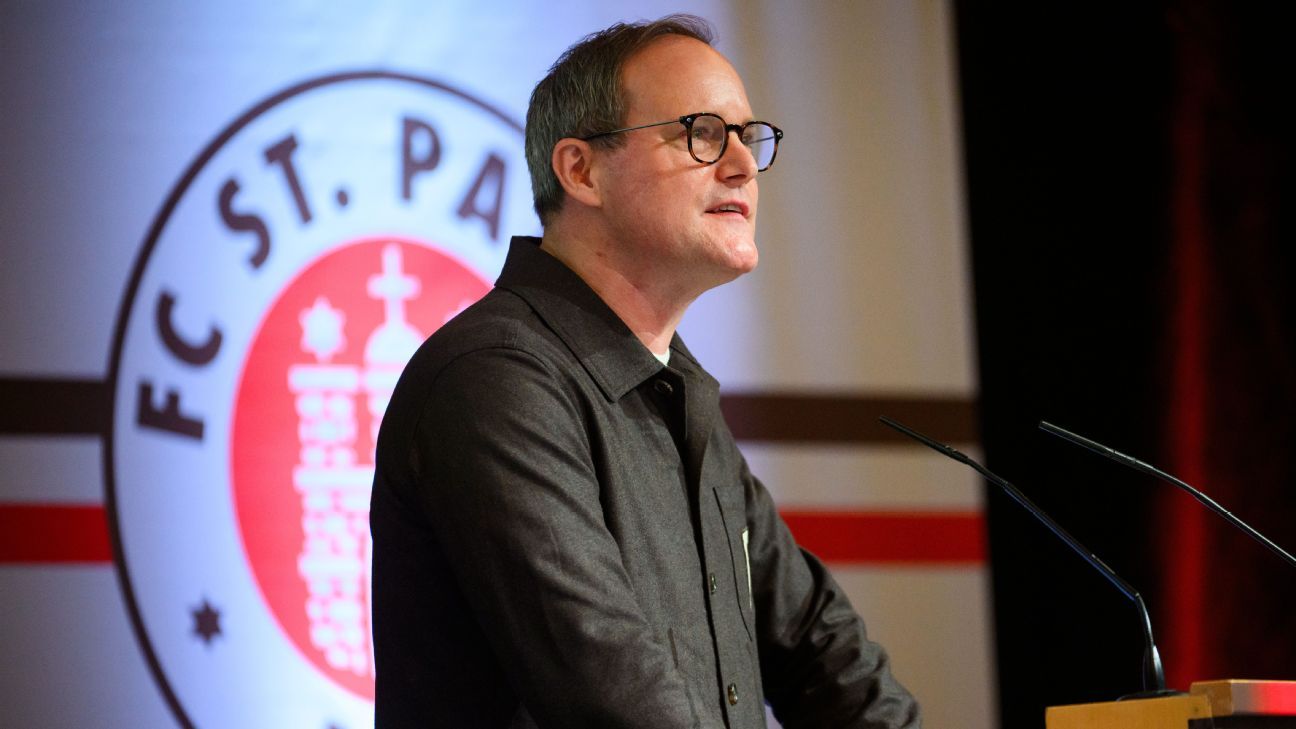
A high-ranking official from the German Football Association (DFB) has suggested that it may be time to contemplate a boycott of the upcoming 2026 World Cup, prompted by the recent controversial actions of former United States President Donald Trump. The World Cup, which is scheduled to take place this summer, will be jointly hosted by the United States, Canada, and Mexico.
Earlier this month, President Trump ignited outrage among European leaders by threatening to purchase Greenland, a territory governed by Denmark. He also hinted at imposing tariffs on eight European nations, including Germany, for their opposition to this idea. While he later retracted this threat, the diplomatic tensions between the US and various European governments continue to simmer.
“We should seriously consider a boycott,” declared Oke Gottlich, a vice-president of the DFB, in an interview with Hamburger Morgenpost. “In my opinion, that moment has clearly arrived.” Of the 104 matches slated for this World Cup, a substantial 78 are set to take place in the United States.
In contrast, the French government has expressed its reluctance to support such a boycott at this time, while the Danish Football Association has acknowledged the current delicate circumstances surrounding the matter. Denmark is working to secure its place in the tournament through play-offs.
Gottlich drew a parallel to the US-led boycott of the 1980 Olympic Games, which occurred in response to the Soviet Union’s invasion of Afghanistan. “What were the reasons behind the Olympic boycotts of the 1980s?” he questioned. “From my perspective, the risks we face today are even more significant than they were back then. It’s imperative that we engage in this conversation.”
The 2022 World Cup held in Qatar saw Germany embroiled in controversy with FIFA over its stance on players wearing the OneLove armband, intended to promote values of diversity and inclusion. Despite the initial intention of captains from seven European teams to wear this armband, FIFA quickly introduced its own ‘No Discrimination’ campaign, allowing captains to wear a corresponding armband throughout the tournament.
When Germany’s players covered their mouths during their team picture before the match against Japan, it was a clear statement against FIFA’s perceived silencing of dissenting voices. Hansi Flick, then the manager of Germany, remarked, “Denying us the armband is tantamount to denying us our voice. We firmly stand by our position,” echoed by the DFB at that time.
Gottlich further expressed his frustrations, saying, “Qatar was politically charged, yet now we are expected to be completely apolitical? That notion truly disturbs me. As institutions and as a collective society, we seem to be losing touch with the importance of setting boundaries and defending our principles.”
He emphasized the role that taboos play in shaping societal values, questioning, “Where do we draw the line when threats are made? What happens when individuals are harmed or even lose their lives?” Gottlich called for clarity from Donald Trump regarding his threshold for crossing a moral line, and similarly implored the DFB president, Bernd Neuendorf, and FIFA president, Gianni Infantino, to provide guidance on such critical issues.
 World of sports
Leave a comment