
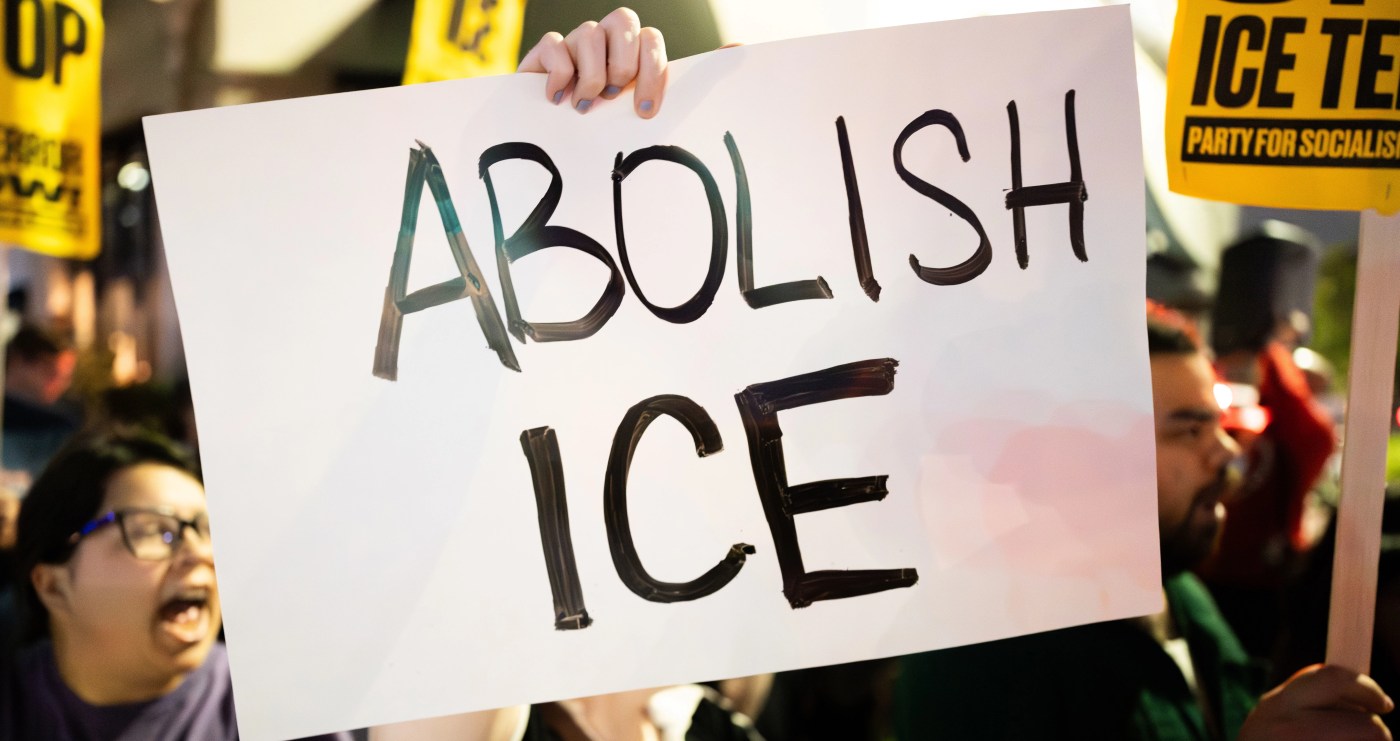
Football Supporters Europe (FSE) has said it is “extremely concerned” about what it describes as the growing militarisation of US police forces ahead of this summer’s Fifa World Cup in North America.
The warning comes after two US citizens were shot dead by federal agents in Minneapolis in recent weeks during operations linked to President Donald Trump’s immigration crackdown.
US authorities have not ruled out the possibility that Immigration and Customs Enforcement (ICE) raids could target undocumented immigrants at or around World Cup venues.
Ronan Evain, executive director of FSE, said travelling supporters currently face significant uncertainty.
“At this stage, travelling fans are left with little to no information as to what will be allowed or not at Fifa venues, or what to expect from the police elsewhere in the country,” he told BBC Sport.
Evain added that FSE was also alarmed by what it sees as a lack of clear planning from Fifa.
“There is no clarity as to what will be allowed in the stadiums, who will be deployed inside, which police forces will be working where,” he said.
He also pointed to reports suggesting the US has not yet invited visiting police delegations — often referred to as ‘spotters’ — to assist with fan management, something he described as unprecedented.
“Reports that the US has not yet invited visiting police delegations, or so-called spotters, which is unprecedented in the modern history of the tournament, only reinforce these concerns,” Evain said.
In response, Fifa said the safety and security of fans and participants was its “top priority”.
In a statement to BBC Sport, the governing body said it works closely with local authorities “to plan, co-ordinate and deliver comprehensive security measures for the tournament”.
Fifa said the US government would invite participating nations, host cities and host countries to deploy law enforcement representatives to the International Police Cooperation Center near Washington DC to support international co-ordination.
It added that some host cities may also invite international police spotters to work locally.
On what will be permitted inside stadiums, Fifa said a Code of Conduct would be made available online, as has been the case at previous tournaments.
“Fifa values ongoing dialogue with stakeholders, including supporter organisations, and has presented its Safety and Security Concept on several occasions,” the statement said.
Fifa added it was confident the measures in place would ensure a “safe, secure and welcoming environment”, pointing to the 2025 Fifa Club World Cup in the US as an example of effective security planning.
The Trump administration has suggested it may “draw down” federal forces in Minnesota if local officials co-operate, following the deaths of Renee Good and Alex Pretti, which triggered protests and public outcry across the country.
Over the past year, Trump has deployed federal agents and National Guard units to major US cities as part of his pledge to crack down on illegal immigration. These deployments have been met with protests and legal challenges, particularly in Democrat-led cities such as Portland, Los Angeles and Chicago.
A special federal task force is overseeing preparations for the World Cup, including security arrangements.
In a statement, it said: “The 2026 Fifa World Cup will be the largest, safest, and most welcoming sporting event in history.
“Under President Trump’s leadership, our team is working closely with Fifa, international partners, US federal agencies, state governments, and host cities to deliver an event that highlights America’s hospitality, commitment to security, and spirit of excellence.”
The UK Football Policing Unit told BBC Sport that no final decisions have yet been made regarding the deployment of British police spotters at World Cup matches.
Earlier this month, the European Democratic Party (EDP) said it may ask national football federations to consider withdrawing from the tournament if sufficient safety guarantees are not provided.
The party cited “growing concerns over legal and administrative uncertainty”, including the risk of non-transparent or discretionary visa decisions, border controls, and what it described as potentially invasive practices involving personal data and online activity.
It warned these issues “may translate into concrete risks for European citizens”.
Concerns were heightened this week after it emerged that a branch of ICE is sending agents to support US security operations at the Winter Olympics, which begin in Italy on 6 February.
The US Department of Homeland Security has stressed that all Olympic security operations will be “directed and managed exclusively by Italian authorities”.
Washington’s ambassador to Rome said the agents would not conduct patrols and would have only an advisory role.
 World of sports
Leave a comment