
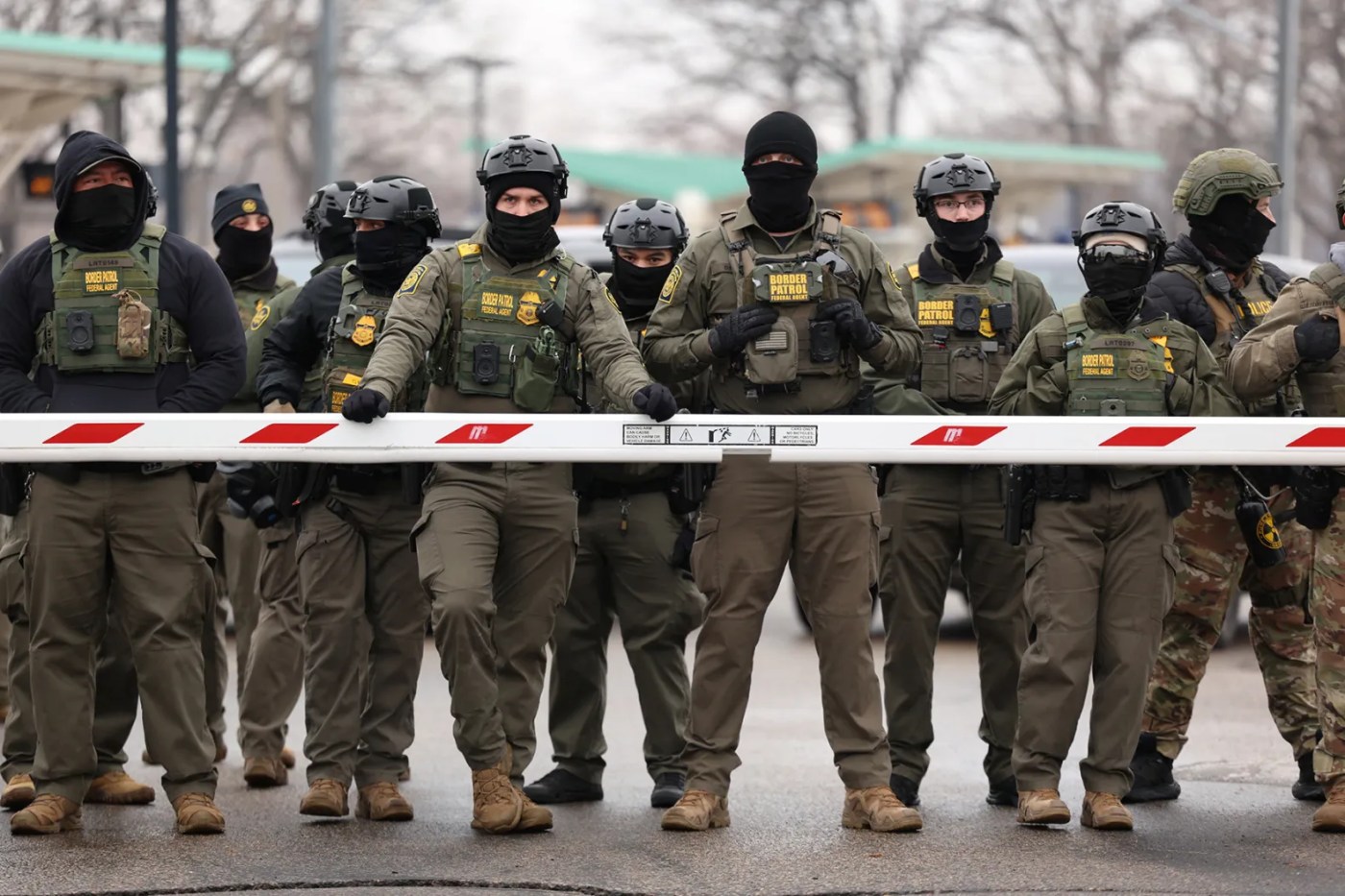
The NFL is committed to maintaining a level of security that aligns with the high standards established in prior Super Bowl events, a reassurance that stands firm even amidst the backdrop of President Donald Trump’s stringent immigration enforcement policies. This approach signifies the league’s dedication to ensuring a safe environment for all attendees, emphasizing that the strategies in place are consistent with past practices.
Specifically, the league has clarified there are no plans for ICE immigration enforcement during this Sunday’s Super Bowl, a decision viewed by many as a reflection of the NFL’s understanding of the broader social context within which it operates. In recent weeks, the actions of ICE agents, resulting in fatalities within the United States, have brought the discussion of immigration enforcement to the forefront. Since the onset of what President Trump has termed the “largest immigration enforcement operation ever” in Minnesota, concerns surrounding safety and rights have escalated.
In light of these circumstances, reports by Reuters concerning the security preparations for the upcoming matchup between the Seattle Seahawks and New England Patriots reinforce that measures will mirror those of previous Super Bowls. This continuity shows a commitment to ensuring fan safety and the integrity of the event amidst any evolving socio-political climate.
The Department of Homeland Security plays a crucial role in orchestrating the collaboration of various federal agencies tasked with managing security for the Super Bowl. NFL Commissioner Roger Goodell addressed the media, emphasizing the critical nature of security for such a prominent event. He noted: “Security is obviously one of the things we focus on the most,” when questioned about potential ICE presence at the venue. Goodell expressed confidence in the established protocol:
“It’s a SEAR-1 level event that involves unique assets at the federal level, state level and the local level, all working together. I see no change in that. We’re working with all three of those levels and doing everything we can to make sure it’s a safe environment. And the federal government is a big part of that, including this administration and every other administration before that.”
In a notable public demonstration, a small gathering of fewer than 100 individuals protested ICE’s actions during NFL’s Opening Night event held in San Jose earlier this week. This protest signified a growing concern and activism surrounding immigration policies within the United States, particularly within communities that feel directly impacted by these enforcement actions.
Adding to the cultural conversation surrounding the Super Bowl is the halftime show performance by popular rapper Bad Bunny. Just a week prior, he made headlines with his “ICE out” comments during the Grammy Awards, a statement that resonated with many in attendance and beyond, highlighting the intersection of entertainment and activism in today’s society. President Trump, however, criticized the NFL’s choice of Bad Bunny as “absolutely ridiculous,” showcasing the divisive nature of discussions surrounding immigration and representation in media.
Commissioner Goodell defended the selection, stating: “Bad Bunny is, and I think that was demonstrated last night, one of the great artists in the world and that’s one of the reasons we chose him. But the other reason is he understood the platform he was on and that this platform is to use to unite people and to be able to bring people together with their creativity, with their talents, and to be able to use this moment to do that.”
He added, “I think artists in the past have done that. I think Bad Bunny understands that, and I think he’ll have a great performance.” This insight into the NFL’s considerations when engaging artists for high-profile events showcases the league’s awareness of its cultural impact and its commitment to fostering a narrative of unity, especially at such a globally recognized event as the Super Bowl.
 World of sports
Leave a comment