
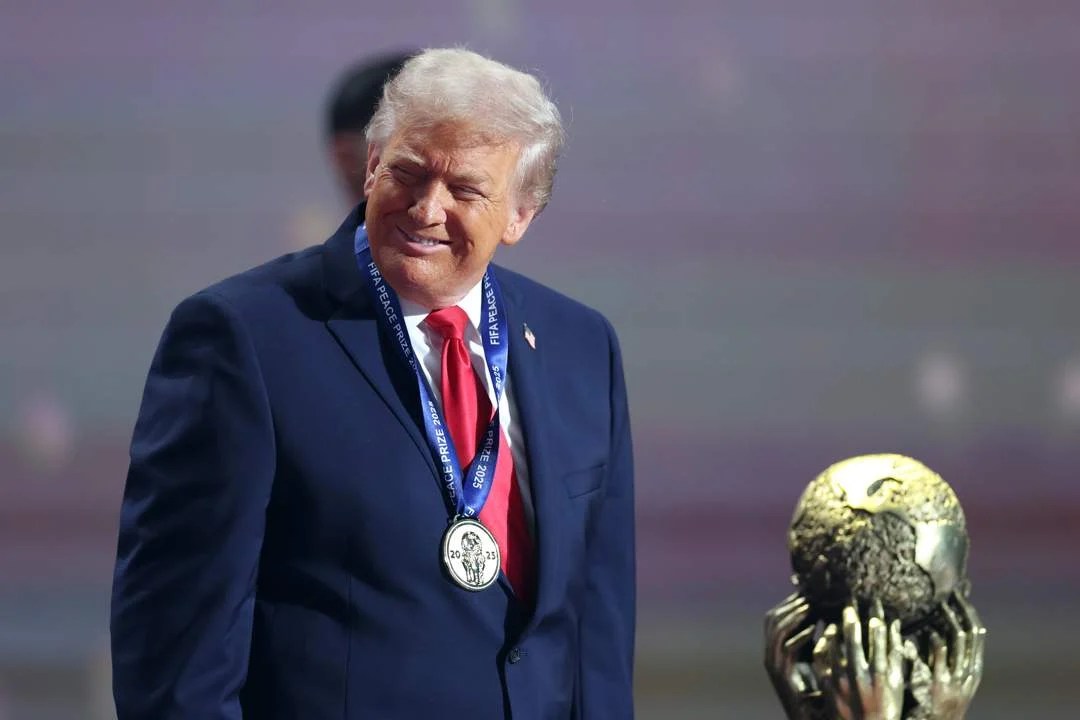
Iran is slated to compete against Belgium, Egypt, and New Zealand in Los Angeles and Seattle during this summer’s World Cup. However, US President Donald Trump has publicly stated that he has reservations about Iran participating in the tournament due to ongoing conflicts in the Middle East, suggesting that he does not think it is safe or appropriate for them to play.
In a recent meeting with FIFA president Gianni Infantino, President Trump conveyed his concerns regarding the Iranian national soccer team’s safety amidst the rising tensions. He articulated that while he welcomes Iran’s participation in the World Cup, the risks involved could far outweigh the benefits. Trump’s sentiments were echoed in a post he shared on Truth Social, where he remarked, “The Iran National Soccer Team is welcome to The World Cup, but I really don’t believe it is appropriate that they be there, for their own life and safety.” His statement reflected a sense of caution regarding the well-being of the players in such a fraught environment.
The geopolitical backdrop features a significant escalation of hostilities, particularly following airstrikes conducted by the US military and Israel on Iran on February 28, which triggered a series of retaliatory actions from Iran against Israel and nations in the Middle East housing US military bases, such as Saudi Arabia and the United Arab Emirates. Such conflicts have not only heightened tensions within the region but have also cast a long shadow over sporting events, with political implications intertwining with international competitions.
Iran’s Minister of Sports has also weighed in on the matter, making an announcement during an interview on state television that the nation would not participate in the World Cup. Ahmad Donyamali clearly stated, “Considering that this corrupt regime has assassinated our leader, under no circumstances can we participate in the World Cup.” His remarks underline the severe dissatisfaction within the Iranian leadership concerning their relationship with the US and wider international community, as well as how political turmoil can overshadow sporting events.
Despite this, it’s important to note that there has yet to be an official decision regarding Iran’s withdrawal, compounded by the fact that, historically, no country has opted out of the World Cup since 1950. After meeting with Trump, Infantino shared insights with the media regarding their discussions, highlighting the growing anticipation as the tournament approaches. “I met with the President of the United States to discuss the preparations for the upcoming World Cup, which is set to kick off in just 93 days. We also addressed the current situation in Iran, noting that the Iranian team has indeed qualified for the World Cup.” Infantino emphasized that bringing people together through sport is vital, particularly during challenging times, as he expressed gratitude to Trump for his support of the event.
The dynamic surrounding the World Cup also raises the prospect of a potential matchup between Iran and the USA if both teams succeed in finishing second in their respective groups. This scenario harkens back to the memorable clash in the 1998 World Cup when Iran defeated the US 2-1, a match that holds significant meaning for soccer fans from both countries.
Iran’s games in Group G are scheduled to be played on the West Coast, an area home to a large Iranian American population, estimated at around one million residents. The Iranian national team boasts a history of participation in the last three World Cups and is currently ranked as the second strongest Asian team in FIFA rankings, just behind Japan.
FIFA’s regulations allow for the possibility of Iran being replaced in the tournament if they withdraw from it. If that were to occur, it is likely that another nation from the Asian Football Confederation would take their place, with Iraq and the United Arab Emirates having the strongest claims due to their recent performances. Iraq, having recently triumphed over the UAE in a playoff, is anticipated to compete against either Bolivia or Suriname in a decisive intercontinental playoff soon. However, logistical challenges regarding travel to Mexico for this critical match have emerged, further complicating the situation surrounding both Iraq and the broader World Cup narrative. The intertwining of sport and politics in this context presents a complex landscape that ultimately raises questions about the implications for international sporting events amidst geopolitical disputes.
 World of sports
Leave a comment