
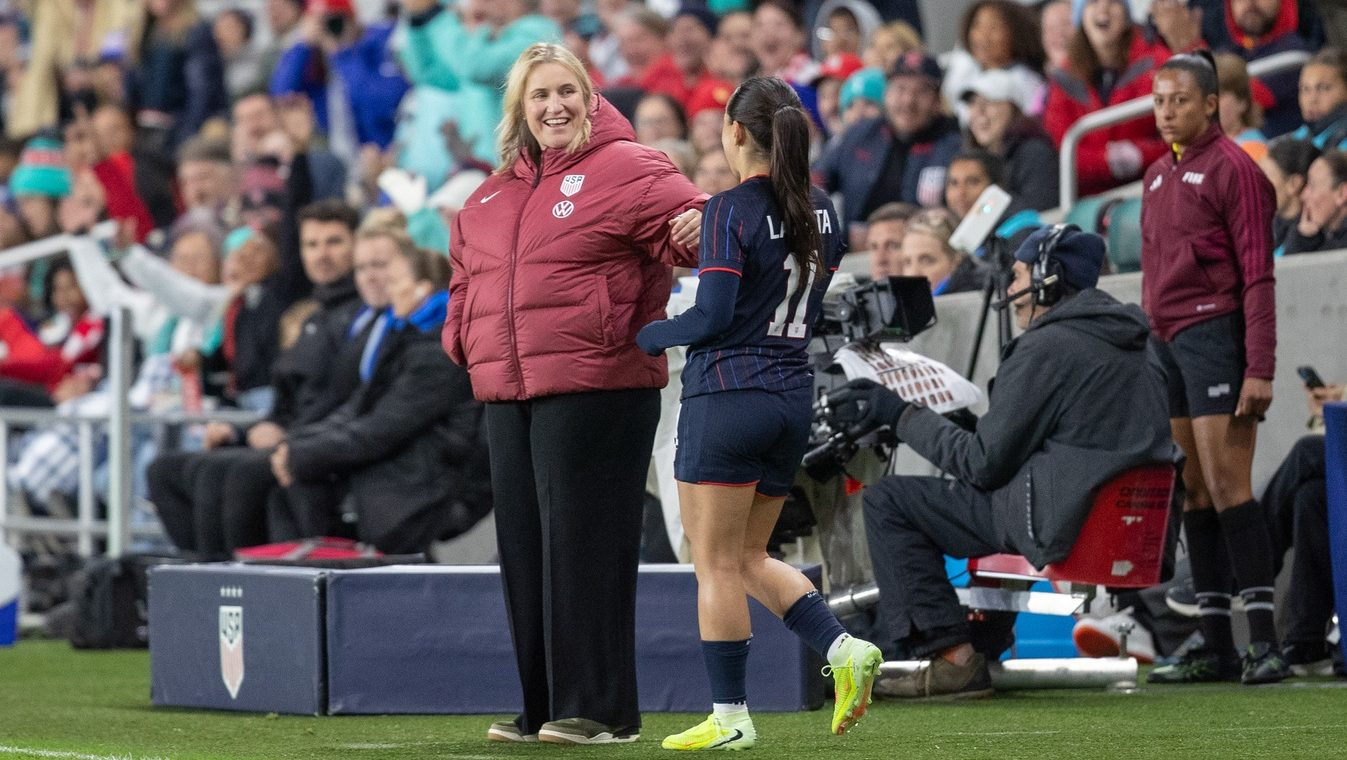
Every team participating in FIFA’s women’s football tournaments is now required to have at least one female head coach or assistant coach, reflecting a significant regulatory change aimed at promoting gender equality in sports. This new mandate is set to be implemented during the upcoming under-17s and under-20s Women’s World Cup and Women’s Champions Cup competitions this year, marking a pivotal moment in the integration of women into coaching roles at various competitive levels.
The decision was reached during a FIFA Council meeting on Thursday, where members deliberated on strategies to enhance female representation in coaching. This initiative stands as a testament to the growing recognition of diversity’s value in sports leadership, reinforcing the importance of having a balanced and inclusive coaching environment. According to the new regulations, at least two members of the coaching staff on each team must be female, with one holding a designated role as an assistant coach or head coach. This rule is applicable across all levels of youth and senior tournaments, impacting both national teams and clubs alike.
At the 2023 Women’s World Cup, observers noted that only 12 out of 32 head coaches were female, highlighting the pressing need for structural changes within the sport. Among those coaches was Sarina Wiegman, manager of the England National Team, who has become a symbol of excellence in women’s football leadership. Jill Ellis, FIFA’s chief football officer, stated, “There are simply not enough women in coaching today. We must do more to accelerate change by creating clearer pathways, expanding opportunities, and increasing visibility for women on our sidelines.” This statement underscores a commitment to fostering an environment where women can thrive and lead in coaching roles.
The new regulations by FIFA, along with targeted development programs, signify a meaningful investment in both the present and future generations of female coaches. By drafting clear policies that mandate female representation among coaching staff, FIFA hopes to catalyze a rapid increase in the number of women coaching teams, with particular focus on preparing for the 2027 Women’s World Cup in Brazil, which is anticipated to be a landmark event for female athletes and coaches.
Prominent figures in women’s football, such as Emma Hayes from London, exemplify what can be achieved through female leadership. Hayes is renowned for her effective coaching at the club level and currently serves as an assistant coach for the United States team, working alongside Denise Reddy. Her successes illustrate the vital role of women in shaping competitive football dynamics.
In a 2024 interview with BBC Sport, Hayes voiced her concerns regarding the underrepresentation of female coaches in English football, describing it as “a massive issue.” She urged football administrators to “come up with more creative ways” to remedy this persistent disparity. This clarion call reflects a growing recognition within the football community of the need to rectify historical imbalances and support burgeoning female talent through mentorship and leadership opportunities.
Additional female coaches from England, such as Gemma Grainger, head coach of the Norway team; Casey Stoney, coaching Canada; and Carla Ward, overseeing the Republic of Ireland, are also breaking barriers at the international level. Their achievements demonstrate that women are increasingly stepping into impactful coaching roles that influence the trajectory of women’s football on a global scale.
Canadian coach Rhian Wilkinson made headlines by leading Wales to its first significant tournament at Euro 2025 last summer, marking a historic achievement for female leadership in Welsh football. Moreover, Sarina Wiegman has guided England not only to back-to-back European titles but has also been honored four times as FIFA’s best women’s coach, reinforcing her status as a pioneer in women’s football.
During the quarter-finals of the 2023 Women’s World Cup, Wiegman stood out as the only female coach, which emphasizes the critical need for change within the sport. In her reflections at that time, she expressed a hopeful desire for increased female representation among top-level coaches, emphasizing the importance of achieving a balanced coaching landscape. “Males are welcome too,” she said, “but if the balance is better, then hopefully that will inspire more women to get involved in coaching.” This sentiment echoes a collective aspiration within the sports community to cultivate an inclusive environment that not only empowers women but also lays a strong foundation for the future of female coaches in football.
As these new regulations begin to take shape, they signify not just a policy change but a cultural shift, advocating for a future where female coaches are prevalent and valued in football, ultimately leading to a richer, more diverse sporting landscape for all to enjoy.
 World of sports
Leave a comment